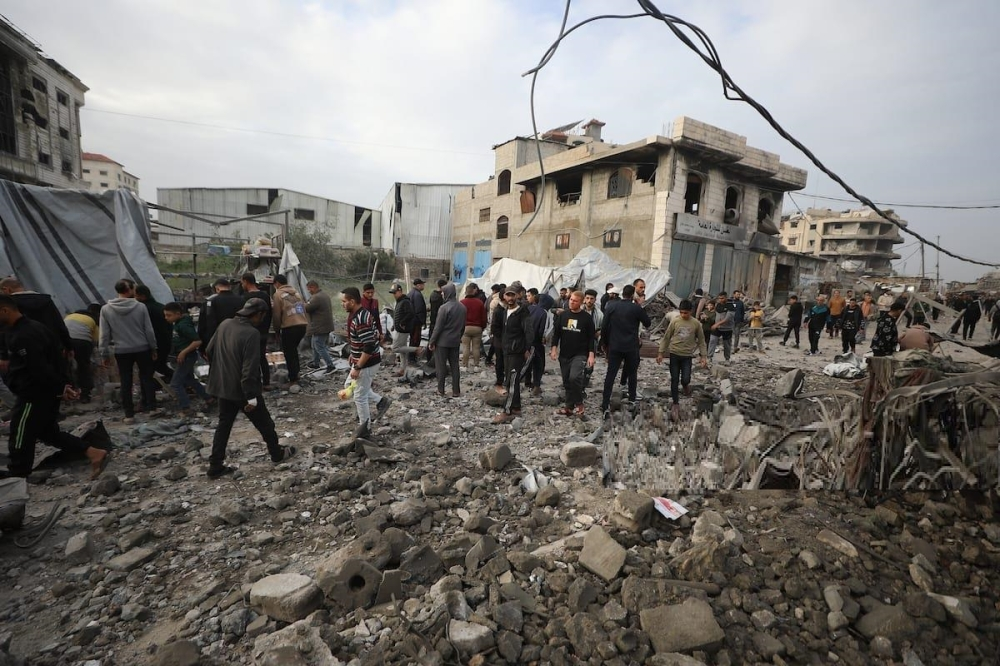
The United Nations Office for the Coordination of Humanitarian Affairs (OCHA) issued a strongly worded warning about the continuation of Israeli military operations throughout the Gaza Strip, stressing that airstrikes, artillery shelling and gunfire have not stopped, exposing the lives of civilians, including humanitarian workers and medical teams, to grave and ongoing risks.
This warning comes amid a worsening humanitarian crisis in the sector, with the office stressing that humanitarian teams are ready to expand their operations throughout Gaza, but achieving this depends on lifting restrictions on their movement and ensuring the safety and security of their staff, which is impossible while the fighting continues.
The general context and the worsening humanitarian crisis
The Gaza Strip, home to more than 2.3 million people, is experiencing one of the worst humanitarian disasters in modern history since the start of the military escalation in October 2023. Israeli military operations have killed tens of thousands of Palestinians, mostly children and women, and caused the displacement of more than 85% of the population, who now live in tragic conditions inside overcrowded shelters or in the open, with a near-total lack of basic services such as clean water, sanitation and health care.
The imposed blockade and the massive destruction of infrastructure have led to the collapse of the health system, with most hospitals out of service, while the few remaining ones are operating far beyond their capacity and with a severe shortage of medicines, medical supplies and fuel needed to run electric generators.
Relief efforts amidst the dangers
Despite the immense challenges, the United Nations reported successfully coordinating ten humanitarian missions to deliver vital aid to northern and southern Gaza. This aid included food supplies, vaccines, fuel, and medical supplies, which entered through the Kerem Shalom and Zikim crossings. In a related development, the United Nations Development Programme (UNDP) announced the commencement of a solid waste removal operation at the Firas Market site in Gaza City, transferring the waste to a temporary location. This initiative aims to improve environmental and health conditions and prevent the spread of diseases and epidemics in the devastated Gaza Strip.
Local and international impacts
On the ground, civilian casualties continue. In the Zeitoun neighborhood east of Gaza City, a Palestinian was killed and others were wounded by Israeli occupation forces. New injuries were also reported in Beit Lahia in the northern Gaza Strip and the al-Mawasi area of Khan Younis in the south as a result of gunfire and shelling. Artillery shelling and the demolition of buildings continue in the eastern areas of the Gaza Strip, confirming that any talk of a truce or tactical ceasefire is not reflected on the ground and only exacerbates the suffering of the besieged population.
The continuation of these violations undermines the credibility of any pledges to ensure the safety of civilians and complicates regional and international diplomatic efforts aimed at achieving a permanent ceasefire, which is the main demand of humanitarian organizations and the international community to put an end to the disaster and allow the path to recovery and reconstruction to begin.