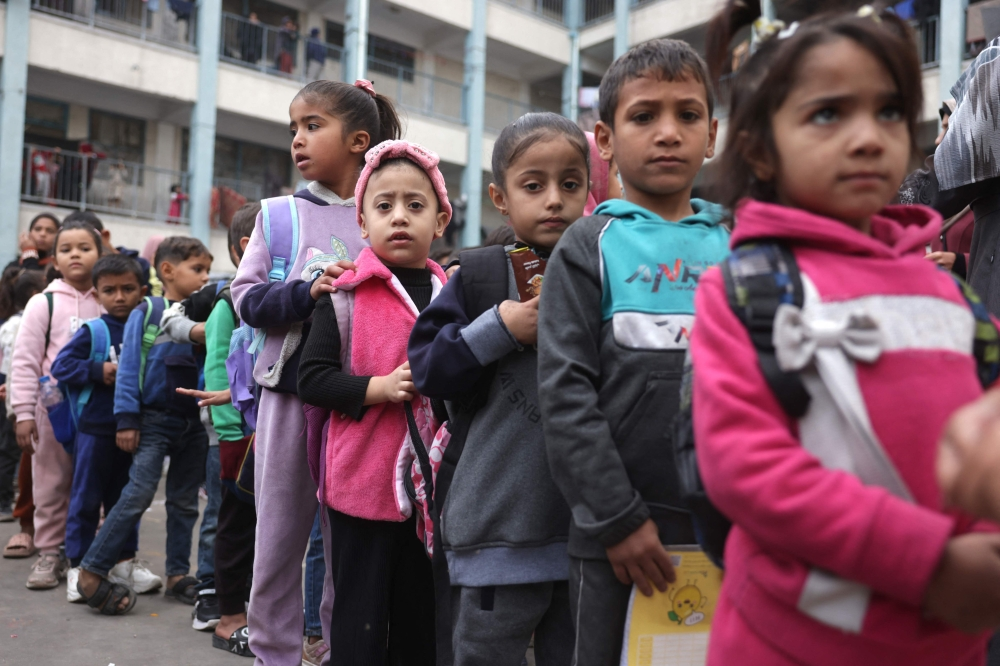
The United Nations Office for the Coordination of Humanitarian Affairs (OCHA) issued a stark warning about the alarming decline in the flow of humanitarian aid into the Gaza Strip, at a time when restrictions, coupled with harsh weather conditions, pose an existential threat to hundreds of thousands of displaced families. This warning comes amidst the ongoing aggression and the worsening humanitarian crisis gripping the besieged territory.
The suffering worsens with the arrival of winter storms
As winter reaches its peak, recent rainstorms and strong winds have flooded large areas of shelters and tent encampments. Field reports indicate that rainwater inundated the already dilapidated tents of displaced people, exacerbating the daily misery of children, women, and the elderly who lack even the most basic means of heating or adequate winter clothing.
In this context, Olga Cherevko, spokesperson for the UN Office for the Coordination of Humanitarian Affairs (OCHA) in Gaza, confirmed that humanitarian agencies are racing against time to provide emergency winter supplies, but the scale of the disaster exceeds current capacity. UN estimates indicate that approximately 1.3 million people in Gaza are in dire need of shelter assistance to repair what can be salvaged or replace tents destroyed by wind and water.
Occupation restrictions hinder infrastructure repair
The crisis is not limited to weather conditions; it is exacerbated by policies imposed by the Israeli occupation authorities at the crossings. The UN official explained that there is a growing list of vital materials that are being prevented from entering the Gaza Strip, most notably heavy machinery, engineering equipment, and spare parts. This ban constitutes a major obstacle to efforts to repair the water and sanitation infrastructure, which was severely damaged by the bombing, and threatens health and environmental disasters as sewage accumulates and mixes with rainwater.
A huge gap between needs and response
Despite the ongoing efforts of the United Nations and its international partners, the reality on the ground indicates that humanitarian needs are increasing at a much faster pace than the capacity of organizations to meet them. This is primarily due to the limited number of open crossings, the strict restrictions on truck movement, and the logistical complexities imposed by lengthy Israeli inspection procedures.
The international humanitarian community stresses the need to immediately remove all obstacles that prevent the safe and sustainable flow of aid, and to open additional supply routes to ensure that food, medicine and shelter materials reach all areas of the sector, in order to avoid the situation slipping into a real famine or uncontrollable epidemics.