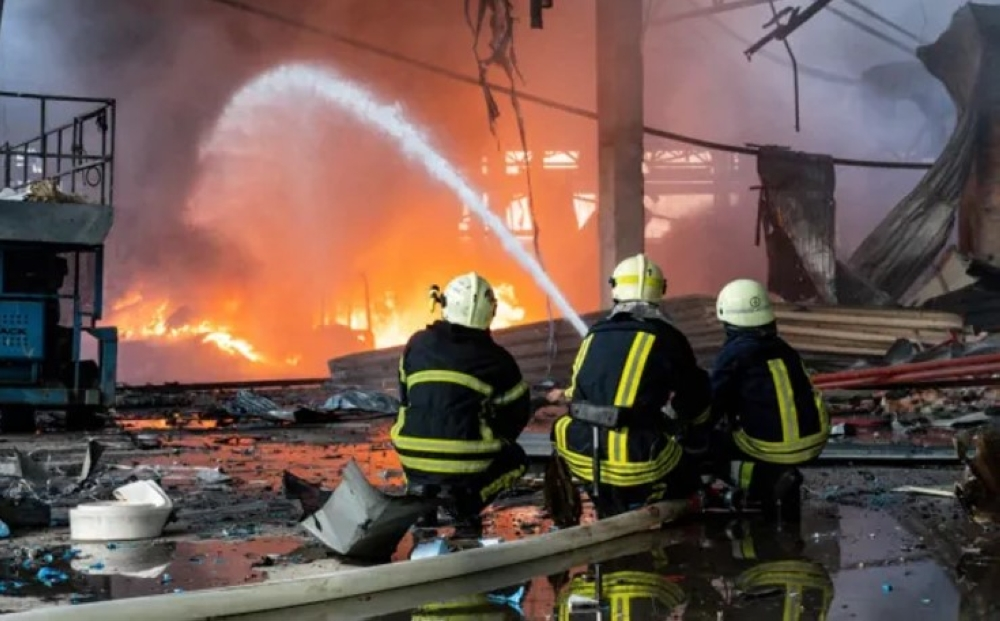
In a worrying escalation, the United Nations on Thursday issued an urgent appeal to Russia to halt its systematic attacks on Ukraine's energy infrastructure. This appeal came after a night of intense shelling that plunged entire cities into darkness and left thousands of civilians without heating and electricity amid what is being described as the harshest winter since the start of the war.
In a strongly worded statement, UN High Commissioner for Human Rights Volker Türk said: “The Russian Federation has launched a large-scale attack targeting energy infrastructure across Ukraine. Thousands of civilians have woken up without electricity or heating.” Türk stressed that targeting civilian infrastructure is prohibited under international humanitarian law, calling on Russia to “immediately cease these attacks.”.
Background of the conflict and targeting of infrastructure
Since the start of Russia’s full-scale invasion of Ukraine in February 2022, targeting critical infrastructure has been a recurring strategy of Russian forces. These tactics aim to cripple the Ukrainian state’s ability to withstand the onslaught, weaken civilian morale, and disrupt the economy and war effort. The winter of 2022–2023 saw a similar campaign of attacks that resulted in widespread power outages, prompting the international community to intensify its support for Ukraine in the areas of air defense and network repair.
These attacks constitute a flagrant violation of the principles of international humanitarian law, specifically the Geneva Conventions, which require the distinction between military and civilian targets and obligate parties to the conflict to protect civilians and infrastructure indispensable to their survival.
Humanitarian repercussions and international risks
The effects of these attacks extend far beyond mere power outages, leading to a profound humanitarian crisis. Hospitals, schools, and water pumping stations are entirely dependent on electricity, and its disruption endangers patients' lives, paralyzes education, and results in shortages of clean drinking water. With temperatures plummeting below freezing, the lack of heating poses a direct threat to the lives of the most vulnerable, such as children and the elderly.
Internationally, these attacks raise serious concerns about nuclear safety, especially given the repeated targeting of areas near nuclear power plants. They also increase pressure on neighboring countries hosting refugees and prompt Ukraine's allies to increase military and humanitarian aid, thus prolonging and complicating the conflict.
Growing concern over the Zaporizhzhia nuclear power plant
In a related development, Moscow announced that Ukrainian strikes had severed a power line supplying the Zaporizhzhia nuclear power plant, Europe's largest, which is under Russian control. While there is no immediate radiological risk, the incident underscores the potential for catastrophic consequences. The International Atomic Energy Agency has repeatedly warned that any military activity around the plant poses a serious threat to the region and the world. Relying on backup diesel generators to cool the reactors is not a sustainable solution and increases the likelihood of a nuclear accident.