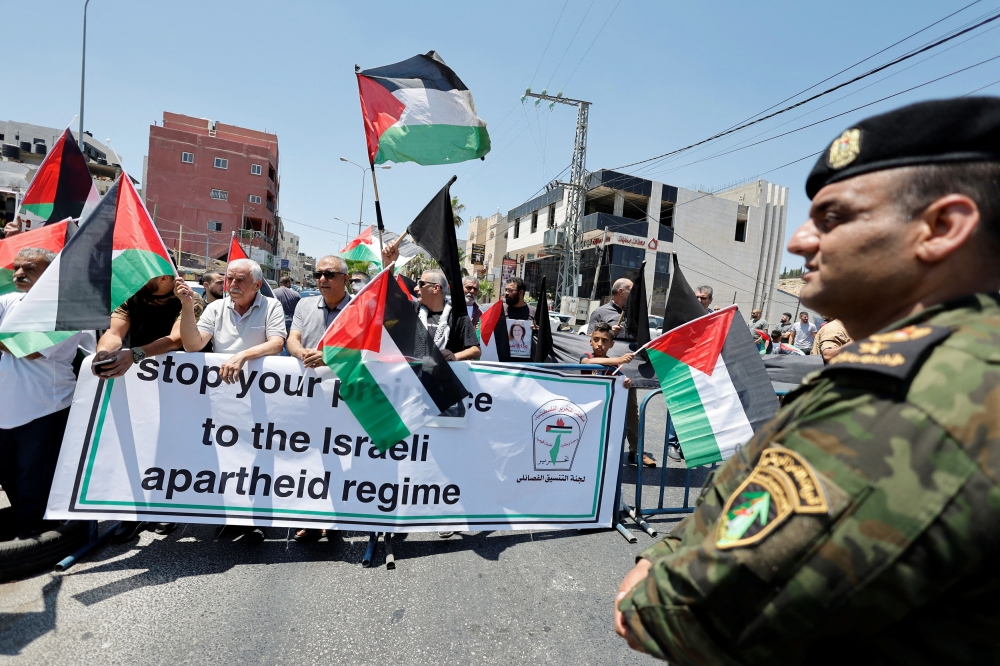
In a move reflecting growing international concern over the situation in the occupied Palestinian territories, the UN Committee on the Elimination of Racial Discrimination called on all states to take concrete and immediate action to support the implementation of its recommendations concerning the case brought by the State of Palestine against Israel. This explicit call underscores the need to impose appropriate punitive measures against those who incite apartheid and perpetrate racially motivated violence against Palestinians.

Results of the Independent Conciliation Commission
These international moves followed the publication of the official findings of an independent Conciliation Commission, which, for the first time, conducted an in-depth examination of allegations of systematic racial discrimination against Palestinians. The Commission concluded in its report that the policies in place, including the forced separation of communities, the expansion of illegal settlements and outposts, as well as severe restrictions on construction and the demolition of Palestinian homes, collectively constitute a system of racial discrimination that undermines any real prospects for peace in the region.
Legal and international context
This call is particularly significant given the legal context of the conflict; the International Convention on the Elimination of All Forms of Racial Discrimination is one of the cornerstones of international human rights law. Palestine's accession to this convention has enabled it to hold Israel legally accountable before UN committees, a path distinct from traditional political approaches. This places the international community before its legal and moral responsibilities regarding practices that amount to apartheid, a situation that major international human rights organizations have warned against for years.
Repercussions of settlement expansion
The Committee affirmed that the continued expansion of settlements is not merely a violation of geographical boundaries, but a tool for consolidating demographic and military dominance, leading to the fragmentation of Palestinian territory and rendering the establishment of a geographically contiguous Palestinian state virtually impossible. The Committee emphasized that these practices necessitate strict adherence to international agreements, stressing that responsibility rests not only with the parties to the conflict, but also with the entire international community.
Responsibility of States Parties
In its concluding recommendations, the Committee emphasized the legal obligations of States Parties to the Convention, urging them not to enable or support discriminatory Israeli policies and practices, whether directly or indirectly. It called for the use of all legitimate diplomatic and legal means to promote compliance with international standards, which opens the door to the possibility of imposing sanctions or boycotts on entities involved in supporting settlement activity and apartheid.