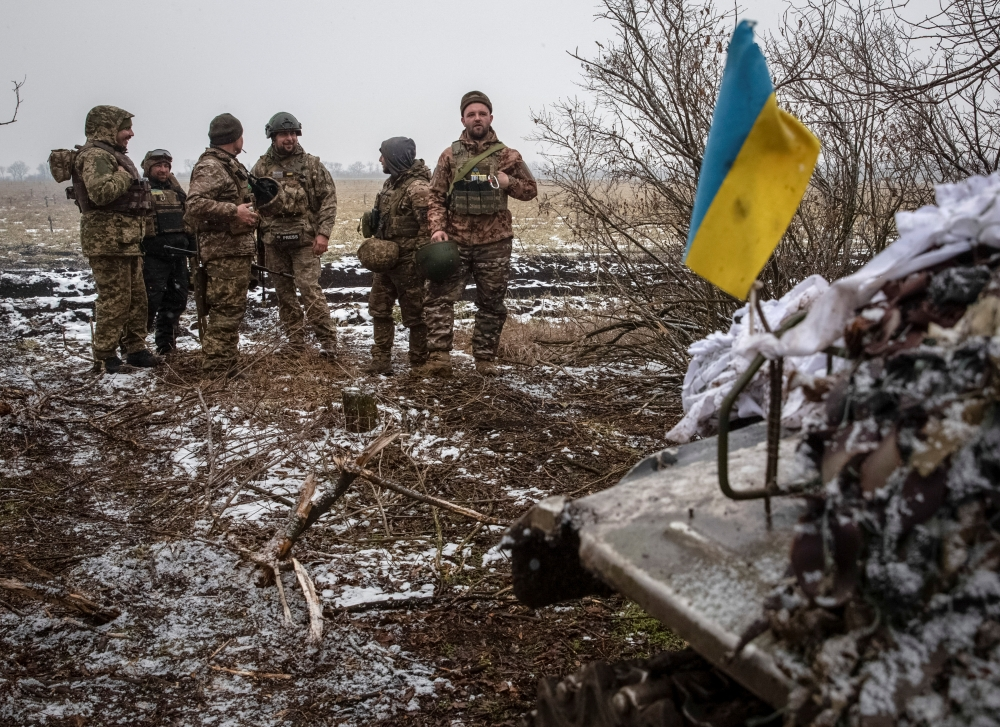
In a significant development on the ground, Ukrainian President Volodymyr Zelensky announced that his country's forces had successfully regained control of large swathes of territory previously occupied by Russian forces, particularly on the southern front. This advance comes as diplomatic efforts to end the conflict remain stalled, with each side adhering to its conditions for ending the war, which has now entered its third year.
Background of the conflict and its historical context
The roots of this conflict can be traced back to 2014, when Russia annexed Crimea and conflict erupted in the Donbas region of eastern Ukraine between Ukrainian forces and Moscow-backed separatists. Tensions escalated dramatically on February 24, 2012, when Russia launched a full-scale invasion of Ukraine, which it described as a “special military operation,” resulting in the largest war in Europe since World War II and causing a massive humanitarian crisis and global economic and political repercussions.
Details of the progress on the ground and its importance
In his recent remarks, President Zelenskyy confirmed that the ongoing counter-offensive has resulted in the “liberation of hundreds of square kilometers” of Ukrainian territory. This military success not only represents a tremendous morale boost for the Ukrainian forces and people, but also holds significant strategic importance. Recapturing territory in the south could disrupt Russian supply lines to Crimea and weaken Moscow’s grip on Ukraine’s southern coast. This advance also demonstrates the effectiveness of Western weaponry and international support for Kyiv, strengthening its position in any future negotiations.
Obstacles in the path of peace negotiations
Despite military advances, peace talks remain stalled. The main obstacle is the dispute over the fate of the industrial Donbas region, which is almost entirely controlled by Russia. Moscow insists that Kyiv recognize the new reality on the ground as a precondition for any settlement, a demand Ukraine categorically rejects, insisting on the withdrawal of Russian forces from all its internationally recognized territory, including Donbas and Crimea.
Zelenskyy indicated that any Ukrainian withdrawal must be met with a simultaneous Russian withdrawal, emphasizing that Kyiv would not relinquish its territory. He added that his country seeks strong security guarantees from its Western allies, particularly Washington, before entering into any final settlement with Russia, to ensure that aggression is not repeated in the future.
Regional and international impact
Ukraine’s battlefield successes are not only altering the course of the war but also reshaping the geopolitical dynamics of the region. They are placing increasing pressure on the Russian leadership both domestically and internationally, and testing the long-term viability of Western support for Ukraine. The continuation of the conflict also directly impacts global energy and food security and exacerbates tensions between Russia and NATO. The outcome of this war will determine not only Ukraine’s future but will also shape the European and global security order for decades to come.