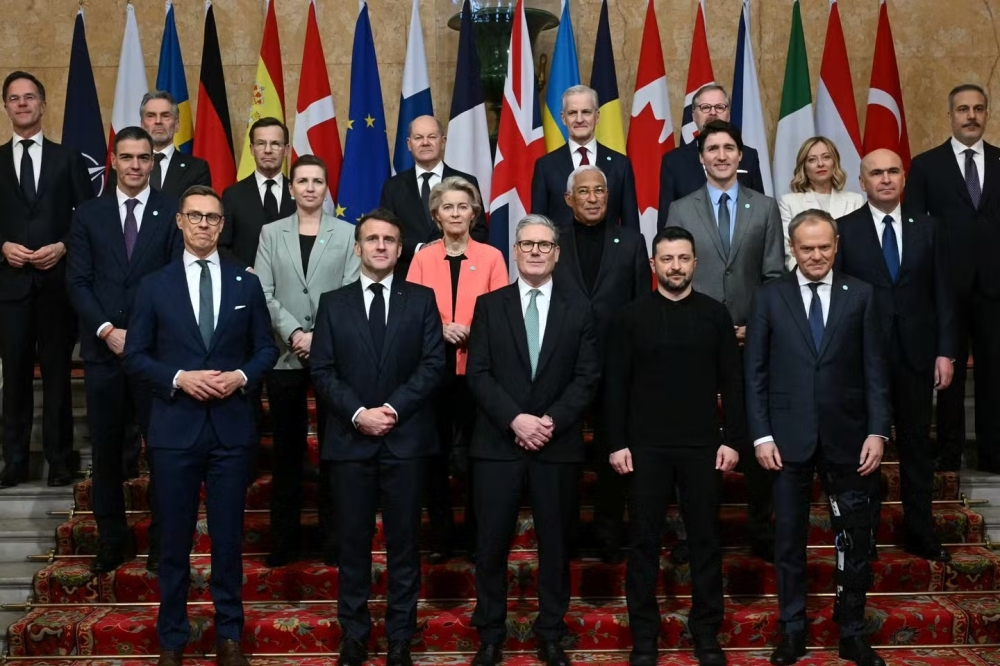
Ukrainian President Volodymyr Zelenskyy announced “real progress” in talks held in Berlin regarding future security guarantees for Ukraine, describing the discussions as an important step toward securing the country’s future in the face of ongoing Russian aggression. These remarks come amidst intensive diplomatic efforts by Kyiv with its Western allies to establish a robust security framework that will protect its sovereignty in the long term.
Historical context: From a security vacuum to bilateral agreements
Ukraine’s pursuit of security guarantees has roots stretching back decades, specifically to the 1994 Budapest Memorandum on Security Guarantees, under which Kyiv relinquished its nuclear arsenal in exchange for pledges from Russia, the United States, and the United Kingdom to respect its sovereignty. However, Russia’s annexation of Crimea in 2014 and the full-scale invasion in 2022 demonstrated the inadequacy of those pledges. Since the start of the invasion, NATO membership has become a strategic objective for Ukraine, but given the difficulty of achieving this in the short term, the idea of “security guarantees” has emerged as an alternative, interim solution. This path was formalized at the 2023 NATO summit in Vilnius, where the G7 countries issued a joint declaration in support of Ukraine, opening the door to negotiations for binding bilateral security agreements.
The importance of the talks and their expected impact
The Berlin talks are of particular importance given Germany’s pivotal role as Europe’s largest economy and one of Ukraine’s biggest military and financial backers. Progress in these talks not only reflects Berlin’s commitment to Ukraine’s security but also sends a strong signal to Moscow that Western support for Kyiv is a long-term strategic commitment, not merely a temporary response. Domestically, these agreements provide a tremendous morale boost to the Ukrainian people and military, and lay the foundation for future stability, which will encourage the return of investment and reconstruction. Regionally, these guarantees contribute to strengthening the security of Europe’s eastern flank, where Ukraine’s resilience is seen as the first line of defense against any future Russian expansionist ambitions. Internationally, they represent a new model of security cooperation outside of traditional frameworks like NATO, and underscore the commitment of major powers to the principles of international law and state sovereignty.
The nature of the guarantees and Russia's position
The security guarantees being negotiated include commitments to provide sustained military support, encompassing advanced weaponry, training, and cooperation in the defense industry, as well as financial and economic assistance and sanctions against any future aggression. While these fall short of Article 5 of the NATO treaty, which stipulates that an attack on one member is an attack on all, they constitute a strong deterrent. Russia, however, categorically rejects these security arrangements, viewing them as a direct threat to its national security. Moscow insists on its own terms for ending the war, which include Ukraine's neutrality and the return of the territories annexed by Russia—demands that Kyiv and its allies completely reject, making any comprehensive political settlement currently unattainable.