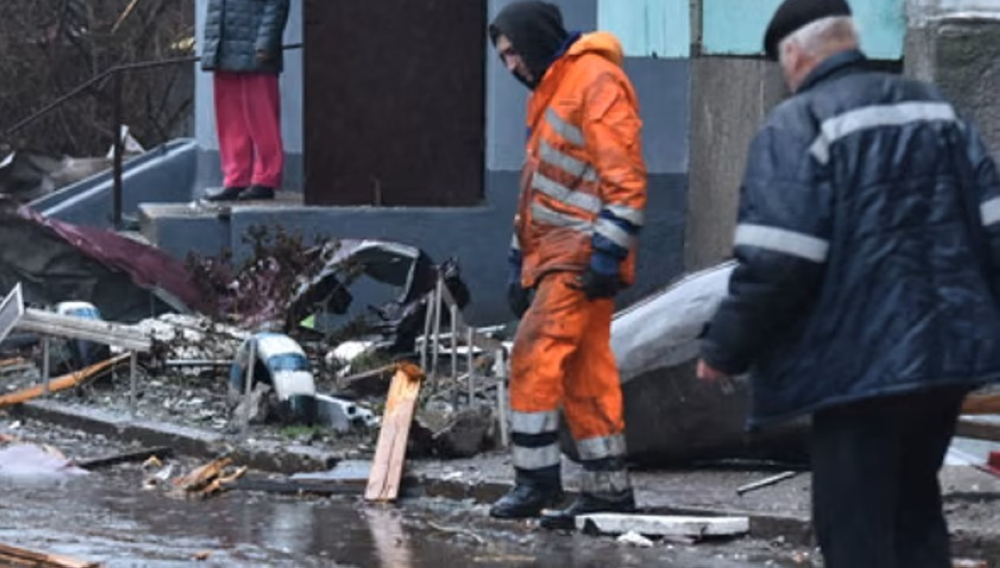
In a new escalation of the humanitarian crisis caused by the ongoing war, Ukrainian authorities announced on Thursday that more than one million families in the central Dnipropetrovsk region are living in dire conditions, deprived of water, heating, and electricity. This catastrophic situation comes amid a sharp drop in temperatures, following a series of intense Russian airstrikes overnight that directly targeted vital energy infrastructure.
Details of the attack on power grids
Ukraine's national energy company, Ukrenergo, reported that infrastructure in the southern regions of Dnipropetrovsk and Zaporizhzhia was subjected to a large-scale attack using Russian drones overnight. These precise attacks caused extensive damage, resulting in widespread power outages and paralyzing essential energy services.
In a related context, the energy company “Dytec” confirmed that emergency teams were able to restore electricity to part of the vital infrastructure in Dnipropetrovsk, stating in a statement: “We will do our utmost to restore electricity to homes as quickly as possible despite the security and technical challenges.”.
A race against time to repair the damage
Ukraine's Deputy Prime Minister for Reconstruction, Oleksiy Kuleba, explained via social media that maintenance teams are working around the clock under extremely difficult conditions. Kuleba stated, "Repair work is continuing in the Dnipropetrovsk region to restore heating and water services to more than one million subscribers affected by the shelling." The Ukrainian official also noted a bright spot amidst the crisis: technical teams managed to restore electricity in the Zaporizhzhia region, allowing for the resumption of heating and water supplies to residents there.
Energy targeting strategy and harsh winter
This attack is not an isolated incident, but rather a link in a chain of military strategies that Russia has been pursuing since the start of its full-scale invasion of Ukraine in February 2022. This strategy relies on targeting energy infrastructure, especially power plants and transport networks, with the aim of weakening the morale of Ukrainians and crippling the economy.
These attacks become doubly dangerous with the onset of winter, as Moscow uses the cold as a weapon to pressure Kyiv. These attacks have intensified significantly in recent months, placing immense strain on Ukraine's energy system and threatening new waves of displacement from areas lacking heating.
Humanitarian and regional repercussions
The effects of these strikes extend beyond the military sphere, posing a direct threat to the humanitarian and health security of civilians. The lack of heating and clean water in freezing temperatures increases the risk of disease outbreaks and endangers the lives of vulnerable groups such as children and the elderly. Internationally, these attacks have renewed Ukraine's demands for its Western allies to strengthen air defense systems to protect Ukrainian airspace and prevent the collapse of the national power grid, which is the lifeblood of the country.