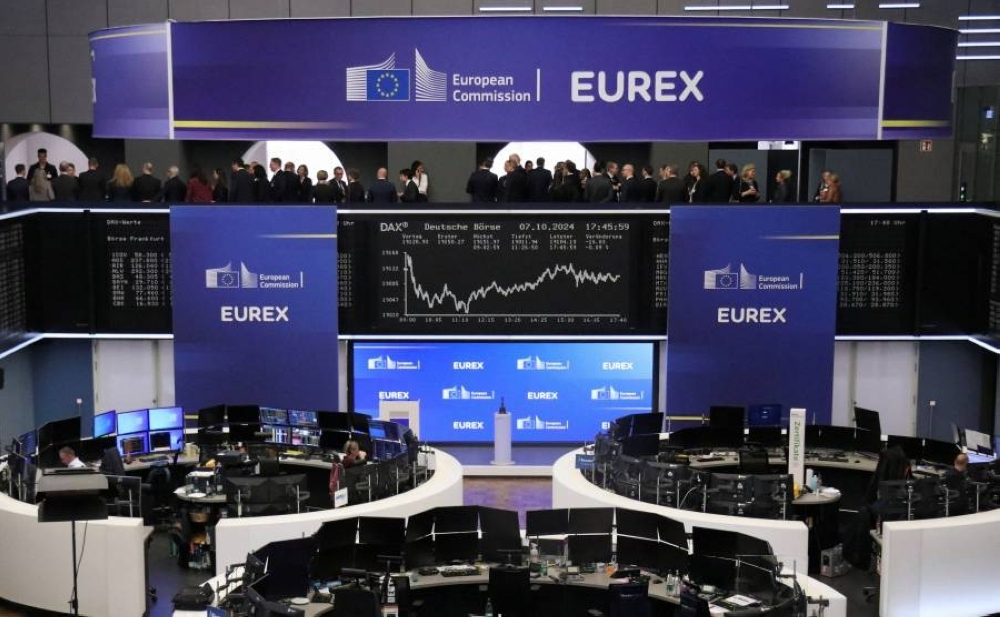
Mixed performance in London's financial markets
British financial markets experienced a mixed day, with the FTSE 100 index posting a notable gain, while the pound continued its decline against other major currencies such as the US dollar and the euro. The FTSE 100, which tracks the 100 largest companies listed on the London Stock Exchange by market capitalization, closed up 0.85%, adding 87.75 points to its value.
Conversely, the British pound came under selling pressure, leading to its decline. At the close of trading in London, the pound was trading at approximately $1.3664 against the US dollar, a decrease of 0.23%. It also weakened against the euro, reaching €1.1567, a drop of 0.20%.
The economic context and the inverse relationship
This divergence in performance reflects a familiar economic phenomenon in the UK markets: the inverse relationship between the value of the pound sterling and the performance of the FTSE 100 index. The primary reason for this is that many of the large companies listed on the index are multinational corporations that generate a significant portion of their profits in foreign currencies, particularly the US dollar. When the pound sterling depreciates, these overseas earnings translate into larger amounts in pounds, boosting the valuations of these companies' shares and driving the index higher.
This development comes amid a complex global economic environment, influenced by multiple factors such as central bank policies to combat inflation, concerns about slowing economic growth, and geopolitical tensions. The Bank of England's interest rate decisions play a pivotal role in determining the pound's trajectory, as do domestic economic data such as inflation rates and GDP growth.
Importance and expected effects
Domestically, the fall in the value of the pound has a dual effect. On the one hand, it increases the cost of imported goods, potentially contributing to inflationary pressures on consumers and businesses that rely on imported raw materials. On the other hand, it makes British exports cheaper and more competitive in global markets, which could support export-oriented manufacturing and service sectors. A weaker pound also makes Britain a more attractive tourist destination for foreign visitors.
Regionally and internationally, investors and trading partners closely monitor the performance of the pound and the British stock market as an indicator of the health of the world's sixth-largest economy. Fluctuations in the pound sterling affect trade and investment flows between the UK and its key partners, such as the European Union and the United States. The stability of London's financial markets, one of the world's leading financial centers, remains vital to the global economy as a whole.