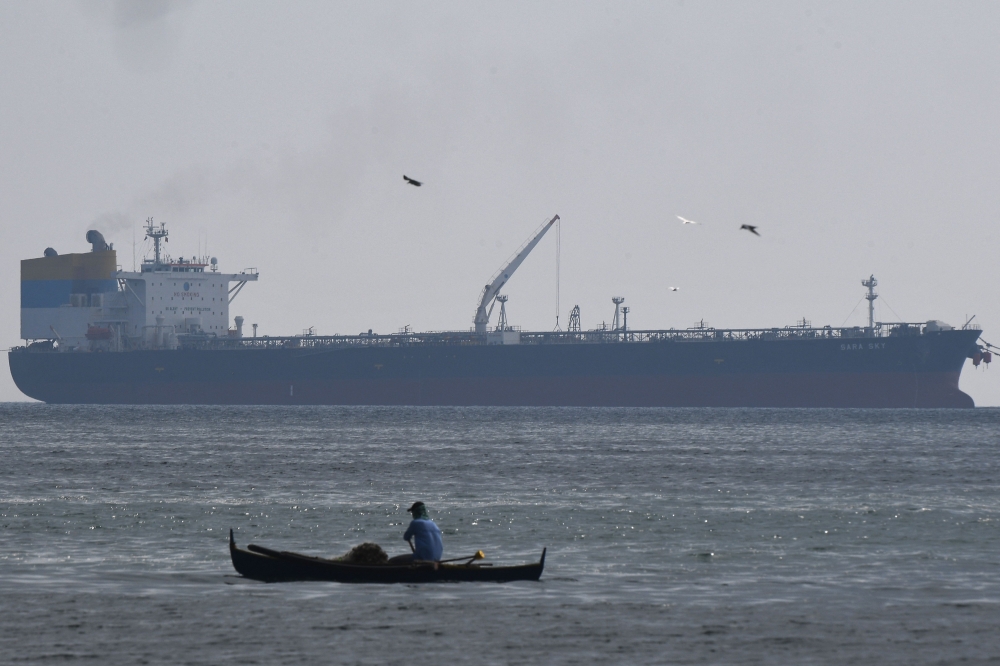
In a significant security development, Turkish maritime authorities reported that a Turkish oil tanker carrying one million barrels of crude oil was attacked in the Black Sea. Initial assessments indicate that the attack, which occurred early Thursday morning, was carried out by a drone suspected to have been launched from underwater. Despite the seriousness of the incident and the enormous size of the cargo, authorities confirmed that there was no oil spill, thus averting a potential environmental disaster.
Details of the targeting of a Turkish oil tanker off the Bosphorus Strait
The Turkish General Directorate of Maritime Authorities stated in an official statement that the oil tanker “Altura” sustained significant damage to its engine room following a powerful explosion that severely shook the bridge. This explosion disabled the ship's essential equipment, rendering it unmanageable. However, the authorities reassured the public that there were no injuries among the crew members, and no visible structural damage was observed on the ship's exterior.
Field reports indicated that the tanker ran aground and came to rest approximately 26 nautical miles from the entrance to the strategic Bosphorus Strait. Global ship tracking data showed that the tanker, a giant Suezmax vessel, was carrying about one million barrels of Russian Urals crude and had departed from the port of Novorossiysk. It is worth noting that the Altura is currently subject to economic sanctions imposed by the United Kingdom and the European Union, but not by the United States. Turkish television channel NTV had previously reported, before official announcements, that the ship had been attacked by a drone, without disclosing its source at the time.
The security context and escalating tensions in the Black Sea
This incident comes at a time of unprecedented geopolitical and security tensions in the Black Sea, particularly since the outbreak of the Russian-Ukrainian conflict. This vital body of water has become a theater for complex military operations, with the warring parties increasingly relying on modern technologies, such as aerial drones and unmanned surface and underwater vessels, to target strategic assets. Historically, the Black Sea has been a crucial waterway for global trade, but the recent militarization of the region has made commercial navigation a perilous undertaking. The use of underwater drones in such attacks reflects a qualitative shift in asymmetric naval warfare tactics, posing new security challenges for littoral states.
Economic repercussions and the impact of the attack on energy markets
Targeting energy infrastructure and commercial vessels has far-reaching consequences that extend beyond the geographical boundaries of the incident. Locally and regionally, this attack places additional pressure on Turkey, as the custodian of the straits (the Bosphorus and the Dardanelles) under the Montreux Convention, which requires it to ensure the safety and security of navigation in one of the world's busiest waterways. Internationally, any threat to oil supplies via the Black Sea is a major concern for global energy markets. Although no oil spill occurred in this incident, the mere targeting of a vessel carrying a million barrels of crude is enough to drive up marine insurance costs and shipping rates. Moreover, a continuation of such incidents could lead to volatility in global oil prices, especially given the complexities imposed by Western sanctions on Russian energy exports, thus jeopardizing the stability of global supply chains.