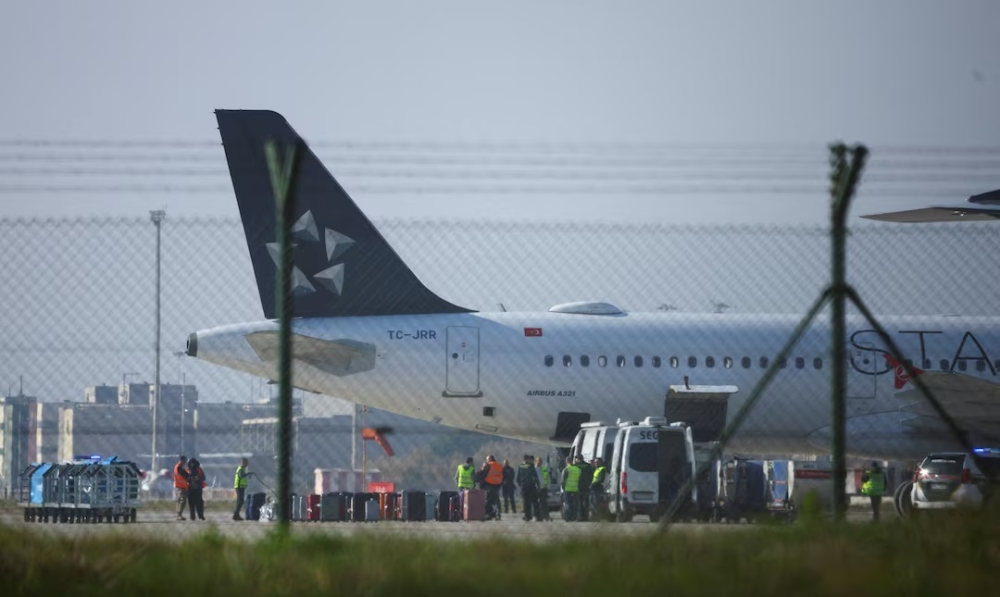
Barcelona's El Prat International Airport was placed on high alert Thursday after a Turkish Airlines flight from Istanbul made an emergency landing. The sudden landing was triggered by a false alarm caused by a passenger's irresponsible action regarding the naming of a Wi-Fi hotspot.
Details of the incident and the false alarm
Official sources reported that the Airbus A321, flight number TK1853, was flying its normal route to Barcelona when the crew and electronic systems detected a newly established Wi-Fi network in the cabin. The problem wasn't the network itself, but the name chosen by the passenger, which included an explicit bomb threat.
In an official statement, Turkish Airlines spokesman Yahya Östün explained the circumstances of the incident, saying: "As the Turkish Airlines flight from Istanbul approached its destination at Barcelona Airport, we detected a passenger creating an internet hotspot during the flight, and giving the network a name that included a bomb threat. As a result, the plane made an emergency landing.".
Security measures and investigations
Upon landing, Spanish authorities treated the situation with utmost seriousness, adhering to international protocols for terrorist threats. Units of the Spanish Civil Guard cordoned off the aircraft in a secure area of the airport, and passengers were disembarked. The aircraft and luggage were then thoroughly searched using sniffer dogs and explosive detection equipment.
After hours of thorough inspection, the Spanish police announced that the alert was false, and no explosives or suspicious objects were found, confirming that the airport had returned to normal operations after the danger had passed.
Aviation security context and the impact of passenger "jokes"
This incident highlights the extreme sensitivity with which the global aviation industry deals with any security threat, no matter how minor or seemingly insignificant. Since the events of September 11th and the evolution of security threats, airlines have adopted a zero-tolerance policy toward any indication of danger. Historically, the world has witnessed similar incidents where Wi-Fi network names like "Galaxy Note 7" (when it was banned) or names containing words like "Bomb" or "Jihad" caused flight delays and significant losses for airlines.
Economic and legal repercussions
Although the incident ended peacefully, its repercussions extend far beyond mere momentary panic. Economically, an emergency landing incurs significant costs for airlines, including fuel expenses, additional airport fees, compensation for passengers experiencing delays, and disruption to flight schedules at the host airport.
Legally speaking, such actions, which some might consider a "joke," fall under the category of crimes that threaten public safety. International and local laws impose severe penalties on those who issue false alarms, which can include imprisonment, hefty fines, and placement on no-fly lists for extended periods or even lifetime bans.