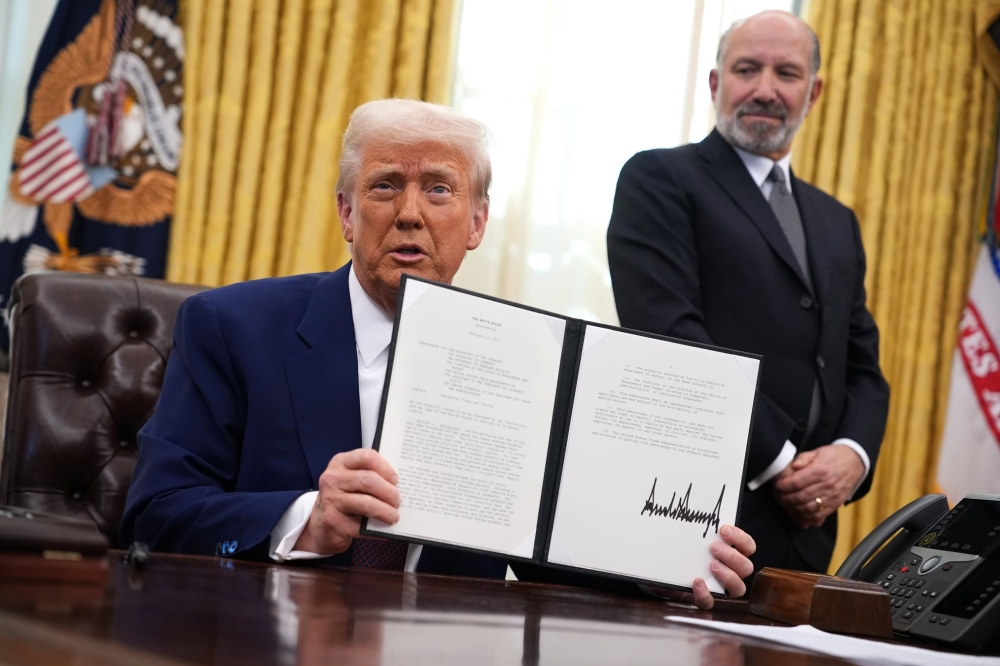
In a significant development reflecting the US administration's move to reduce its foreign commitments, President Donald Trump signed a presidential memorandum on Wednesday withdrawing the United States from 66 international organizations. This step reinforces Trump's "America First" policy, which he has pursued since taking office and which involves reviewing the viability of international agreements and alliances.
Details of the presidential memorandum
The White House announced in an official statement that President Trump signed a memorandum aimed at ending Washington's membership in international entities that "no longer serve American interests." The statement detailed this broad withdrawal, noting that the decision requires all federal departments and agencies to immediately cease participation in and cut funding to 35 independent organizations not affiliated with the United Nations, as well as 31 UN agencies and bodies.
"America First" context and political background
This decision is not an isolated event, but rather part of a long series of decisions by the Trump administration to withdraw from numerous international commitments. The US president subscribes to a political doctrine that questions the effectiveness of the multilateral world order, arguing that the United States bears a huge financial burden funding organizations that do not provide tangible benefits to American citizens and sometimes even adopt political positions hostile to Washington.
Historically, the Trump administration has been marked by high-profile withdrawals, most notably from the Paris Climate Agreement, the United Nations Educational, Scientific and Cultural Organization (UNESCO), and the UN Human Rights Council, as well as the Iran nuclear deal. These moves underscore a consistent approach that favors direct bilateral relations over engagement with bureaucratic international institutions.
Expected repercussions: a geopolitical vacuum and funding crises
This decision has profound financial and political repercussions. Financially, the United States is the largest donor to many of these organizations, meaning its withdrawal will create a massive funding gap that could threaten the continued operation of some humanitarian and development agencies, presenting the international community with significant logistical challenges in compensating for this shortfall.
On the geopolitical front, a US withdrawal from the international stage could create a strategic vacuum that other international powers, such as China and Russia, would seek to fill and expand their global influence. This move could also strain relations with traditional allies in Europe who are committed to the rules-based international order and institutions, potentially reshaping the map of international alliances in the near future.