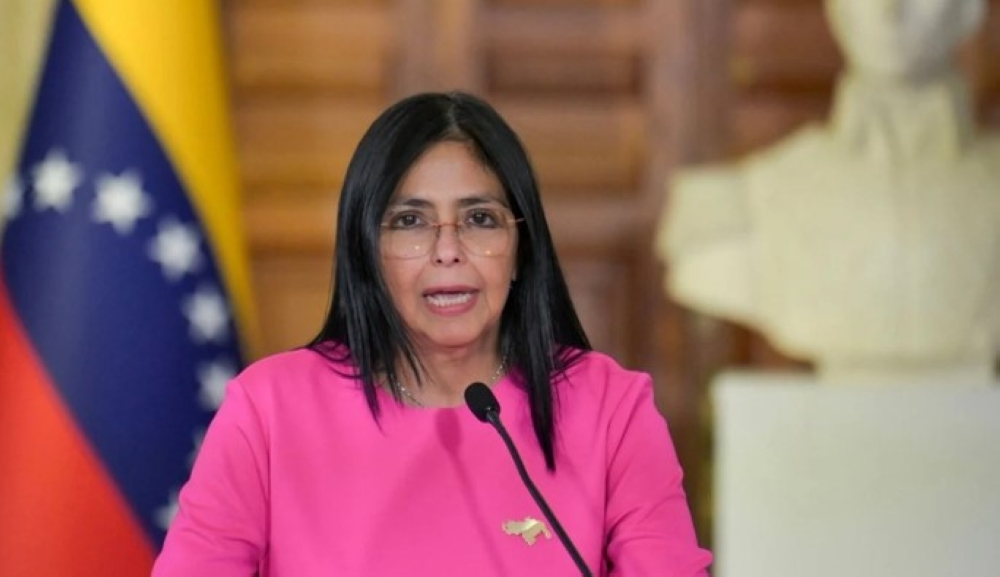
In an unprecedented escalation of the Venezuelan crisis, US President Donald Trump issued a stern warning to Delcy Rodríguez, who assumed the interim presidency of Venezuela following the US military operation that led to the arrest of President Nicolás Maduro. Trump's remarks have left the new leadership in Caracas with very limited options amidst escalating regional and international tensions.
Direct warning and dire consequences
In an exclusive telephone interview with the American magazine "The Atlantic," Trump did not hesitate to threaten the use of force or harsher sanctions if Rodriguez did not fully cooperate with Washington. The US president stated bluntly: "Unless you do the right thing, you will pay a very heavy price, perhaps even more than Maduro." This threat came just hours after US special forces successfully carried out a surprise operation on Saturday, resulting in the capture of Maduro and his wife, a move that radically altered the balance of power in Latin America.
Background of the conflict and military intervention
These rapid developments are the culmination of years of tension between Washington and Caracas, with successive US administrations consistently deeming the Maduro regime illegitimate, accusing it of human rights abuses and undermining democracy. However, the shift from economic sanctions and diplomatic pressure to direct military intervention and the arrest of the head of state represents a dangerous shift in US policy toward neighboring countries, raising serious questions about the future of national sovereignty in the region.
Regional rejection and fears of resource control
On the international and regional levels, the US operation did not go unanswered. A broad coalition of countries, including Brazil, Chile, Colombia, Mexico, Uruguay, and Spain, expressed their deep concern and categorical rejection of unilateral military action. These countries issued a joint statement emphasizing the need to resolve conflicts peacefully and diplomatically, warning that "the US military operation in Venezuela sets a very dangerous precedent for regional peace.".
International concern was not limited to the political sphere; it extended to economic and strategic aspects as well. The joint statement clearly expressed fears of foreign ambitions regarding Venezuela's resources, adding: "We express our concern regarding any attempt at external control or seizure of Venezuela's strategic natural resources." It is worth noting that Venezuela possesses the world's largest proven oil reserves, making any change in its government a matter of global economic significance that would impact energy markets.
An uncertain future
While Washington awaits Delcy Rodríguez's response, Venezuela is in a state of cautious anticipation. Caught between the hammer of American threats and the anvil of internal pressures and regional rejection of foreign intervention, the options available to the interim leadership appear complex, at a time when observers fear the country could descend into widespread chaos with repercussions for the entire Americas.