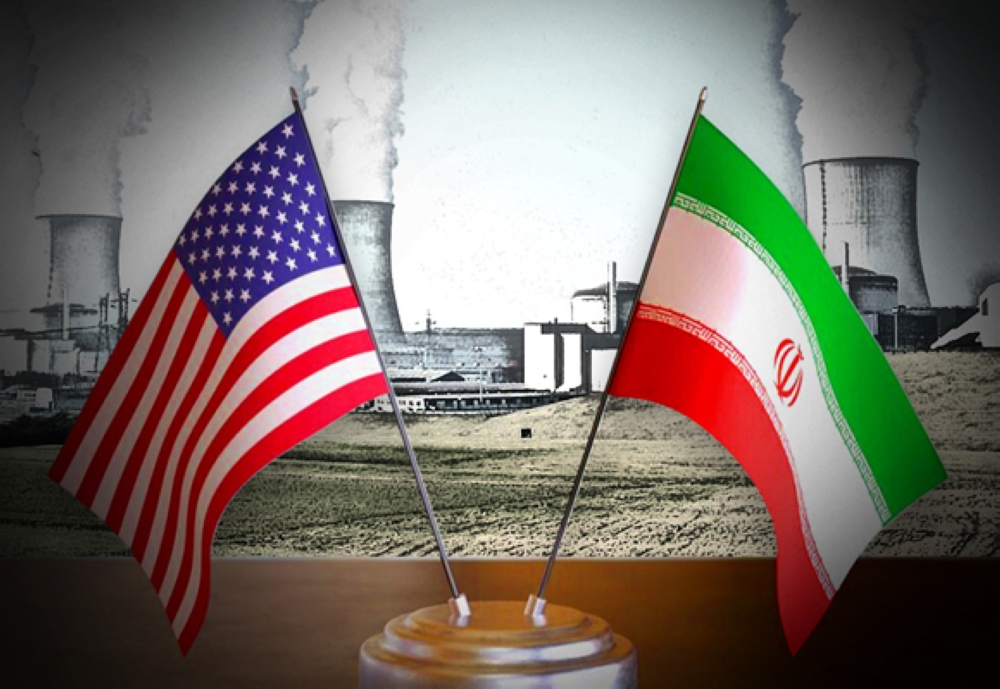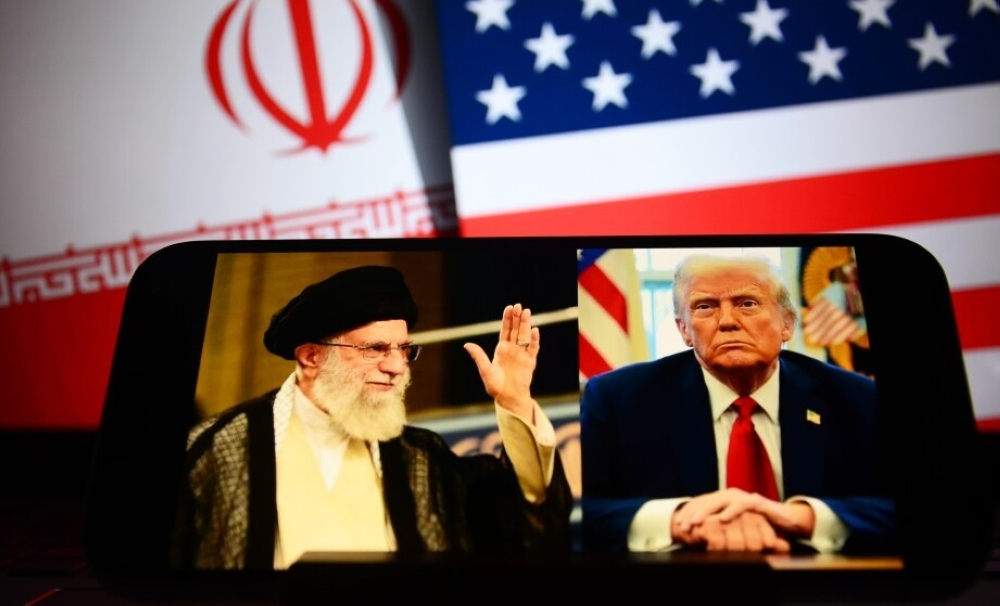
In a statement reflecting the escalating tensions between Washington and Tehran, former US President Donald Trump issued a direct warning to Iranian Supreme Leader Ayatollah Ali Khamenei, asserting that he should be “very worried.” This warning came in an interview with NBC News, coinciding with the US military buildup in the Middle East, a move interpreted as a strong deterrent message to the Iranian regime.
Background to the tension and withdrawal from the nuclear agreement
The roots of this escalation lie in the Trump administration’s decision in May 2018 to unilaterally withdraw from the Iran nuclear deal (the Joint Comprehensive Plan of Action), signed in 2015. Trump deemed the agreement “disastrous” and “the worst deal ever,” believing it did not adequately address Iran’s ballistic missile program and Tehran’s destabilizing role in the region. Following the withdrawal, Washington reimposed crippling economic sanctions on Iran as part of a campaign dubbed “maximum pressure,” aimed at paralyzing the Iranian economy and forcing Tehran back to the negotiating table for a new, more comprehensive agreement.
Escalating confrontation in the Gulf waters
The period preceding Trump's remarks witnessed a series of serious incidents in the Gulf region, raising international concerns. These incidents included mysterious attacks targeting oil tankers in the Gulf of Oman, which Washington and its allies were quick to blame on Iran. Tensions reached a peak when Iran shot down a sophisticated US Global Hawk drone over the Strait of Hormuz, claiming it had violated Iranian airspace—a claim the United States denied. In response, Trump ordered military strikes against Iranian targets but reversed his decision at the last minute, explaining that he wanted to avoid casualties and that the response would not be proportionate to the downing of an unmanned aircraft.
Strategic importance and international influence
This confrontation is of paramount strategic importance given its location in the Strait of Hormuz, the world's most vital shipping lane for oil. Any disruption or military conflict in this region would likely lead to a dramatic surge in global oil prices and threaten the stability of the global economy. Regionally, Iranian actions have alarmed traditional US allies such as Saudi Arabia and the United Arab Emirates, who view Tehran's policies as a direct threat to their security. Internationally, the European signatories to the nuclear agreement (Britain, France, and Germany) have attempted to preserve the agreement and de-escalate tensions, but their efforts have been thwarted by the US "maximum pressure" campaign and Iran's countermeasures, which have included a gradual rollback of some of its nuclear commitments.