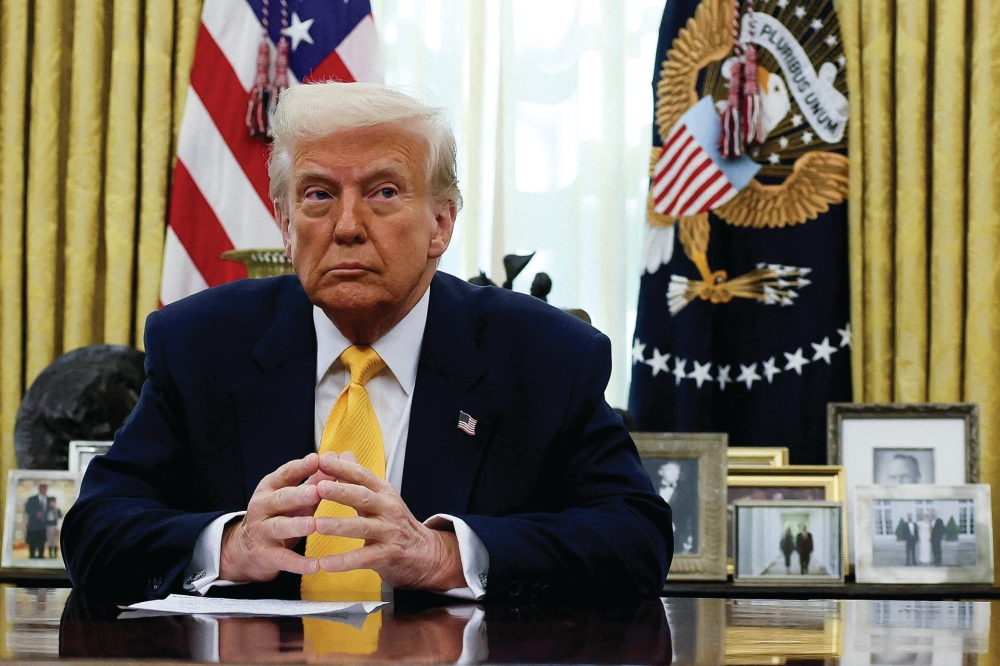
US President Donald Trump escalated his rhetoric against Iran, threatening “very painful” consequences if diplomatic efforts fail to reach a new agreement on its nuclear program. Trump expressed hope that the situation would be resolved within the next month, indicating that the alternative to the agreement would be severe for Tehran.
In his remarks, Trump, responding to a question about his talks with Israeli Prime Minister Benjamin Netanyahu regarding the Iranian issue, said: “We have to reach an agreement, otherwise it will be very painful… I don’t want that to happen, but we have to reach an agreement.” He added emphatically: “Not reaching an agreement will be very painful for Iran.”.
Background to the tension: From the nuclear agreement to the policy of maximum pressure
These threats come in the context of the “maximum pressure” policy pursued by the Trump administration since its unilateral withdrawal from the landmark nuclear agreement in May 2018. The agreement, formally known as the Joint Comprehensive Plan of Action (JCPOA), was signed in 2015 between Iran and the P5+1 group of nations: the United States, Britain, France, Russia, China, and Germany. The agreement aimed to significantly restrict Iran’s nuclear activities in exchange for the lifting of international economic sanctions.
However, President Trump deemed the agreement “disastrous” and “the worst deal in history,” arguing that it failed to address Iran’s ballistic missile program or its destabilizing regional role, in addition to containing “sunset clauses” that would allow Iran to resume certain nuclear activities after the agreement’s expiration. Consequently, Washington reinstated crippling economic sanctions targeting vital sectors such as oil and banking, aiming to cripple the Iranian economy and force Tehran back to the negotiating table for a new deal on American terms.
Importance and potential impacts on the region and the world
This escalation carries significant regional and international implications. Regionally, the tension between Washington and Tehran is raising concerns among US allies, such as Israel and Saudi Arabia, about a potential military confrontation that could destabilize the entire Middle East. Trump's statements coincided with reports that the US administration was considering bolstering its military presence in the region, including the possible deployment of additional aircraft carriers, as a deterrent to Iran.
Internationally, the US stance has led to disagreements with European allies who have tried to salvage the original nuclear agreement, asserting that it is the best available means to prevent Iran from developing a nuclear weapon. Should diplomatic efforts fail, moving to what Trump has termed "phase two" could mean imposing further crippling sanctions or even resorting to other options, thus plunging the world into an uncertain and perilous future regarding nuclear proliferation and global energy security.