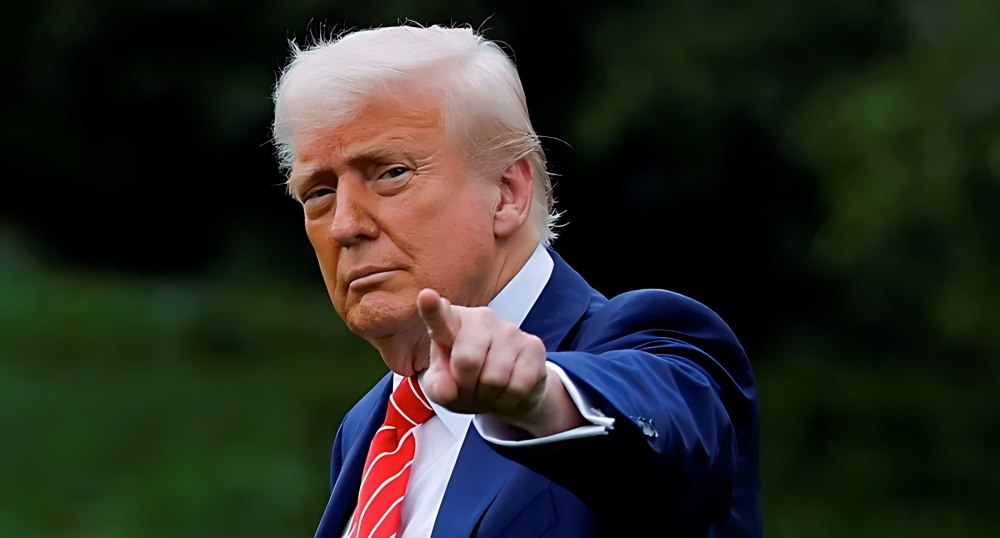
In a further escalation of his hardline stance on immigration, former US President Donald Trump announced his intention to impose a permanent ban on immigration from what he termed "Third World" countries if he were to return to the White House. This controversial announcement came in the wake of a tragic shooting in Washington, D.C., in which an Afghan national shot and killed two National Guard soldiers.
On his social media platform, Trump wrote: “I will permanently halt immigration from all Third World countries to allow the U.S. system to fully recover.” He didn't stop there, but threatened to “cancel millions of approved applications granted under his predecessor Joe Biden and deport anyone who does not bring added value to the United States.”.
Historical background of Trump's policies
This stance is not entirely new; rather, it is an extension and escalation of the policies Trump pursued during his first term (2017-2021). His administration was notorious for imposing strict immigration restrictions, most notably the executive order known as the "travel ban," which targeted citizens of several Muslim-majority countries. He also adopted a "zero tolerance" policy on the southern border, which resulted in the separation of thousands of children from their families, in addition to his relentless pursuit of building a wall along the border with Mexico. These new statements form a key part of his election campaign, as he places border security and immigration at the heart of his political platform, targeting his conservative base.
Details of the incident and its immediate repercussions
Trump's remarks came after he announced in a televised address the death of Army Specialist Sarah Beckstrom, one of the two National Guard members shot near the White House. According to authorities, the attacker was a 29-year-old Afghan national who had arrived in the United States in 2021 after serving alongside the U.S. military in Afghanistan. Following the incident, the head of the Bureau of Citizenship and Immigration Services, Joseph Edlow, announced a "comprehensive and thorough review of every green card issued to nationals of countries of concern," which includes Afghanistan and 18 other countries such as Venezuela, Haiti, and Iran. The processing of immigration applications for Afghans has also been suspended indefinitely.
Importance and expected effects
If such a policy were implemented, its repercussions would be far-reaching, both domestically and internationally. Domestically, these measures are expected to face significant legal challenges from civil rights organizations, which will argue that they are discriminatory and unconstitutional. They could also negatively impact vital economic sectors that rely on migrant labor. Internationally, this approach could strain diplomatic relations with dozens of countries and damage the United States' image as a destination for immigrants and refugees. It also raises ethical questions about the fate of thousands of allies, such as the Afghans who risked their lives to assist American forces, only to find themselves now threatened with deportation or being barred from entry.
Trump asserted that his potential administration would “expel anyone who does not represent added value to the United States” and “strip immigrants who pose a threat to civil peace of their citizenship,” signaling a new phase of heated debate about America’s identity and the future of its immigration system.