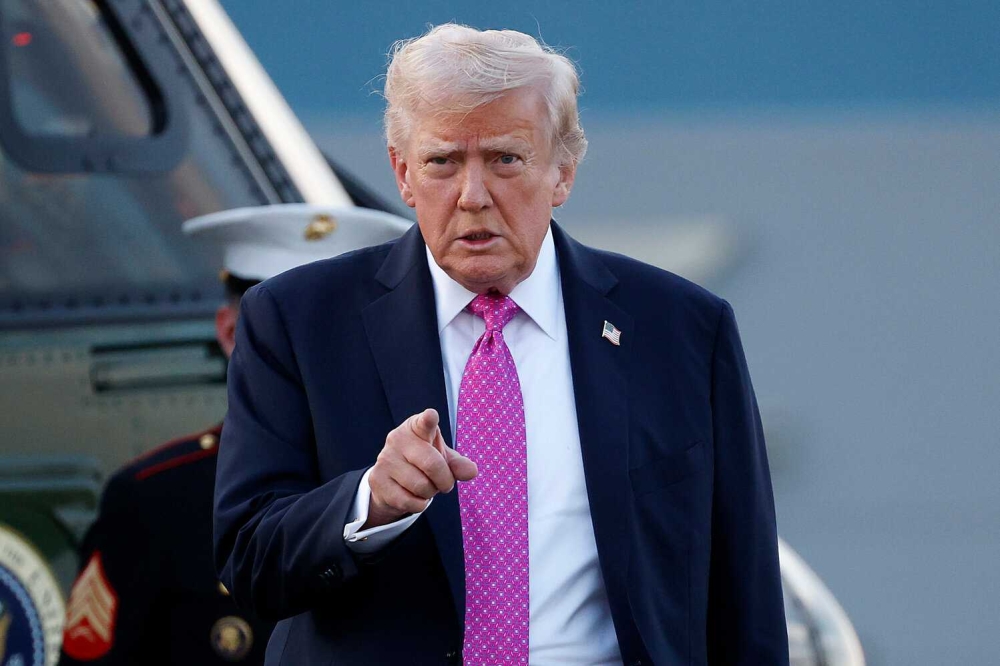
US President Donald Trump issued a stark warning, demanding that negotiations with Iran be taken very seriously in an effort to end the state of war and escalating tensions in the Middle East. These remarks come in the wake of the US and Israeli attack on the Islamic Republic on February 28, placing the entire region at a critical crossroads that requires urgent diplomatic intervention to avert further military escalation.
In a comment on his social media platform Truth Social, Trump explained that Iranian negotiators are desperately seeking and pleading for a deal with Washington. He indicated that this approach is the only logical option available to them at the moment, especially after the heavy military losses they have recently suffered. He added firmly, "They better get serious soon, before it's too late, because when it happens, there's no going back, and it won't be pretty at all.".
Historical context and development of negotiations with Iran
The current tensions are not a recent development, but rather an extension of a long history of tension between Washington and Tehran. Historically, US-Iranian relations have witnessed dramatic shifts, most notably the US withdrawal from the nuclear agreement (the Joint Comprehensive Plan of Action) in 2018. This was followed by the imposition of a “maximum pressure” campaign that included harsh economic sanctions aimed at crippling vital sectors of the Iranian economy, primarily the oil and banking sectors. These accumulated tensions have made any attempt to revive the diplomatic track or initiate a new round of negotiations with Iran a complex challenge requiring substantial concessions and firm security guarantees from both sides, especially given the rapidly evolving geopolitical landscape in the region.
Regional and international repercussions of the current tensions
These developments are of paramount importance, extending beyond local boundaries to cast a shadow over the regional and international landscapes. Regionally, the Middle East is a vital artery for global energy supplies, and any large-scale military escalation could lead to unprecedented disruptions in oil markets, threatening the stability of the global economy. Furthermore, the continuation of the conflict risks exacerbating humanitarian crises and intensifying political and sectarian polarization in neighboring countries already facing complex internal challenges.
On the international level, the success or failure of diplomatic efforts will determine the shape of strategic alliances in the coming phase. Major powers are closely monitoring the situation, as other countries seek to bolster their influence in the region, exploiting any vacuum that might arise from the faltering of American diplomacy. Therefore, reaching a comprehensive settlement is not limited to neutralizing the immediate military threat; it extends to redrawing the security map of the Middle East in a way that guarantees long-term stability and prevents the region from sliding into a devastating war that could jeopardize international peace and security.