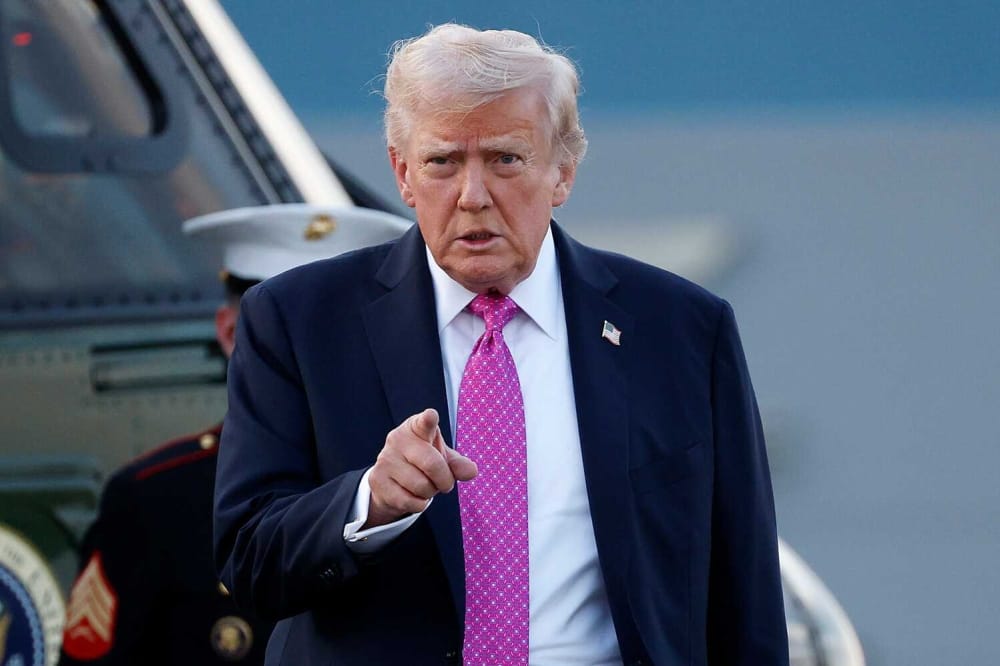
Amid escalating tensions in the Middle East, Trump's threats against Iran as a decisive factor in current events. The US president has vowed to unleash "the gates of hell" on Iran if it does not acknowledge military defeat and accept a comprehensive agreement to end the ongoing conflict. These firm statements come at a sensitive time, as international actors seek a way out of the crisis that has cast a shadow over regional stability and the global economy.
Historical context and roots of tension between Washington and Tehran
To understand the implications of these statements, one must consider the broader context and historical background of US-Iranian relations. These relations have long been characterized by extreme tension, particularly since the US withdrawal from the nuclear agreement in 2018 under President Trump and the imposition of a “maximum pressure” campaign. This policy has crippled the Iranian economy and heightened military tensions in the Persian Gulf. Today, this dynamic is resurfacing as the US administration seeks to impose stringent conditions to ensure that Tehran does not acquire nuclear weapons or threaten international navigation in sensitive waterways.
Details of Trump's threats to Iran and the White House's stance
Trump's threats against Iran were not limited to passing remarks, but took on an official and firm tone. In this context, White House spokeswoman Caroline Leavitt stated clearly during a press conference on Wednesday: "If Iran does not accept the reality of the current moment, and if it does not understand that it has been militarily defeated and will continue to suffer defeat, President Trump that it receives a blow stronger than ever before." Leavitt added, emphasizing that the American president "does not threaten idly, and he is prepared to unleash hell on Iran should it miscalculate again." Despite this escalating rhetoric, the spokeswoman confirmed that diplomatic talks were still ongoing behind the scenes.
Iranian conditions and the American ceasefire proposal
On the other hand, in its first public acknowledgment of the situation, Iranian state television announced that talks were underway to end the war. A senior Iranian official was quoted as saying that Iran's reaction to the American proposal to end the war was negative, emphasizing that "the war will end when Iran decides to end it, not when Trump decides to." Tehran has set five basic conditions for ending the conflict, most notably obtaining international guarantees against future attacks and demanding financial compensation for war damages. This rejection came after two senior officials in Islamabad revealed to AFP that Pakistan had acted as an intermediary and conveyed to Tehran a 15-point plan proposed by the United States to end the war, which began on February 28.
Regional and international repercussions and their impact on energy markets
These developments are of paramount importance and have a profound impact at the local, regional, and international levels. According to The New York Times, citing officials, the proposed plan addresses Iran’s nuclear and missile programs, as well as securing maritime routes. This last point is of utmost importance, as Iran’s de facto closure of the Strait of Hormuz through attacks and ongoing threats has destabilized global markets and caused a significant rise in oil prices, threatening a global energy crisis.
Regionally, Iranian actions are causing widespread concern among neighboring countries seeking to maintain regional stability. In this context, Saudi Arabia welcomed international resolutions condemning Iranian aggression, as shown in the following statement:
The Ministry of Foreign Affairs: #TheKingdom welcomes the UN Human Rights Council's unanimous adoption of a resolution on the human rights implications of Iran's unjustified attacks on the Kingdom, Bahrain, Kuwait, Oman, Qatar, the UAE, and Jordan. #Today
For more: https://t.co/6NxYXsqoTh pic.twitter.com/W7VTZMpEwx
— Al-Youm Newspaper (@alyaum) March 25, 2026
The continuation of this escalation portends profound geopolitical changes, making the coming days crucial in determining the course of international peace and security and the global economy, which is heavily dependent on the stability of energy supplies from the Middle East region.