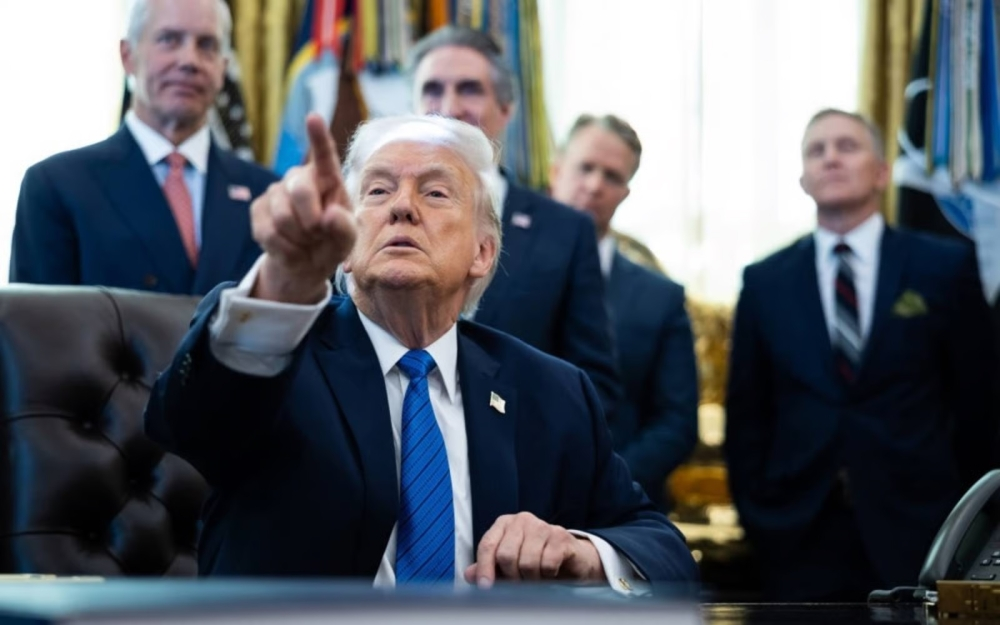
Former US President Donald Trump renewed his harsh rhetoric against Iran, warning that “bad things” could happen if the upcoming negotiations over its nuclear program fail. This statement comes at a crucial time, as Tehran and Washington prepare for a new round of talks that could shape the future of relations between the two countries and the security situation in the entire Middle East region.
Speaking to reporters at the White House, Trump said, “We are talking to them now, we are talking to Iran. If we can work out that would be great, and if we can’t, then very bad things will probably happen.” This statement reflects Trump’s usual strategy of combining military threats with calls for negotiations, a policy aimed at exerting maximum pressure to force Tehran to make substantial concessions.
A tense historical background: from the nuclear agreement to the policy of maximum pressure
The roots of the current tensions can be traced back to 2018, when then-President Trump withdrew the United States from the landmark nuclear agreement known as the Joint Comprehensive Plan of Action (JCPOA), signed in 2015 between Iran and the P5+1 group of world powers. The agreement aimed to curb Iran's nuclear capabilities in exchange for lifting economic sanctions. However, Trump deemed the agreement "disastrous" and reimposed crippling economic sanctions as part of a campaign he called "maximum pressure," intended to cripple the Iranian economy and force it to negotiate a new agreement encompassing its missile program and regional policies.
In response, Iran began gradually withdrawing from its commitments under the agreement and increased its uranium enrichment levels, raising international concerns about its potential pursuit of nuclear weapons. During this period, the region witnessed a dangerous military escalation, with the United States reinforcing its military presence by deploying the aircraft carrier USS Abraham Lincoln and fighter squadrons, bringing the region to the brink of direct confrontation on several occasions.
The importance of negotiations and their expected impact
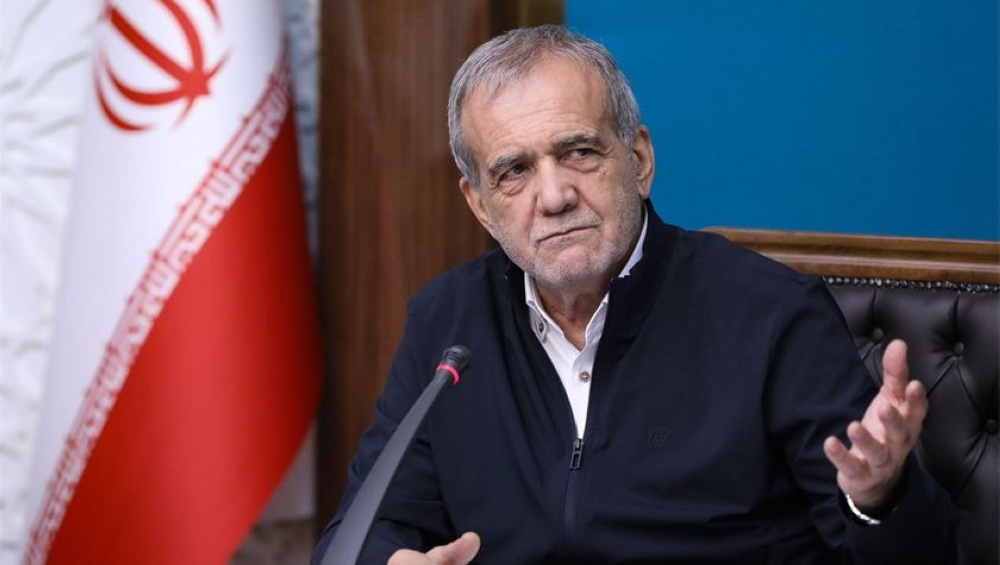
This new round of negotiations is of exceptional importance on all levels. Domestically in Iran, the decision by the new president, Masoud Pezeshkian, to initiate talks is seen as a step that may offer hope for alleviating the immense economic burden the Iranian people are suffering due to sanctions. The success of the negotiations represents an economic lifeline for his administration, while their failure could exacerbate the internal crises.
Regionally, neighboring countries, particularly Israel and Saudi Arabia, are closely monitoring these talks. A diplomatic agreement could help reduce tensions in the region and curb the arms race, while failure could lead to a wider regional military escalation. Internationally, Washington’s European allies view diplomacy as the best option for preventing Iran from developing a nuclear bomb and preserving the global nuclear non-proliferation regime. Regional stability is also essential to ensuring the uninterrupted flow of global energy supplies.
In this context, media reports, including the American website “Axios”, quoted informed sources as saying that Iranian Foreign Minister Abbas Araqchi and US envoy Steve Wittkopf are expected to meet in Istanbul, in a move that represents the first serious test of the intentions of the two sides under the new Iranian administration and the ongoing American threats.