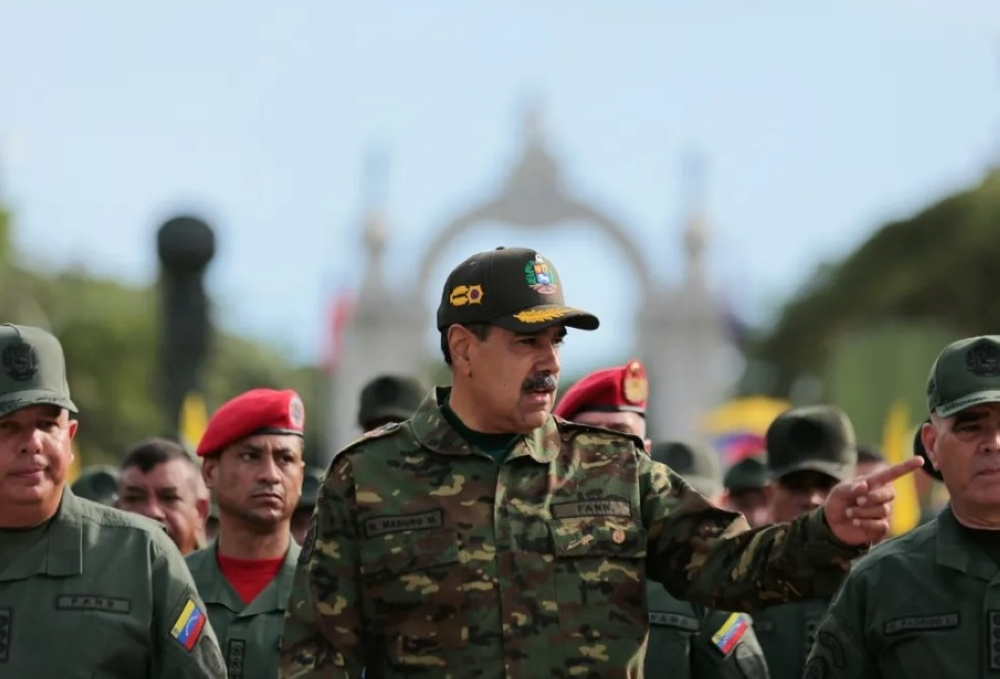
In a new escalation that further heightens tensions between Washington and Caracas, former US President Donald Trump announced that the United States is preparing to launch ground operations targeting drug traffickers in Venezuela, complementing its existing maritime efforts. This announcement came during a televised address to the armed forces on Thanksgiving Day, where Trump indicated that the crackdown on maritime smuggling routes has forced traffickers to rely on land routes, asserting that his administration will address this shift very soon.
Background to the tension between Washington and Caracas
This threat did not come out of nowhere; it is the latest in a long series of deteriorating relations between the United States and Venezuela, which have worsened significantly under President Nicolás Maduro. For years, Washington has imposed harsh economic and political sanctions on Maduro's government, accusing it of corruption, human rights abuses, and undermining democracy. This policy culminated in the Trump administration's recognition of opposition leader Juan Guaidó as Venezuela's interim president, in an attempt to isolate Maduro internationally and force him to step down.
Drug control as a tool of political pressure
The United States uses drug trafficking as one of its main justifications for increasing pressure on Venezuela. Washington accuses high-ranking officials in the Maduro government, including the president himself, of involvement in “narco-terrorism” and facilitating the flow of cocaine shipments from neighboring Colombia to markets in North America and Europe. In this context, the U.S. Southern Command (SOUTHCOM) has deployed significant military assets to the Caribbean, including the aircraft carrier USS Gerald Ford, under the guise of counter-narcotics operations. These naval operations have already resulted in the interception of more than 20 vessels and the deaths of dozens of suspected drug traffickers.
Importance and potential impacts
The threat of ground operations, even on a limited scale, carries serious repercussions both domestically and regionally. Domestically, Venezuelan President Nicolás Maduro views these moves as a direct threat to his country's sovereignty and a prelude to military intervention aimed at overthrowing his regime and seizing Venezuela's vast oil reserves. Regionally, any US military action on Venezuelan soil could destabilize the entire region and exacerbate the Venezuelan refugee crisis in neighboring countries like Colombia and Brazil. Internationally, this policy is alarming Maduro's allies, particularly Russia and China, potentially transforming the Venezuelan crisis into a new arena for global geopolitical competition. While Trump has been sending mixed signals, oscillating between threatening military action and expressing a willingness to engage in dialogue with Maduro, the situation in Venezuela remains precarious, with the humanitarian crisis intertwined with complex international political calculations.