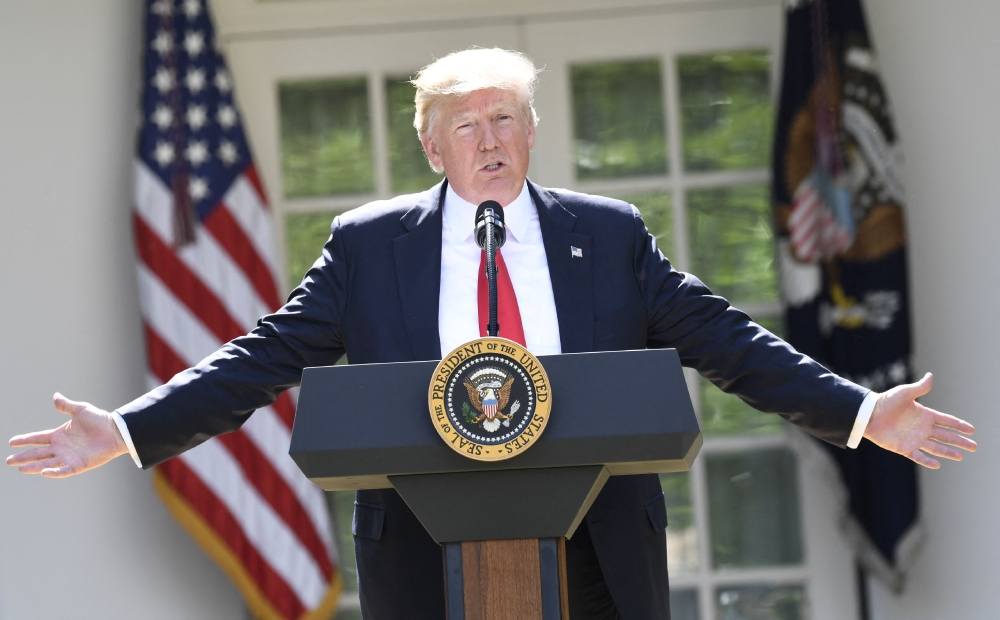
In a new escalation of economic pressure, US President Donald Trump announced on Monday that his administration intends to impose a 25% tariff on any country that continues to trade with Iran. This announcement comes at a critical time as Tehran faces a wave of widespread anti-government protests, the largest in years, placing the Iranian regime between the jaws of internal pressure and external sanctions.
The context of sanctions and their impact on global markets
This threat is not merely an administrative measure; it represents a new link in the chain of the "maximum pressure" strategy aimed at isolating Tehran economically from the world. Historically, the United States has relied on sanctions to reduce Iran's oil and non-oil revenues, but the threat of imposing high tariffs on "third parties" (i.e., Iran's trading partners) shifts the battle to a broader global trade level.
These statements have sparked serious concerns in international markets about the potential for a new tariff war, which could lead to significant disruptions in supply chains and global trade, already turbulent in recent months. Financial institutions fear that countries importing Iranian energy and goods will be forced to seek costly alternatives to avoid US wrath.
Map of Iran's trading partners
Despite sanctions, Iran, an OPEC member, managed to maintain trade channels with 147 partners in 2022, according to World Bank data. Fuel is the backbone of Iranian exports, while its imports are concentrated in intermediate goods, food, and industrial equipment. The following is a breakdown of the countries most likely to be affected by the US decision:
1. China: The largest economic artery
China is Iran's largest trading partner, with Iranian exports to China reaching $22 billion in 2022, more than half of which was fuel. In return, Beijing exported $15 billion worth of goods to Tehran, making it the most likely target for these tariffs.
2. India and Turkey: Intertwined Regional Relations
Official data reveals the extent of regional trade interdependence; trade between India and Iran reached $1.34 billion during the first ten months of 2025, with Indian exports concentrated on basmati rice and pharmaceuticals. Turkey's exports to neighboring Iran totaled $2.3 billion throughout 2025, compared to imports of $2.2 billion, reflecting a delicate trade balance that could be disrupted by the new tariffs.
3. Europe and Asia: Disparity in figures
In Europe, Germany saw a slight increase in its imports from Iran, rising by 1.7% to €217 million by November 2025, despite a 25% decrease in its exports to Tehran. In East Asia, South Korean exports to Iran reached $129 million, while Japan maintained limited trade, primarily involving fruit imports and exports of some machinery and vehicle engines.