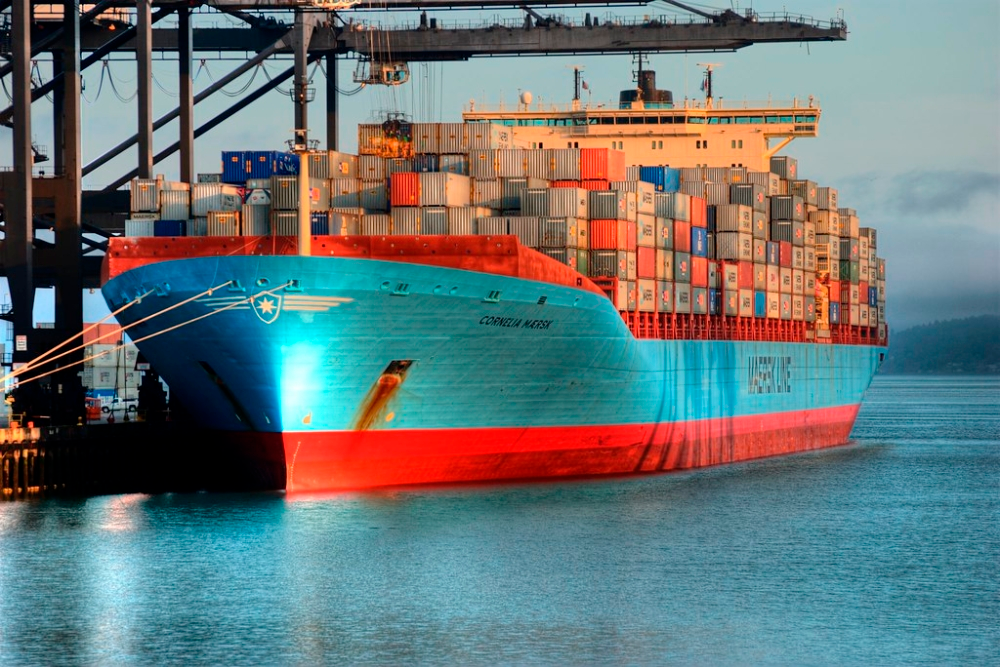
On Wednesday, US President Donald Trump issued an exceptional decision granting a temporary 60-day waiver from US maritime shipping regulations, known as the Jones Act . This strategic move comes as part of his efforts to stabilize global and domestic oil markets amid escalating geopolitical tensions and ongoing conflicts with Iran, which have cast a long shadow over energy supplies. White House Press Secretary Carolyn Leavitt confirmed in an official statement that this temporary suspension will allow for the freer and more flexible flow of vital resources, such as oil, natural gas, fertilizers, and coal, to various US ports.
Historical roots and purpose of Jones's legislation
To understand the implications of this decision, we must return to its historical context. The Jones Act, formally known as the Maritime Trade Act, was signed into law by former US President Woodrow Wilson in 1920. This legislation, enacted in the aftermath of World War I, aimed primarily to protect and develop the domestic shipping industry and ensure that the United States possessed a strong merchant fleet capable of supporting the economy in peacetime and aiding the armed forces in wartime. The law strictly stipulated that goods transported between US ports must be carried out exclusively by ships built in the United States, owned by Americans, flying the American flag, and operated by American crews. Despite its strategic importance, the law has long faced harsh criticism as a form of protectionism that raises transportation costs and restricts free competition.
The impact of regional tensions on energy supplies
The exemption from this legislation coincides with a continued surge in oil prices due to conflicts and tensions with Iran in the Middle East. Key energy infrastructure has been repeatedly attacked, disrupting supply chains, particularly given the ongoing threats to close the Strait of Hormuz, a vital artery for global oil trade. This underscores the significance of the event both regionally and internationally; the stability of energy markets impacts not only the US economy but also inflation and economic growth rates worldwide.
Will the temporary suspension succeed in curbing oil prices?
In this context, opinions varied on the effectiveness of this decision. According to Dalip Singh, chief global economist at asset management firm PGIM, fewer than 100 vessels currently comply with the provisions of the aforementioned law. Therefore, the exemption opens the door for a much larger number of international oil tankers to transport fuel between US ports, potentially alleviating logistical bottlenecks. However, Singh noted that the actual impact may be limited due to a structural mismatch between US consumption needs and refinery capacity. Most US refineries were designed primarily to process heavy crude oil imported from the Middle East, while the US mainly produces light shale oil. Singh explained in a note to clients: “Simply put, the US can now transport fuel more easily, but it still cannot refine enough of its own domestic production to achieve complete self-sufficiency.”.
Security concerns and labor criticism of the decision
Domestically, the decision did not pass without strong opposition. A coalition of nine U.S. maritime labor organizations expressed “grave concern” over the suspension of the law. In a joint statement, these organizations explained that this broad exemption “undermines U.S. national security, weakens the nation’s military readiness, and grants vital maritime work to foreign ship operators at the expense of domestic employment.” The unions also argued that the move would not significantly reduce gasoline prices for the end consumer. The labor organizations added, “It has become clear that the primary driver of gasoline prices remains the global cost of crude oil, and multiple economic analyses show that the cost of shipping domestically is less than one cent per gallon, meaning that suspending the law will not provide the magic bullet for inflation.”.