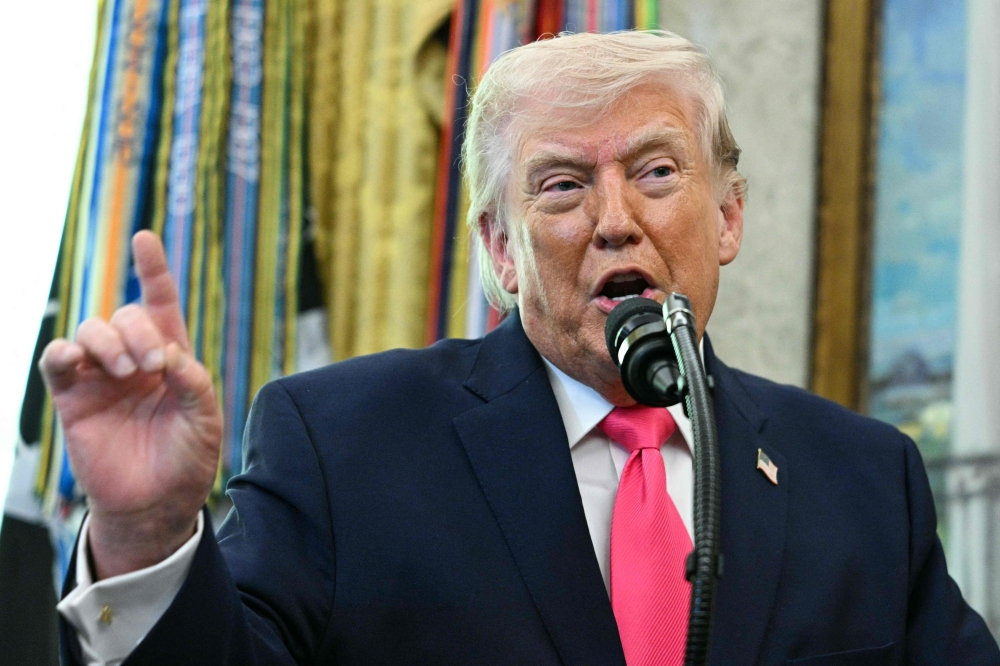
Trump's recent remarks about Iran have sparked widespread interest in global political and economic circles, with the US president revealing that the United States had received a "very big gift" from Tehran related to the oil and gas sector. Speaking to reporters at the White House on Tuesday, Trump indicated that this gift was worth a considerable sum of money, without elaborating on its nature or how it was delivered. This has opened the door to much speculation about the future of relations between the two countries and the potential impact on global energy markets.
The historical roots of tensions and the impact of Trump's statements about Iran
To understand the dimensions of these developments, one must consider the broader context and historical background of US-Iranian relations. These relations have been characterized by decades of persistent tension, particularly since the US withdrawal in 2018 from the Iran nuclear deal (the Joint Comprehensive Plan of Action) during Trump's first term. This was followed by the imposition of harsh economic sanctions primarily aimed at crippling Tehran's ability to export oil and gas, the lifeblood of the Iranian economy. Therefore, Trump's statements about Iran today represent a significant shift, or perhaps a new negotiating tactic based on a policy of maximum pressure combined with the opening of back channels of diplomacy to achieve geopolitical and economic gains for Washington.
Behind the scenes of the current negotiations to halt the escalation
In a related development, the US president confirmed that his administration is currently engaged in direct and indirect negotiations with Tehran aimed at achieving a ceasefire and de-escalating the ongoing conflict that is casting a shadow over the stability of the Middle East. Trump emphasized the seriousness of these efforts, stating, "What I said yesterday is absolutely true; we are currently negotiating." To further underscore these efforts, Trump revealed the high-level team tasked with managing this sensitive issue, which includes prominent figures in his administration, among them his special envoy, Steve Wittkopf, his son-in-law and advisor, Jared Kushner, as well as Vice President Jay D. Vance and Secretary of State Marco Rubio. The involvement of this team reflects the paramount importance the new US administration places on resolving the situation in the Middle East.
Strategic importance and expected repercussions on energy markets
These developments are of paramount importance and have anticipated repercussions at the local, regional, and international levels. Internationally, the Iranian oil and gas sector is a key driver of energy markets; any US-Iranian understanding could lead to the resumption of millions of barrels of Iranian oil exports to the global market, inevitably impacting global prices and the strategies of the OPEC+ alliance. Regionally, the success of these negotiations would contribute to reducing security tensions in the Arabian Gulf and the Strait of Hormuz, through which a significant portion of the world's energy supply passes, thus enhancing the stability of neighboring countries. Domestically, in the United States, achieving such a diplomatic and economic breakthrough would be considered a major accomplishment for the Trump administration, bolstering its domestic standing and supporting the US economy by stabilizing fuel prices and securing vital strategic interests.