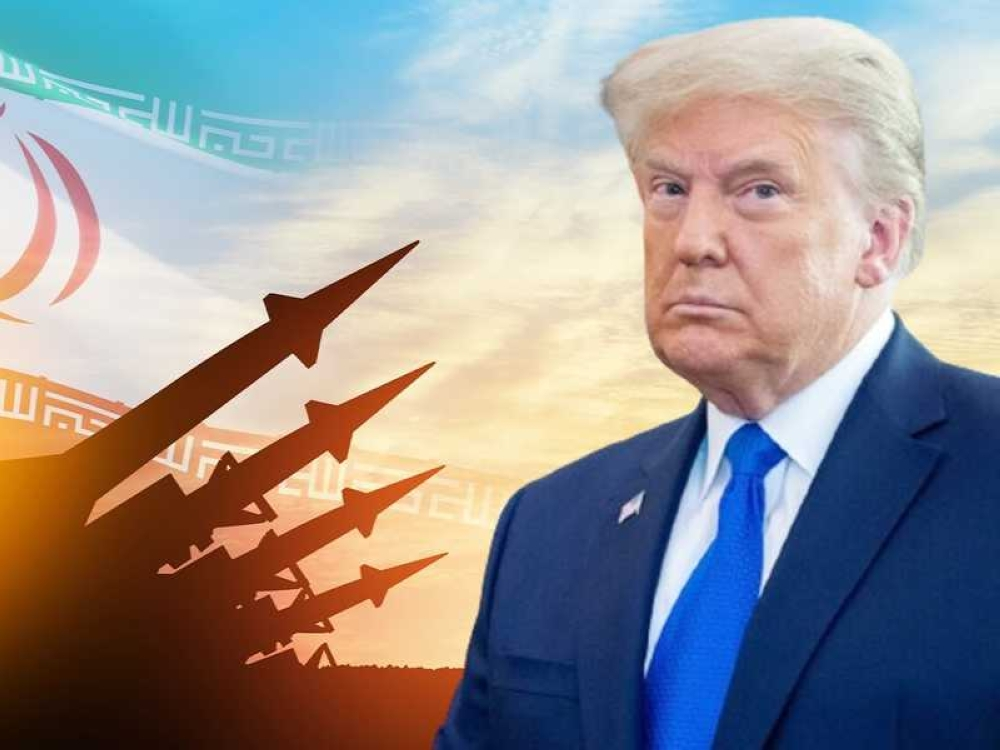
In an unprecedented statement from the White House, US President Donald Trump announced on Monday, for the first time, a specific and clear list of targets for war against Iran . This announcement marks a radical shift in the rules of engagement, as the US administration has moved from threatening economic sanctions to defining a strategic military target bank aimed at completely crippling Tehran's military and nuclear capabilities.
In his speech, the US president outlined four key missions for American forces, placing Tehran's missile capabilities at the forefront. "First, we will destroy Iran's ballistic missile capabilities," Trump said, referring to the arsenal that Washington and its allies have long considered a direct threat to regional security.
Details of the US military strategy
The US president didn't limit his remarks to missiles, but moved on to the naval and nuclear dimensions, adding: "Secondly, we will completely destroy their naval power." This objective clearly indicates Washington's desire to secure international waterways, specifically the Strait of Hormuz, from any potential Iranian threats.
Third, Trump emphasized the enduring red line of US policy, stating, "Third, we want to ensure that the world's leading state sponsor of terrorism never acquires nuclear weapons." The president concluded his list of objectives by focusing on Tehran's regional influence, saying, "Finally, we want to ensure that the Iranian regime cannot arm, fund, and command terrorist armies outside its borders," a clear reference to Iranian-backed militias in the region.
Context of escalation: From the nuclear agreement to open confrontation
This announcement cannot be viewed in isolation from the long history of tension between the two countries. Since the United States withdrew from the Joint Comprehensive Plan of Action (JCPOA) in 2018, Washington has pursued a policy of "maximum pressure." However, defining the objectives of a war against Iran with such military precision represents the culmination of this escalation. Tehran has long relied on "strategic patience" and the development of its missile capabilities as a deterrent, in addition to using fast attack craft in the Persian Gulf to harass commercial and military vessels. This explains Trump's focus on destroying the Iranian navy and missiles as a top priority.
The regional and international repercussions of achieving the war's objectives on Iran
This declaration carries enormous geopolitical and economic implications. Regionally, implementing these objectives would strip Iran of its main sources of power, potentially altering the balance of power in the Middle East, particularly concerning the security of the Gulf states and Israel. Targeting "terrorist armies" beyond Iran's borders would effectively sever supply lines to Tehran's allies in Lebanon, Yemen, and Iraq.
Internationally, talk of destroying Iran's naval forces sends reassuring messages to global energy markets regarding the security of oil flow through the Strait of Hormuz, but at the same time, it raises the risk of a full-blown confrontation that could lead to a temporary and sharp rise in oil and gas prices. This announcement presents the international community with a new reality, where diplomatic options are no longer on the table, but rather military solutions aimed at reshaping the region's security landscape.