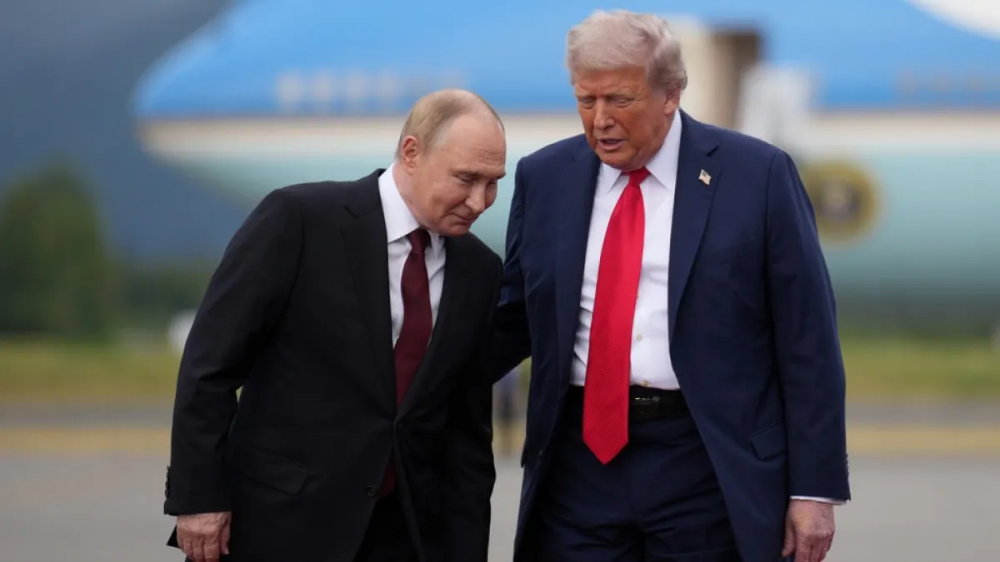
In a significant development that could reshape the global geopolitical landscape, former US President and presidential candidate Donald Trump announced that Russian President Vladimir Putin has accepted his invitation to join the "Peace Council" initiative. This move is part of Trump's vision to establish a new international entity intended to rival or replace the United Nations, which Trump has long criticized for its effectiveness and cost.
The Kremlin's position: careful study and strategic consultation
On the other hand, the Russian response was characterized by both cautious diplomacy and seriousness. Russian President Vladimir Putin confirmed receiving the official invitation, announcing that he had given direct instructions to the Russian Foreign Ministry to carefully study the documents and proposals submitted by the American side. During a high-level government meeting, Putin stated, "I have instructed the Russian Foreign Ministry to study the documents we have received and to consult with our strategic partners in this regard," emphasizing that a final response would only be issued after these consultations were completed. This indicates Moscow's desire to coordinate its position with its international allies before engaging in this new entity.
Background of the conflict with traditional international institutions
This announcement cannot be separated from the historical context of Donald Trump's relationship with international institutions. From his first term, Trump adopted an "America First" policy, expressing deep skepticism about the effectiveness of multilateral organizations such as the United Nations and NATO. Trump views the UN as a bureaucratic entity hampered by conflicting interests and incapable of resolving major international conflicts, which, in his view, justifies the need for a new "peace council" based on force and direct negotiations between the great powers, bypassing the complexities of the UN Security Council.
Geopolitical dimensions and their expected impact
This event carries profound implications both regionally and internationally. On the one hand, Russia's potential membership in this council represents an attempt to break the diplomatic isolation imposed on it by the West in recent years and to re-establish Moscow as a key partner in global peacemaking. On the other hand, Trump's success in bringing together major powers like Russia in a parallel body to the United Nations could erode the legitimacy of the international order established since the end of World War II, paving the way for a new multipolar world order governed by bilateral agreements and direct interests rather than traditional international consensus.