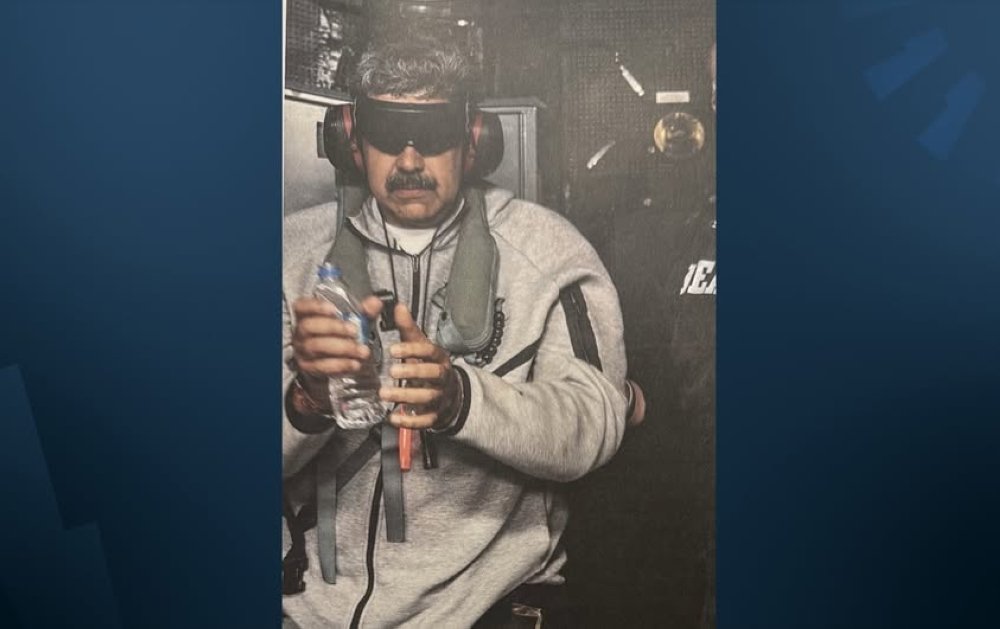
In an unprecedented development in Latin American politics, US President Donald Trump posted the first photo of Venezuelan President Nicolás Maduro after his arrest on his social media platform, Truth Social. Trump accompanied the photo with a brief but highly significant caption: "Nicolás Maduro on board the USS Iwo Jima," confirming reports that the Venezuelan president had been transferred to US naval custody.
Context of the conflict and history of tension between Washington and Caracas
This event is not a spontaneous occurrence, but rather the culmination of years of escalating tension between the United States and Venezuela. The roots of the dispute trace back to the era of the late President Hugo Chávez, and it has intensified significantly under Maduro. In March 2020, the US Department of Justice formally indicted Nicolás Maduro and several of his top aides on charges of "terrorism and drug trafficking," offering a $15 million reward for information leading to his arrest or conviction. This legal background provided the justification for the US administration's recent actions.
Strategic importance and political messages
The choice of the USS Iwo Jima as the hostage carries strong symbolic and military significance. This amphibious assault ship represents a long arm of the US Navy, and Maduro's presence on board sends a clear message about American resolve in dealing with regimes that Washington classifies as threats to national security. This move also reflects a radical shift in crisis management policy in the Western Hemisphere, moving beyond economic sanctions to direct intervention.
Expected regional and international repercussions
This arrest is expected to trigger a political earthquake in Latin America and the world, raising pressing questions about the future of Venezuela, the country with the world's largest proven oil reserves. Maduro's absence could lead to a power vacuum or internal conflict between factions within the regime and the opposition, requiring close international monitoring.
On the economic front, global energy markets are closely watching developments, as any further disruption to Venezuelan oil production, or conversely, a potential return of Venezuelan oil to Western markets following a regime change, will directly impact global oil prices. Maduro's allies, such as Russia, China, and Cuba, will also be monitoring the situation closely, which could reshape geopolitical alliances in the region.