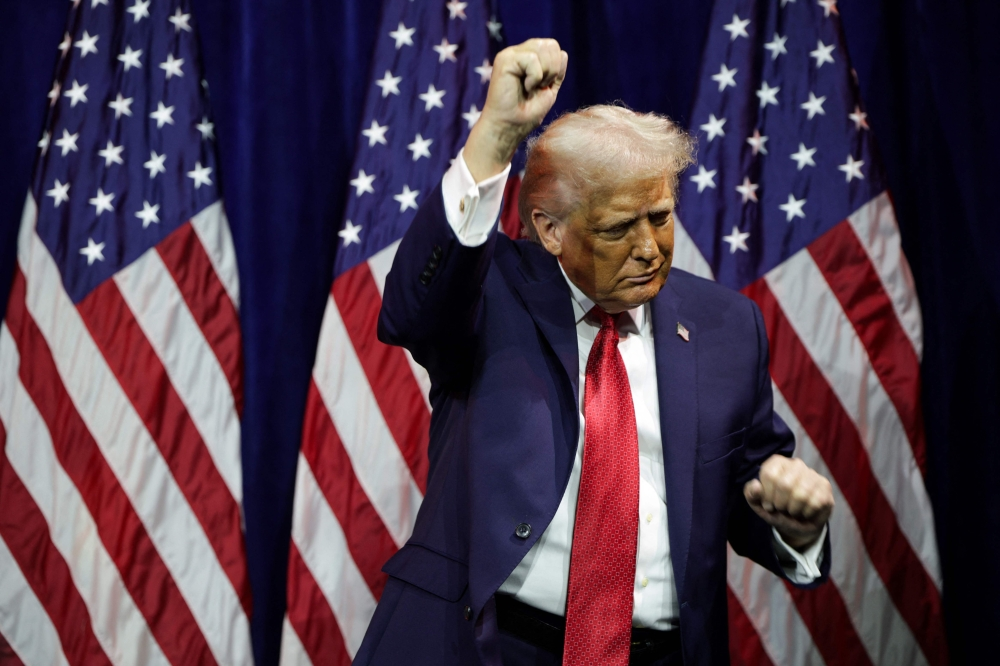
In remarks that sparked widespread controversy and made headlines around the world, US President Donald Trump launched a scathing attack on ousted Venezuelan President Nicolás Maduro following the announcement of a US military operation that led to his capture. During a speech to Republican lawmakers at the Kennedy Center for the Performing Arts (reportedly recently renamed), Trump went beyond the usual political and criminal accusations, making sarcastic personal remarks about Maduro's dancing style.
Accusations of imitating dances and torture chambers
In his speech, Trump said that Maduro had not only committed political crimes but had also tried to imitate his famous dance moves at campaign rallies. Trump stated, "He goes on stage and tries to do a bit like me," referring to his own dance moves to the song "YMCA." These remarks come amidst press reports, most notably one published by The New York Times, indicating that Maduro's frequent public dancing was considered by the White House to be a direct challenge to American threats, thus hastening the decision to take action against him.
On a more serious note, Trump leveled serious accusations against Maduro of excessive violence, saying: "He is a violent man, he has killed millions of people and practiced torture," referring to an alleged "torture chamber" in the center of the capital, Caracas, without providing further intelligence details about this claim or about future US plans for managing oil-rich Venezuela.
Context of the US-Venezuelan conflict
These dramatic developments cannot be separated from the long history of tension between Washington and Caracas. For years, particularly since Maduro assumed power following the death of Hugo Chávez, relations have steadily deteriorated. The United States, along with much of the international community, has consistently considered Maduro's rule to lack democratic legitimacy, especially after the 2018 elections, which were marred by allegations of fraud. Washington has imposed a series of harsh economic sanctions on Venezuela's oil sector in an attempt to pressure the regime, which the US Department of Justice has previously accused of involvement in "narco-terrorism.".
Regional and international dimensions of the event
This event carries significant geopolitical implications. Venezuela possesses the world's largest proven oil reserves, and the fall of the Maduro regime would fundamentally alter the energy and political landscape of Latin America. Furthermore, the humanitarian crisis in Venezuela, which has led to the displacement of millions fleeing hyperinflation and shortages of food and medicine, has consistently been a focus of attention for neighboring countries and human rights organizations. Observers believe that direct US intervention could provoke mixed reactions within the international community regarding the concepts of sovereignty and military intervention.
Domestic political investment
Domestically, Trump appears to be seeking to capitalize on this "military victory" to bolster his domestic political standing, linking the speech to the upcoming midterm elections. He alluded to the anniversary of the Capitol events, warning Republicans against repeating past electoral defeats, and using Maduro's arrest as a trump card to demonstrate strength and decisiveness—a message aimed at both his electoral base and his Democratic opponents.