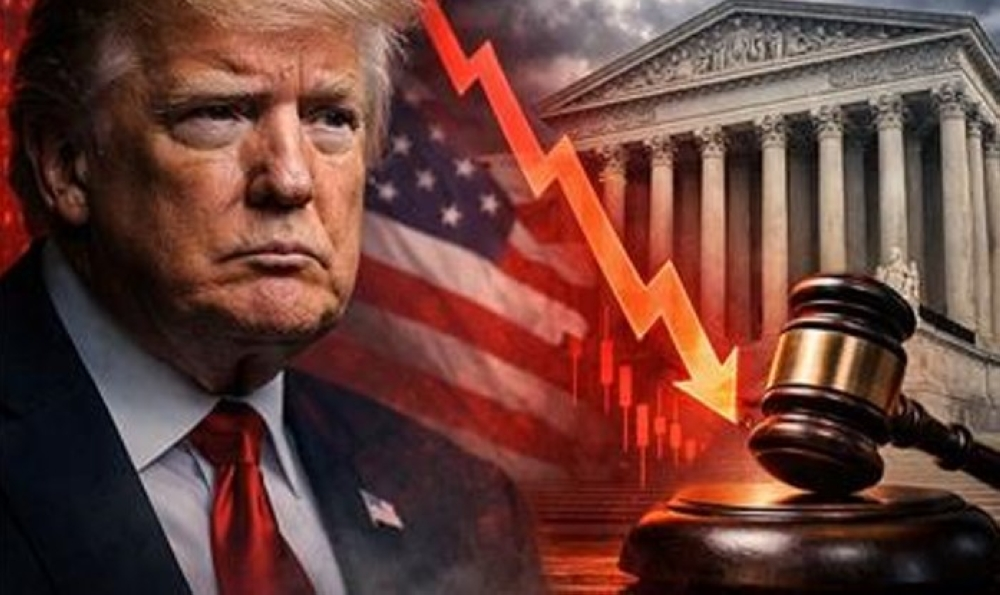
In a surprise escalation, US President Donald Trump announced an immediate and sweeping increase in tariffs on international imports, raising them from 10% to 15%. This decision came as a direct response to a US Supreme Court ruling that overturned a significant portion of the tariffs imposed by his administration since his return to the presidency, opening a new chapter of tensions in global trade policy.
Background to the decision and its trade policy
This move is a continuation of President Trump's economic approach, which he adopted during his first term under the slogan "America First." That period was characterized by the imposition of widespread tariffs, particularly against China, aimed at addressing the US trade deficit and protecting domestic industries. Trump used tariffs as a key tool in his trade negotiations, considering them an effective means of pressuring trading partners to make concessions. The new decision not only revives this policy but escalates it to a new level, underscoring the administration's determination to use trade protectionism as a cornerstone of its economic agenda.
The legal challenge and the presidential response
Trump’s announcement came hours after the Supreme Court ruled that the president had exceeded his authority in imposing a series of tariffs. In a post on his social media platform, Truth Social, Trump described the court’s decision as “very anti-American” and asserted that, after a legal review, he had decided to raise the tariffs to “the maximum level allowed by law, which is 15%.” This move represents a clear challenge to the judiciary and reflects the president’s willingness to push ahead with his trade policies despite legal obstacles, potentially leading to a constitutional confrontation between the executive and judicial branches.
Expected economic impacts locally and internationally
This decision is expected to have broad economic repercussions. Domestically, the tariff increase could raise the cost of imported goods for American consumers and businesses that rely on global supply chains, potentially contributing to increased inflationary pressures. Conversely, some domestic industries may benefit from temporary protection against foreign competition.
Internationally, the decision is likely to provoke retaliatory measures from major US trading partners, such as the European Union and China, threatening to ignite a new global trade war. This escalation would destabilize global financial markets and hinder global economic growth, which is still recovering from previous crises. The move is also seen as another blow to the multilateral trading system led by the World Trade Organization.