A surprise announcement and a legal challenge
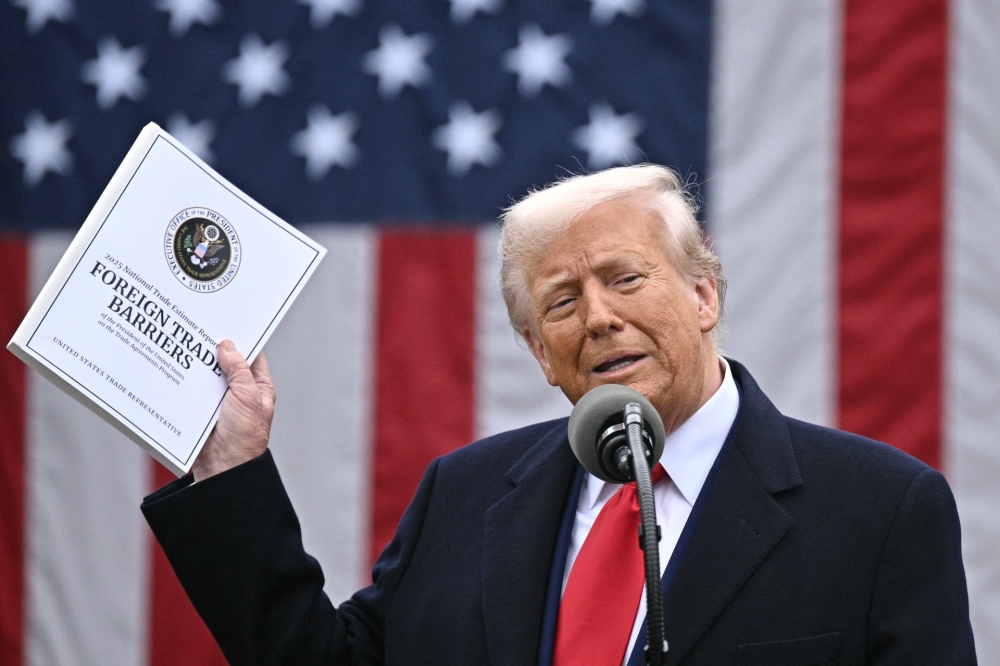
In a new escalation, former US President Donald Trump announced on Friday his intention to impose a sweeping 10% tariff on all US trading partners. This announcement comes as a direct response to the Supreme Court's ruling that his previous sweeping international tariffs were unconstitutional, opening a new chapter of potential trade tensions.
In remarks to reporters, Trump asserted that he would pursue legal “alternatives” to implement the tariffs, arguing that the Supreme Court’s decision, contrary to appearances, had actually granted the presidency clearer and stronger authority to regulate trade and impose tariffs. He stated, “Today’s Supreme Court decision has made the president’s ability to regulate trade and impose tariffs stronger and clearer, not the other way around,” describing the ruling that overturned his previous policy as “very disappointing.”.
The historical context of the “America First” trade policy
Trump’s tariff policies were not a spur-of-the-moment decision, but rather an integral part of his “America First” economic agenda, which he championed from his first presidential campaign. Throughout his presidency, Trump used tariffs as a key tool in his foreign and trade policy, aiming to protect American industries and reduce the trade deficit, which he repeatedly described as unfair. He based his decisions on long-standing trade laws, such as Section 232 of the Trade Expansion Act of 1962, which allows the president to impose tariffs on imports deemed a threat to national security. These policies led to a full-blown trade war with China, as well as tariffs on steel and aluminum imports from close allies like Canada and the European Union.
Expected impacts at the local and international levels
The new announcement raises serious concerns about its potential economic repercussions. Domestically, a blanket 10% tariff could lead to higher prices for imported goods, increasing the financial burden on American consumers and driving up inflation. Companies reliant on global supply chains could also be negatively impacted by the increased cost of imported raw materials and components.
Internationally, this decision is likely to provoke retaliatory measures from major trading partners, potentially igniting a new round of global trade wars. Countries such as China, the European Union, Canada, and Mexico may respond by imposing similar tariffs on American goods, harming US exports and creating uncertainty in global markets. Furthermore, this unilateral move undermines the authority of international trade organizations like the World Trade Organization, which advocates for resolving trade disputes through dialogue and internationally agreed-upon rules.