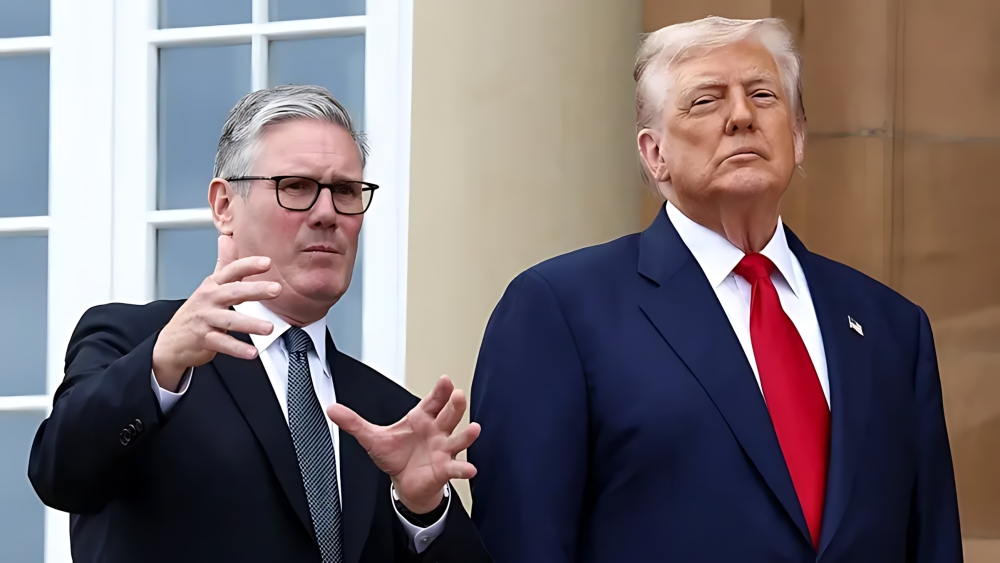
Former US President and Republican presidential candidate Donald Trump revived an old geopolitical debate, expressing confidence that European leaders would offer little resistance to his attempts to acquire Greenland. Speaking to a reporter in Florida, Trump downplayed potential European opposition to his plans, saying firmly, “I don’t think they’re going to stand up very strongly. We should get it. This should be done.”.
Trump's pronouncements didn't stop at the economic or real estate aspects of the deal; he directly linked it to global national security. In a letter to Norwegian Prime Minister Jonas Gahr Støre, Trump asserted that "the world is unsafe" as long as the United States doesn't exert complete control over the strategic Arctic island. The letter also included a sharp rebuke regarding his exclusion from the Nobel Peace Prize, stating: "Since your country decided not to award me the Nobel Peace Prize after I stopped more than eight wars, I no longer feel obligated to work solely for peace.".
Historical background: This is not the first attempt
The United States' interest in purchasing Greenland is not a recent development, nor is it limited to the Trump era. This American ambition dates back to 1946, when President Harry Truman offered Denmark $100 million in gold for the island, an offer that was rejected. Prior to that, in 1867, the US State Department explored the possibility of a purchase, coinciding with the acquisition of Alaska. Trump first raised the issue during his presidency in 2019, causing a brief diplomatic crisis with Denmark, with then-Prime Minister Mette Frederiksen describing the idea as "absurd" and asserting that "Greenland is not for sale.".
Strategic and geopolitical importance
Greenland's strategic importance extends far beyond its vast ice sheet. Located between the Arctic and the Atlantic, it is home to Thule Air Base, a cornerstone of the US and NATO missile early warning system. As Arctic ice melts, new shipping lanes open up, increasing access to vast natural resources.
Analysts believe Trump's insistence stems from Washington's desire to curb growing Chinese and Russian influence in the Arctic region. The island contains vast reserves of rare earth minerals essential for technological and military industries, making control of it a matter of US national security to reduce reliance on Chinese resources.
Potential impacts on transatlantic relations
These statements are expected to create renewed tension in European-American relations should Trump return to power. While Trump views the matter as a major strategic real estate deal, Denmark and the European Union see Greenland as a self-governing territory with its own sovereignty and people who determine their own destiny, thus placing the concept of “national sovereignty” in direct conflict with the “security interests” of the great powers.