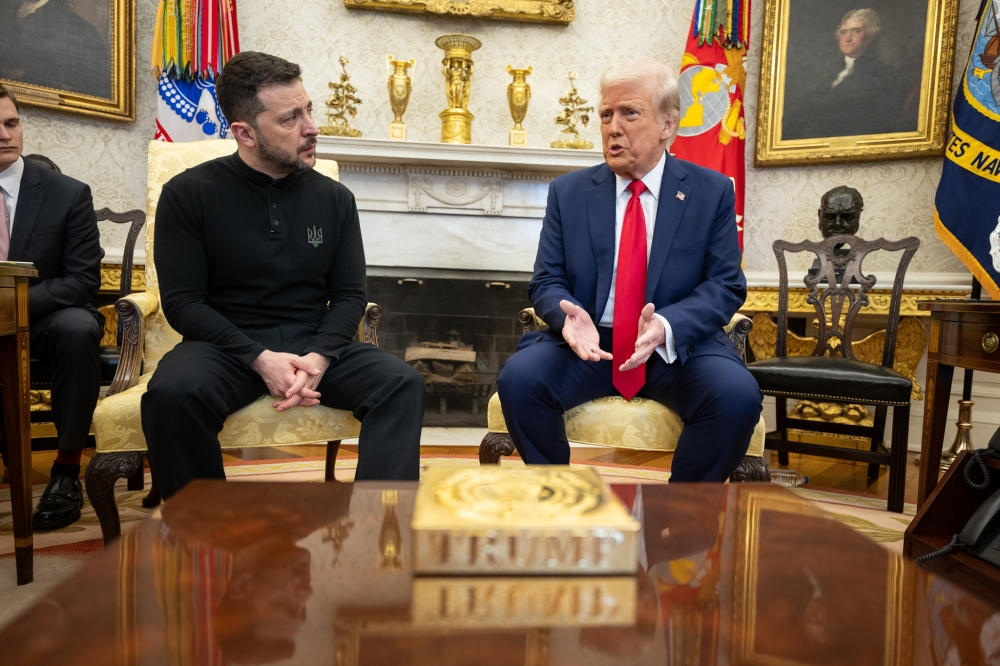
In a significant development in the diplomatic efforts to end the war in Eastern Europe, US President-elect Donald Trump sharply criticized his Ukrainian counterpart, Volodymyr Zelensky, expressing his disappointment at the latter's lack of response to new US peace proposals. These remarks come at a critical juncture, with negotiations in what US officials have described as the "final stretch.".
Details of the American criticism and the Ukrainian position
During the Kennedy Center Honors ceremony, Trump told reporters that he had been in contact with Russian President Vladimir Putin and the Ukrainian leadership, expressing his frustration that Zelenskyy "hadn't even read the proposal yet" as recently as his remarks. This stance reflects the incoming US administration's desire to expedite a political solution, placing additional pressure on Kyiv, which seeks guarantees for its security and sovereignty before signing any agreement.
A round of intensive talks between U.S. and Ukrainian officials, in which Zelensky participated by telephone, ended without a tangible breakthrough, despite continued pledges to continue the dialogue to reach a just and genuine peace.
Historical context and strategic importance of the conflict
To understand the depth of the current dispute, one must look at the roots of the crisis, which has worsened since the Russian invasion of Ukraine in February 2022. The war was not just a border dispute, but turned into the largest military conflict in Europe since World War II, resulting in huge geopolitical changes and widespread destruction of Ukrainian infrastructure.
The disputed territories, particularly the Donbas region, hold immense strategic and economic importance, serving as Ukraine's industrial heartland and boasting a high population density. Controlling these areas has been a primary objective for Moscow since 2014, making their concession extremely difficult for the Ukrainian leadership.
Two main obstacles: Donbas and the Zaporizhzhia power station
The US special envoy to Ukraine, Keith Kellogg, explained that an agreement was very close, but contingent on resolving two thorny issues:
- The future of the Donbas region: which includes the Donetsk and Luhansk provinces, where Russia insists on consolidating its influence, while Ukraine clings to its territorial integrity.
- The fate of the Zaporizhzhia nuclear power plant: This plant, the largest in Europe, is currently under Russian control. Its status is a matter of international security concern due to potential nuclear risks, as well as its importance to Ukraine's energy sector.
Kellogg stressed that resolving these two dilemmas would practically mean the end of the war, noting that diplomatic efforts are now focused on finding a compromise formula that guarantees nuclear security and determines the legal and political status of the disputed territories.
Expected regional and international impacts
The success or failure of this American plan will have far-reaching consequences. A successful agreement could stabilize global energy markets and ease tensions between Russia and the West, but it could also raise questions about the future of security alliances in Europe. Conversely, a failure of the talks could mean continued military attrition and a worsening of humanitarian and economic crises, the effects of which have already been felt in countries far removed from the battlefield.