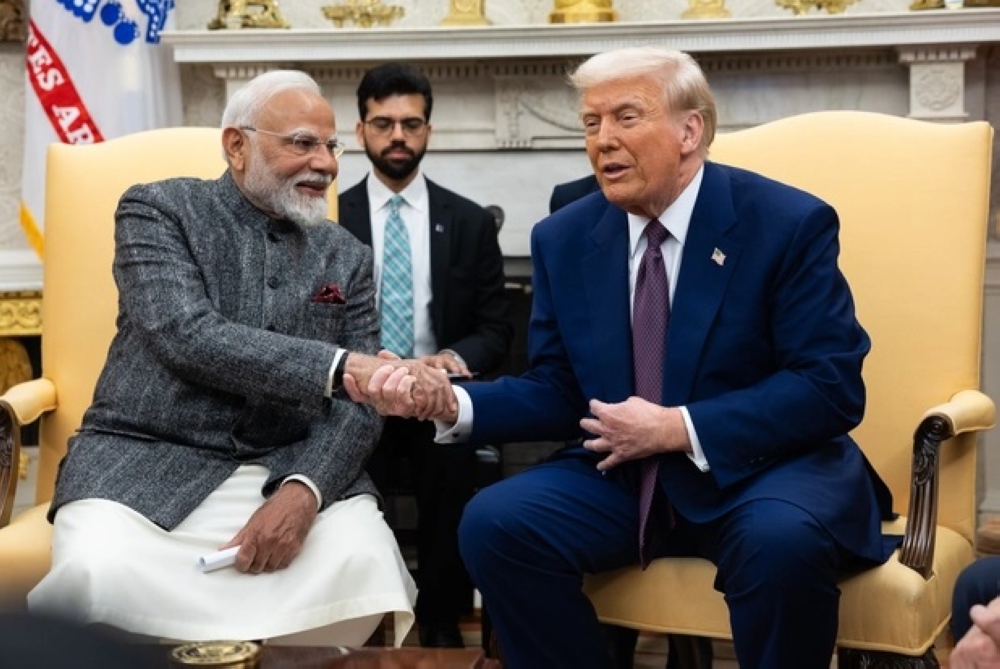
Former US President Donald Trump announced on his Truth Social platform that he had reached what he described as a "trade agreement" with India, following a phone call with Indian Prime Minister Narendra Modi. According to Trump, the agreement includes a commitment from New Delhi to stop buying Russian oil and shift towards purchasing more oil from the United States, with the possibility of adding Venezuela as an alternative source.
Trump added in his post that this progress stemmed from mutual “friendship and respect” with Modi, noting that the United States, in return, would reduce its tariffs on Indian imports from 25% to 18%, while India would eliminate its tariffs on American products. This announcement, if confirmed, represents a significant shift in the trade and energy policies of both countries.
The historical context of trade relations between the two countries
These statements come against the backdrop of complex trade relations between the United States and India. During the Trump administration, the relationship was sometimes strained by the “America First” policy, with Washington imposing tariffs on steel and aluminum imports from several countries, including India, which retaliated with tariffs on American goods. Despite this, the strategic partnership between the two countries continued to grow, particularly given their shared desire to counterbalance Chinese influence in the Indo-Pacific region. Following Russia’s invasion of Ukraine in 2002, India emerged as one of the largest buyers of discounted Russian oil, a position that alarmed Western nations but was based on India’s energy security and national economic interests.
The importance and potential effects of advertising
If such an agreement were to be implemented, it would have far-reaching geopolitical and economic implications. Internationally, India’s cessation of Russian oil purchases would represent a significant economic blow to Moscow and bolster the effectiveness of Western sanctions. It would also reshape the global energy landscape, with the United States increasing its share of the vast Indian market. Regionally, enhanced trade ties between Washington and New Delhi would solidify their strategic partnership as two democratic powers in Asia. Domestically, the agreement could help reduce the US trade deficit with India, a long-sought goal of Trump’s, while India would benefit from lower tariffs on its exports to the world’s largest economy. However, this announcement remains merely a statement from a former president, and its implementation would require formal procedures and complex negotiations between the two administrations.