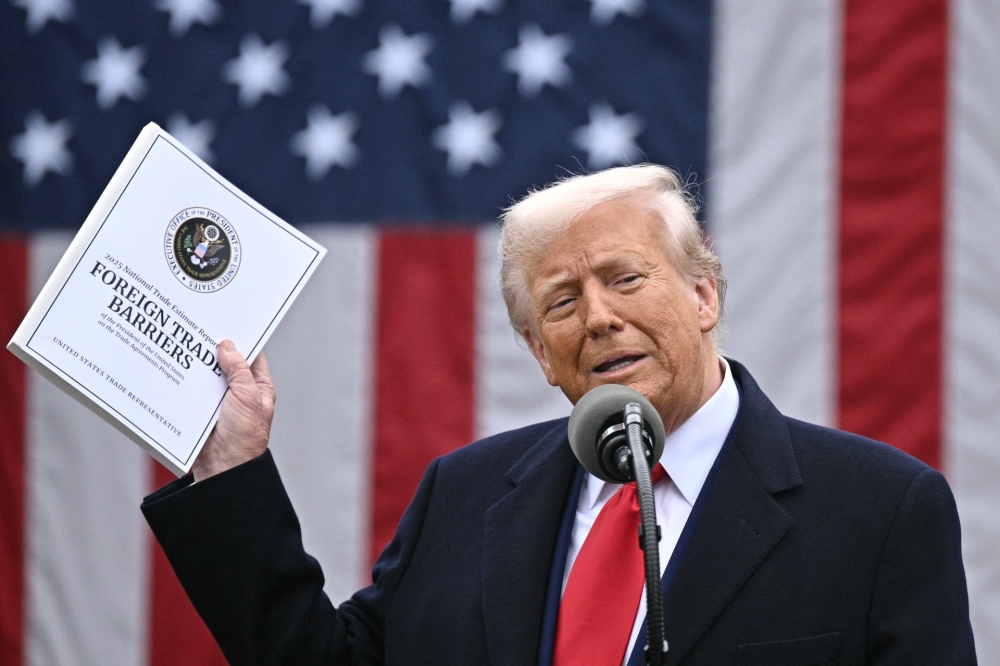
In a new escalation reflecting the tension between the executive and judicial branches in the United States, former President Donald Trump announced his intention to seek alternatives to the sweeping tariffs imposed by his administration, following the Supreme Court's ruling that overturned them. At a press conference, Trump described the court's decision as "wrong and disappointing," asserting that his administration would resort to other economic tools that might be more effective in achieving his trade objectives and potentially generate greater revenue for the US Treasury.
Background to the trade war and the “America First” policy
This confrontation comes in the context of Trump's "America First" policy, adopted since taking office, which aimed to protect domestic industries and reduce the US trade deficit. This policy relied heavily on imposing broad tariffs on imports from several countries, most notably China, as well as traditional allies such as the European Union and Canada. The tariffs targeted vital sectors like steel and aluminum, along with hundreds of billions of dollars' worth of Chinese goods, igniting a global trade war that disrupted supply chains and triggered anxiety in international financial markets.
The judicial challenge and the role of the Supreme Court
The tariff policy has faced legal challenges from the outset, with numerous businesses and trade groups arguing that the president has overstepped his constitutionally granted executive powers. The Supreme Court's decision, which includes a conservative majority, three of whom were appointed by Trump, represents a significant blow to the foundation of his economic agenda. Trump has expressed deep disappointment with the court's decision, suggesting that some justices were influenced by "foreign interests"—a serious accusation that deepens the political divide over the role and independence of the judiciary.
Importance and expected impacts locally and internationally
This clash has significant repercussions both domestically and internationally. Domestically, Trump's announcement creates uncertainty for American companies that rely on imports and exports, potentially impacting investment and hiring decisions. Internationally, the threat of new trade measures risks reigniting trade tensions that had begun to subside. This could prompt US trading partners to retaliate, plunging the global economy back into a cycle of retaliatory trade wars that harm everyone. Furthermore, the decision puts the credibility of the WTO-based global trading system at risk and highlights the challenges facing globalization in the face of rising protectionist policies.