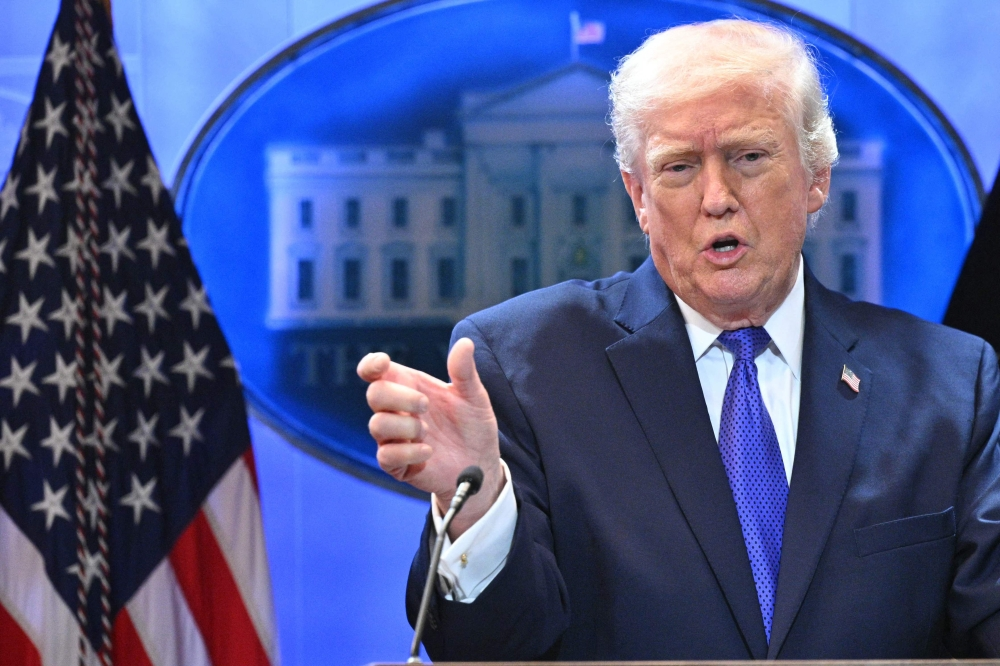
Former US President Donald Trump renewed his scathing attack on the US Supreme Court, describing it as “biased towards China,” following its decision to overturn a large portion of the tariffs imposed by his administration. Trump did not stop at criticism; he warned that foreign countries might exploit the ruling, vowing to impose “much higher” tariffs on any country that attempted to do so.
Background to the “America First” policy and trade wars
The roots of this issue lie in Trump's "America First" policy during his presidency, which aimed to protect American industries and reduce the US trade deficit. In this context, his administration launched a broad trade war, most notably by imposing punitive tariffs on billions of dollars' worth of Chinese goods under Section 301 of the Trade Act of 1974, citing unfair trade practices and intellectual property theft. It also imposed tariffs on steel and aluminum imports from several countries, including close allies, based on Section 232 of the Trade Expansion Act of 1962, claiming to protect US national security. These measures sparked widespread controversy and led to lawsuits from affected companies that considered the tariffs illegal and an overreach of presidential authority.
A sharp attack and a warning against exploiting the decision
Through his platform, Truth Social, Trump unleashed his fury on the court, deeming its decision “ridiculous, stupid, and deeply divisive.” He added that the court would find a way to reach a “false conclusion” that would “please and enrich China and other countries once again.” In a defiant tone, Trump asserted that he still possessed broad powers enabling him to take harsh measures against countries that have “ripped us off for decades,” hinting at the possibility of using other mechanisms to impose trade restrictions.
Even the conservative justices he himself appointed were not spared his criticism, as he expressed his disappointment that they did not vote to maintain the tariffs in full. Trump directly threatened, saying, “Any country that plays games following the ridiculous Supreme Court decision…will face tariffs far higher and worse than any recently approved.”.
Economic and political impacts of the decision
The Supreme Court's decision carries significant weight both domestically and internationally. Domestically, it represents a constraint on the executive branch's ability to impose broad trade policies without clear legislative approval, a move welcomed by many American companies that have suffered from increased production costs and disrupted supply chains. Internationally, the trade war initiated by Trump has strained relations with key trading partners such as the European Union, Canada, and Mexico, who have retaliated with tariffs on American goods, harming vital sectors like agriculture. The court's decision is seen as potentially opening the door to a broader legal review of protectionist trade policies, but it also raises concerns that Trump's actions could lead to a new round of escalation should he return to the White House, once again threatening the stability of the global trading system.