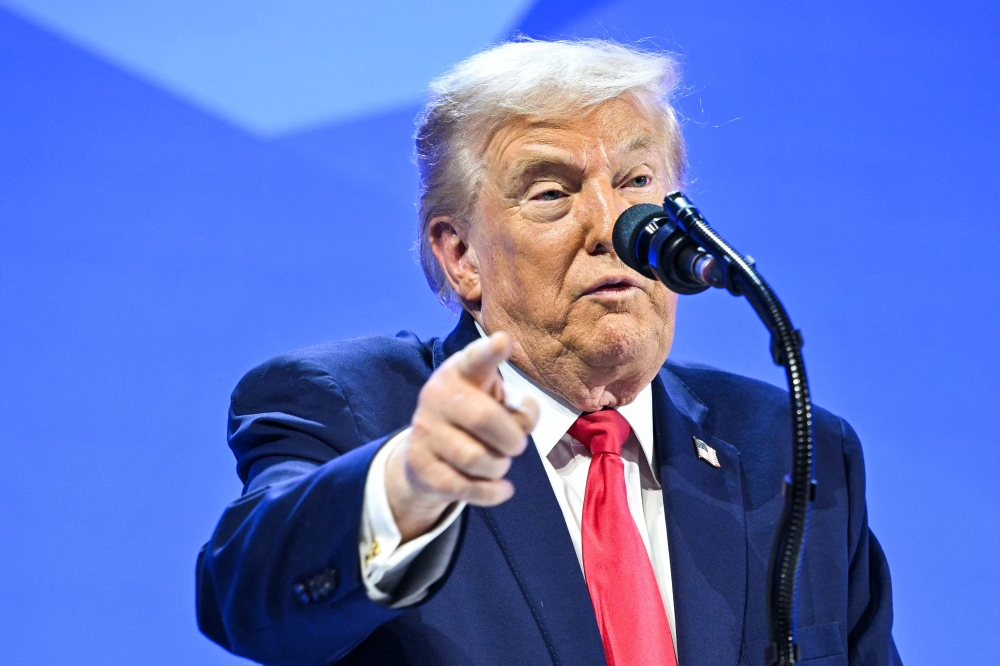
US President Donald Trump announced on Wednesday a significant diplomatic breakthrough with the establishment of a "framework" for an agreement concerning Greenland, following a strategic meeting with NATO Secretary General Mark Rutte. Trump asserted that this development would directly lead to his abandonment of the punitive tariffs he had threatened to impose on several European allies.
Declaration details and customs fees
In a post on his social media platform Truth Social, Trump revealed the agreement without elaborating on its specifics, stating, "We have established a framework for a future agreement on Greenland, and indeed, the entire Arctic region." The US president added that this new understanding entails the cancellation of tariffs that were scheduled to take effect on February 1st, representing a breakthrough in the recently strained trade relations between Washington and its allies in Europe.
Historical background: American ambitions towards Greenland
Trump's interest in Greenland is not new. In 2019, during his first term, he sparked controversy when he openly expressed the United States' desire to purchase the self-governing Danish territory, describing it as a "great real estate deal." At the time, the proposal was met with staunch rejection from Danish Prime Minister Mette Frederiksen, who called the idea "absurd," leading to a temporary diplomatic row and Trump's cancellation of a planned visit to Denmark. Revisiting this issue now indicates the US administration's determination to strengthen its influence in this strategically vital region.
The strategic and geopolitical importance of the Arctic
This agreement is of paramount importance given Greenland's geopolitical location and the Arctic region. The island hosts Thule Air Force Base, the northernmost US military base, which plays a pivotal role in the ballistic missile early warning system and space surveillance. Furthermore, with the melting ice due to climate change, the Arctic has become a major arena of international competition, opening new shipping lanes and revealing opportunities for the extraction of vast natural resources, including rare earth minerals, oil, and gas.
Impact of the agreement on transatlantic relations
This announcement is reshaping relations between the United States and NATO under the Trump administration. His meeting with Mark Rutte and the linking of security issues (Greenland and NATO) with economic ones (tariffs) reflect Trump's strategy of using economic pressure to achieve strategic and security gains. The removal of tariffs suggests that European allies may have offered guarantees or concessions regarding cooperation in the Arctic region to ensure it does not fall under the influence of rival powers like Russia and China, thus strengthening the cohesion of the Western front in the face of escalating security challenges.