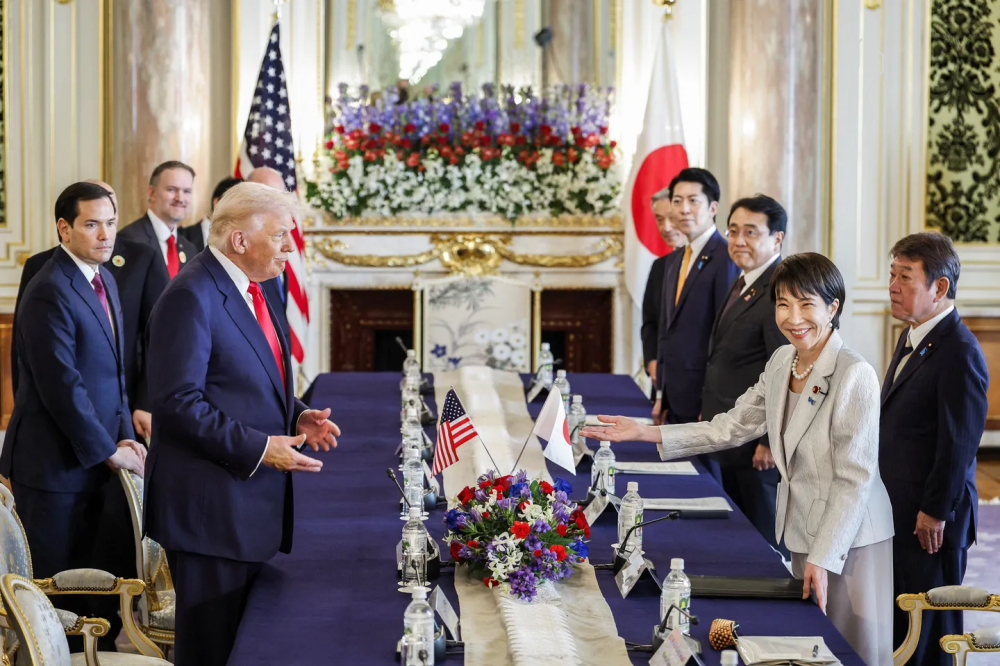
In a notable diplomatic move, The Wall Street Journal revealed that former US President Donald Trump advised prominent Japanese politician Sanae Takaichi to avoid provoking China over the contentious issue of Taiwan. This advice came after Takaichi's remarks angered Beijing, escalating diplomatic tensions between Asia's two largest economies.
The crisis began when Takaichi, known for her hardline stance toward China, stated that Japan might intervene militarily to defend Taiwan in the event of a Chinese attack. These remarks provoked outrage in Beijing, which considers Taiwan an integral part of its territory under the "One China" principle, and promptly summoned the Japanese ambassador to lodge a strong protest.
Historical background of the conflict
The dispute over Taiwan dates back to the end of the Chinese Civil War in 1949, when the Nationalist government of China fled to the island of Taiwan after its defeat by the Communist Party, led by Mao Zedong, who established the People's Republic of China on the mainland. Since then, Taiwan has developed into a prosperous, self-governing democracy, but Beijing has never relinquished its goal of reunifying the island with the mainland, by force if necessary. Most countries in the world, including the United States and Japan, adhere to the "One China" policy, which recognizes Beijing as the sole legitimate government of China, but at the same time maintain strong unofficial ties with Taiwan.
Strategic importance and regional impacts
The Taiwan issue holds immense strategic importance for both Japan and the United States. For Japan, any conflict in the Taiwan Strait directly threatens its national security and vital sea lanes upon which it depends for trade and energy imports. For the United States, the Taiwan Relations Act obligates it to provide the island with the means to defend itself, and regional stability is a cornerstone of its Indo-Pacific foreign policy.
According to sources cited by the newspaper, Trump's intervention came after a phone call with Chinese President Xi Jinping. Trump appeared keen to avoid jeopardizing the trade agreement he had reached with China, which aimed to increase Beijing's purchases of American agricultural products. The newspaper quoted Japanese officials as saying that Trump's message was "worrying," interpreting it as potentially reflecting a decline in the US commitment to the security of its allies in the region in favor of short-term economic interests.
This incident highlights the complexity and interconnectedness of relations in East Asia, where geopolitical ambitions clash with economic interests, placing traditional allies in difficult positions that require a delicate balance between principles and pragmatism.