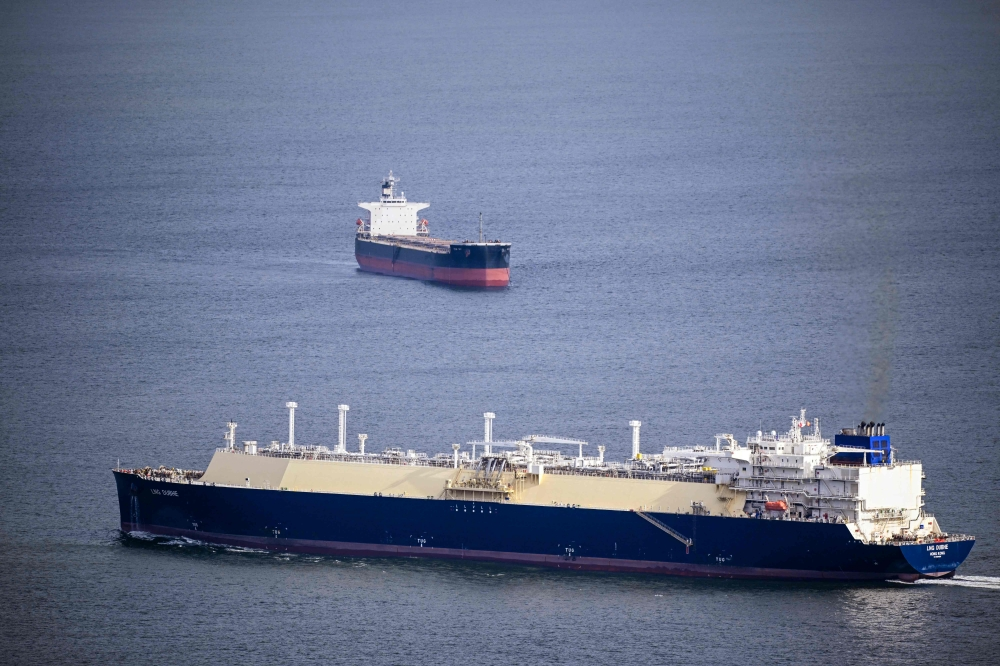
In a significant development for global maritime traffic, oil tanker the strategic Strait of Hormuz while transmitting signals via its Automatic Identification System (AIS) for the first time since the recent outbreak of conflict in the Middle East. According to the maritime tracking observatory Marine Traffic, the transit was detected on February 28. The observatory stated in an official statement that the vessel was a medium-sized Aframax tanker named "Karachi," carrying a cargo of Das crude oil, and had departed from Abu Dhabi, the capital of the United Arab Emirates.
The observatory noted details about the 237-meter-long vessel, which flies the Pakistani flag. Its draft (the part of the vessel submerged below the waterline) was approximately 11.5 meters, clearly indicating that it was a heavy tanker fully loaded with oil. The vessel entered Iranian waters on Sunday and sailed through the Gulf of Oman at a speed of 9.6 knots, having successfully transited the Strait of Hormuz with its Automatic Identification System (AIS) activated—a significant shift in the behavior of commercial vessels in the region recently.
The strategic and historical importance of any oil tanker passing through the strait
The Strait of Hormuz is one of the world's most important and vital waterways, connecting the Persian Gulf, the Gulf of Oman, and the Arabian Sea. Historically, it has served as the main artery for global energy supplies, with an estimated one-fifth of the world's oil consumption passing through its waters daily. Shipping through this strait has always been highly sensitive to geopolitical tensions or military conflicts in the Middle East. The passage of any oil tanker under complex security conditions underscores the pivotal role this strait plays in the stability of global energy markets, as any disruption to traffic could lead to widespread economic shocks and an immediate spike in crude oil prices.
The impact of the war in the Middle East on maritime navigation
Since the outbreak of the recent war in the Middle East, maritime traffic through the Strait of Hormuz has seen a marked decline in transparency, with many vessels switching off their tracking devices to avoid detection and reduce the risk of being targeted. In this context, the maritime data collection company Lloyd's List Intelligence recorded only 77 vessels transiting the Strait of Hormuz from the beginning of the conflict until recently. Interestingly, the vast majority of these vessels belonged to what is known as the "shadow fleet," ships that typically operate outside the framework of internationally recognized maritime security and tracking systems. Therefore, the passage of the Karachi with its tracking system activated, following weeks of significantly reduced and severely restricted traffic in this strategic waterway, suggests that some shipments may have received negotiated safe passage.
Expected impacts on the regional and international economy
This event carries significant economic and geopolitical implications, both regionally and internationally. Regionally, the activation of the automated tracking system suggests the possibility of unannounced understandings or negotiations that have resulted in ensuring the safe passage of some commercial shipments. This may reflect the desire of the parties involved to avoid escalating tensions to the point of a complete closure of trade routes. Internationally, the success of this voyage sends a cautiously reassuring message to global shipping companies and oil markets, indicating that vital supplies can still reach their destinations despite security challenges. Nevertheless, observers and economic experts will remain focused on the region to determine whether this transit represents an exception or the beginning of a gradual return to normal and safe navigation in one of the most important arteries of the global economy.