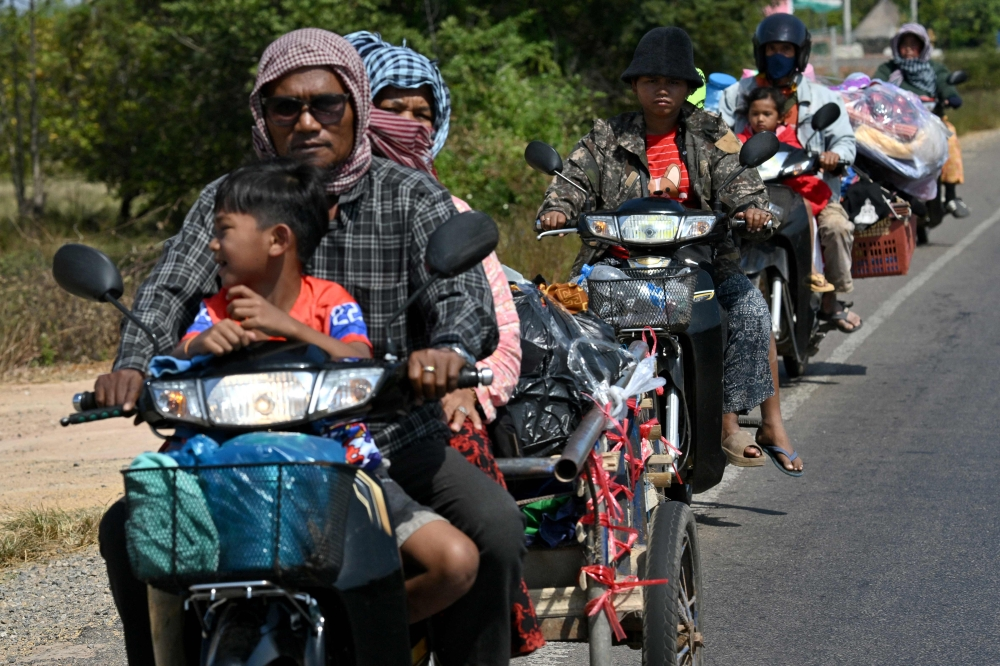
The border region between Thailand and Cambodia has witnessed a dangerous and sudden military escalation, leading to one of the largest mass displacements in Southeast Asia in recent years. Official sources in both countries have confirmed the evacuation of nearly half a million civilians from villages and towns along the border, amidst heavy exchanges of fire and mutual accusations of ceasefire violations.
Shocking figures and a state of high alert
Amid the escalating humanitarian crisis, the Thai Ministry of Defense announced on Wednesday that more than 400,000 Thai citizens have been evacuated from conflict zones since renewed fighting erupted last Sunday. "More than 400,000 people have been moved to safe shelters out of the line of fire," said Defense Ministry spokesman Surasant Kongsiri during an emergency press conference. He noted that this followed initial assessments that had indicated only 180,000 had been evacuated, adding, "Civilians were forced to evacuate en masse due to what we considered an imminent and direct threat to their safety and lives.".
On the other side of the border, the situation was no less dire, with the Cambodian Ministry of Defense confirming the evacuation of more than 100,000 citizens. Ministry spokesperson Mali Suchitata stated, “In total, 20,105 families, amounting to 101,229 people, have been evacuated and distributed among shelters and relatives’ homes in five safe provinces.”.
The collapse of the truce and international mediation
This violent escalation comes shortly after a period of relative calm, with both sides trading accusations about who was responsible for the renewed fighting on Sunday evening. The timing is particularly striking given the collapse of the ceasefire agreement, which had been in place for less than two months and was brokered directly by US President Donald Trump. This presents a new challenge to international diplomatic efforts aimed at preventing the region from sliding into open warfare.
The historical roots of the conflict: the legacy of colonialism and maps
To understand the depth of this conflict, one must delve into its historical roots, which extend beyond the current clashes. Thailand and Cambodia have been disputing the demarcation of large sections of their shared 800-kilometer border for decades. The origin of the problem lies in maps drawn by French colonial authorities at the beginning of the 20th century, which differ from the maps currently used by Thailand.
The area surrounding the ancient Hindu temple of Preah Vihear is one of the most significant historical flashpoints between the two countries. The International Court of Justice ruled in 1962 that the temple belonged to Cambodia, but the dispute continues over the surrounding 4.6 square kilometers. While current clashes may encompass wider areas, the historical legacy of the unrecognized border remains the primary driver of tensions.
Regional repercussions and economic concerns
This escalation is raising serious concerns within the Association of Southeast Asian Nations (ASEAN), as it threatens regional stability and disrupts intra-regional trade. Observers also fear the impact of these military operations on the vital tourism sectors of both countries, especially given the images circulating of mass displacement, which could necessitate urgent international intervention to contain the crisis before it worsens.