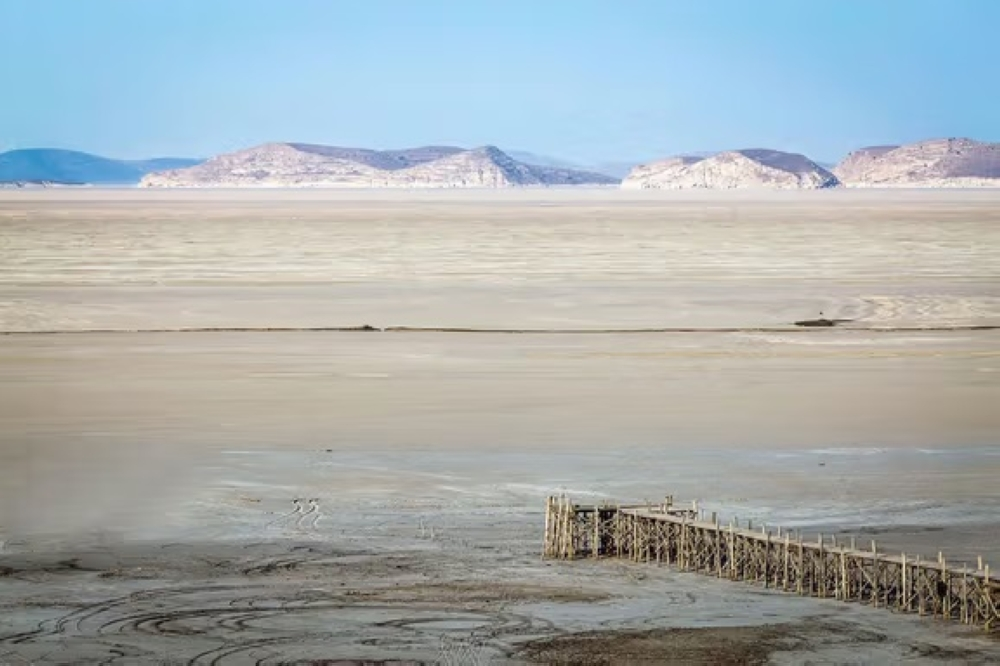
The Iranian capital, Tehran, is experiencing growing anxiety as water levels continue to drop in the main dams that supply the city, a stark paradox that coincided with scattered rainfall this December. While residents initially welcomed the recent rains, official data reveals the worst water situation in decades, presenting the capital with unprecedented environmental and service-related challenges.
Shocking figures: The Amir Kabir Dam is breathing its last
According to local media, primarily the Tasnim News Agency, the situation at the Amir Kabir Dam, a vital water source for Tehran, has reached a critical stage. Data indicates that the actual water level behind the dam is only 6 million cubic meters, while its total storage capacity is 205 million cubic meters. This drastic decrease means that more than 97% of the reservoir's capacity is now completely empty, making it virtually impossible to rely on it to supply the water network at present.
Geographical and climatic context: The roots of the crisis
What is happening today in Tehran cannot be separated from Iran's broader geographical and climatic context. The country lies within a semi-arid region and has historically suffered from water scarcity, but recent years have witnessed a marked acceleration in the pace of drought due to global climate change and, at times, mismanagement of water resources. Iran is facing what is known as "water bankruptcy," as many historical rivers and lakes have dried up, and groundwater levels have declined dangerously, making reliance on seasonal rainfall and dams a vital and no longer as reliable as it once was.
Potential repercussions: Beyond just drinking water
The continuation of this crisis not only threatens the drinking water supply for millions of residents in the capital, but also carries far-reaching economic and social repercussions. The water shortage in the dams directly impacts the country's capacity to generate hydroelectric power, potentially exacerbating the electricity crisis. Furthermore, the strain on water resources could trigger waves of internal migration from the most affected areas to major cities, further burdening Tehran's already dilapidated infrastructure. Iran has witnessed popular protests in previous years in regions such as Isfahan and Khuzestan due to water scarcity, making the water issue a matter of paramount national security.
Presidential warnings and austerity measures
Commenting on this deteriorating situation, Iranian President Masoud Pezeshkian described the country's water situation as "critical," emphasizing in remarks broadcast on state television that all 31 provinces are experiencing supply problems. Pezeshkian stressed that water management has become a vital and urgent matter, warning that failure to control it will lead to problems that will be difficult to resolve in the future.
In an attempt to address the situation, the government began implementing water rationing measures last November, including imposing periodic water cuts during nighttime hours. Official statistics from the IRNA news agency reveal a frightening deficit in the remaining dams supplying the capital compared to last year. The Lar Dam recorded a 51% deficit, the Taleghan Dam 48%, while the Mamlu and Latian Dams recorded a 53% deficit, foreshadowing a harsh summer if rainfall levels do not improve dramatically.