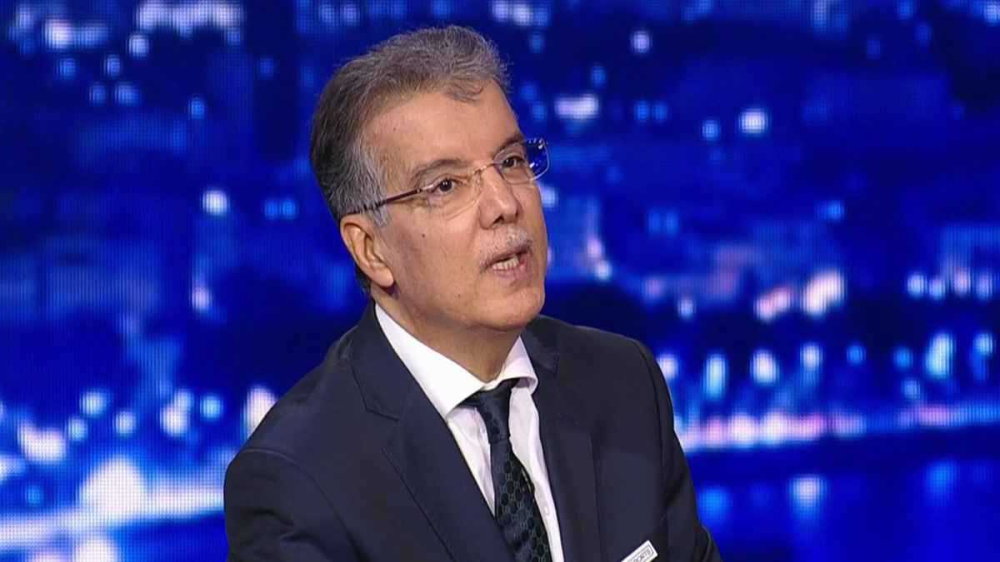
In fiery remarks that shook Tunisian sporting circles, football legend and beIN SPORTS analyst Tarek Dhiab launched a scathing and unprecedented attack on the Tunisian national team's coaching staff, led by coach Sami Trabelsi. Dhiab asserted that the biggest obstacle to the "Eagles of Carthage's" success is not a lack of talent, but rather a defeatist mentality and poor tactical management that squanders the potential of a promising generation of players.
A mindset of fear stifles human potential
Tarek Dhiab, one of the most prominent figures in Tunisian football history, asserted that the real problem lies in the "competition phobia" that dominates the coaching staff's thinking. He explained that the Tunisian national team currently possesses a wealth of professional and local players capable of competing with the top teams in Africa, but that overly cautious tactical decisions are preventing them from achieving this.
Dhiab added in his analysis: "We possess the human and technical capabilities to go far, but we restrict our players with an excessive fear of our opponents." This criticism points to a long-standing dilemma in Tunisian football, where excessive defensive caution often overshadows attacking intent, preventing the national team from securing early victories and leaving them under pressure in the final minutes.
The enigma of the game maker and the marginalization of talent
Dhiab addressed a crucial technical point concerning the "playmaker" or classic number 10 position, a role Tunisian football has lacked for many years following the retirement of its giants. He expressed his astonishment at the handling of the "Western" player, who was persuaded to represent the national team as the magic solution to link the lines, only to find himself relegated to the bench.
Dhiab said indignantly, "We suffered for years from the absence of a number 10 playmaker, and when we finally succeeded in convincing Gharbi to represent the Tunisian national team, we put him on the bench. This is incomprehensible." This statement reflects a lack of tactical vision, where professionals are called up based on their reputations and then tactically sidelined on the field.
Nostalgia for the era of fine art and criticism of modern standards
The Tunisian football legend didn't just criticize tactics; he also condemned the prevailing coaching mentality that prioritizes physical strength and towering height over technical talent. Dhiab recalled the "Argentina 1978 epic," suggesting that he and his legendary teammate Hamadi Agrebi would have been denied playing time had the standards of current coaches been applied to them.
He sarcastically remarked, "I thank God that Hamadi Agrebi and I didn't play during the era of the current Tunisian coaches, because they would have said we were too short and didn't deserve to play." This statement reignites the debate about the identity of Tunisian football, historically known for its short, technically skillful passing and dribbling, before shifting in recent years to an excessive reliance on physicality.
The absence of assistants' input and the call for accountability
In the context of assigning blame, Dhiab questioned the role of the assistant coaches, specifically naming Hamadi Dou and Balbouli, arguing that their silence regarding the head coach's mistakes made them complicit in the failure. He asked, "Where are the assistant coaches? What is their role within the national team if they don't even alert the coach when he's floundering?".
Tarek Dhiab concluded his remarks with an iconic phrase reflecting his anger and frustration with the stubbornness of the management, demanding either radical change or an admission of failure: "If he insists on his opinion, then bring him a hammer, either to smash his head with it or for him to go home." These statements place the Tunisian Football Federation under immense public pressure to correct its course before it's too late.