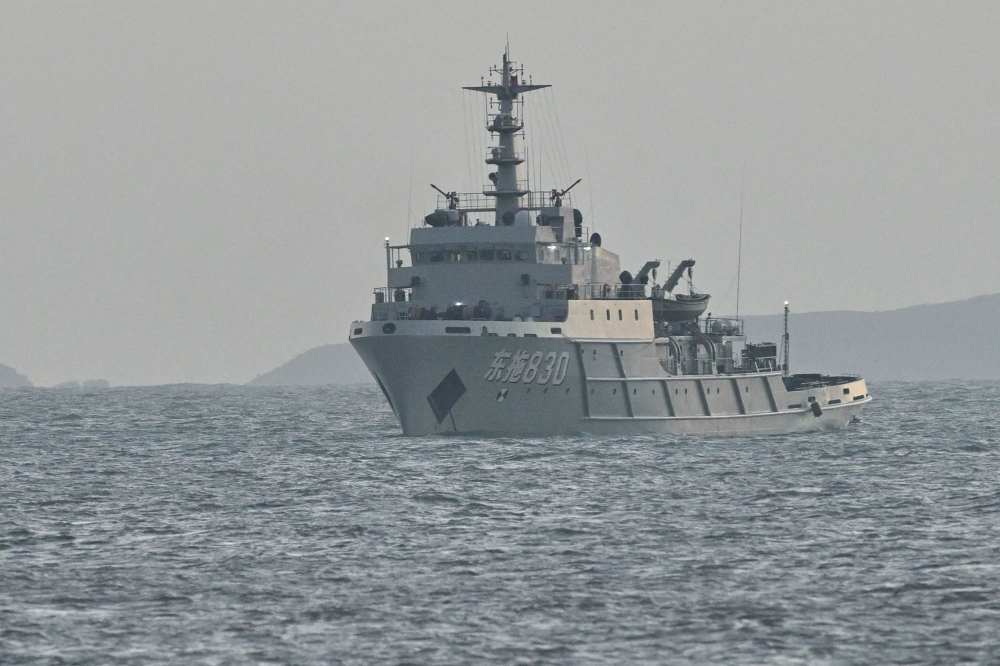
The Taiwanese government welcomed the phone call between US President Donald Trump and Chinese President Xi Jinping, calling it a positive step that contributes to regional stability. This stance comes at a sensitive time, as China increases its military activity near the island, which Beijing considers an integral part of its territory.
In a statement to AFP, Taiwan's Vice Foreign Minister Chen Ming-chi said Taipei was not concerned about the call, but rather believed it "will contribute to stabilizing the situation." He added, "We welcome these efforts aimed at achieving security and stability in our region," noting that direct dialogue between Washington and Beijing is essential to avoid miscalculations amid escalating tensions.
Historical and geopolitical context
Tensions in the Taiwan Strait trace their roots back to the end of the Chinese Civil War in 1949, when the Republic of China government withdrew to Taiwan while the Communist Party established the People's Republic of China on the mainland. Since then, Beijing has insisted on the "One China" principle, viewing Taiwan as a breakaway province that must be reunified, by force if necessary. Taiwan, on the other hand, has a democratically elected government and functions as a separate entity.
The United States plays a pivotal role in this scenario, pursuing a policy of “strategic ambiguity.” While it diplomatically recognizes Beijing as the sole legitimate government of China, it maintains strong unofficial ties with Taiwan and is committed, under the “Taiwan Relations Act,” to providing it with the means to defend itself.
The importance of communication and its expected impact
The significance of this phone call lies in its representation of a high-level channel of communication between the world's two largest economies, thus reducing the risk of direct confrontation. For Taiwan, any dialogue between the two powers offers an opportunity to de-escalate China's military buildup, which includes the near-daily dispatch of warplanes and ships through the median of the Taiwan Strait.
Regionally, US allies in the area, such as Japan and South Korea, are closely monitoring these interactions, as any conflict in the Taiwan Strait would threaten the stability of the entire Indo-Pacific region and disrupt global supply chains, particularly in the semiconductor sector, which is dominated by Taiwan.
China's official Xinhua news agency reported that President Xi urged his American counterpart to practice "mutual respect" and exercise caution regarding the Taiwan issue. For his part, Trump described the call as "excellent," emphasizing the strength of his personal relationship with the Chinese president. Meanwhile, Taiwanese President Lai Ching-te stressed that relations between Taipei and Washington are "rock solid" and that cooperation programs will continue.