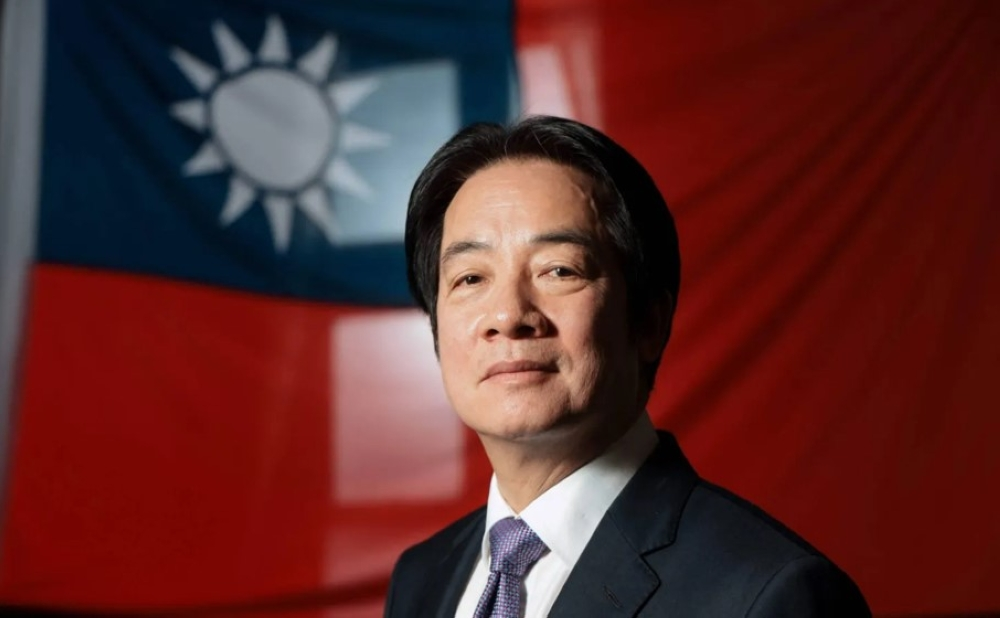
In a statement reflecting Taiwan's firm stance amid international tensions, Taiwanese President Lai Ching-te affirmed that his country is not merely a "bargaining chip" to be used in talks between the two superpowers, the United States and China. These remarks underscored Taiwan's independent identity and its commitment to preserving its sovereignty in the face of mounting pressure from Beijing and the complex international politics surrounding the island's future.
Historical background of the conflict
To understand the depth of these statements, it is necessary to return to the roots of the Sino-Taiwanese conflict. The story goes back to the end of the Chinese Civil War in 1949, when the Kuomintang forces, led by Chiang Kai-shek, were defeated and retreated to the island of Taiwan to establish the Republic of China. In response, the Communist Party, led by Mao Zedong, established the People's Republic of China on the mainland. Since then, Beijing has considered Taiwan a "renegade province" that must be reunified with the mainland, by force if necessary, while Taiwan has developed into a prosperous, self-governing democracy and insists on its sovereignty.
Taiwan's strategic importance and global influence
Taiwan’s importance extends far beyond its geographical borders. Its vital strategic location in the “First Island Chain” makes it a pivotal point for controlling key sea lanes in the Indo-Pacific region. Any change to its current status could radically reshape the regional balance of power. Economically, Taiwan is a global powerhouse in the semiconductor industry, with TSMC dominating the production of the world’s most advanced electronic chips. This role makes Taiwan’s stability crucial to global supply chains in the technology, automotive, and defense sectors, and any disruption could trigger a global economic crisis.
The American role and the policy of “strategic ambiguity”
The United States plays a pivotal role in this complex conflict. While Washington diplomatically recognizes “One China” and maintains its embassy in Beijing, it also maintains strong unofficial ties with Taiwan under the 1979 Taiwan Relations Act. This law obligates the United States to provide Taiwan with the means necessary for its self-defense. This policy, known as “strategic ambiguity,” aims to deter China from invading Taiwan while simultaneously preventing Taiwan from formally declaring independence in a way that might provoke Beijing. President Lai Ching-te’s remarks come as Taiwan seeks to assert its position as a reliable partner, not merely a bargaining chip in negotiations between Washington and Beijing.
The Taiwanese president's call not to use his country as a bargaining chip is a clear message to the world that the people of Taiwan decide their own future, and that any solutions concerning the island must respect their will and democracy, thus placing the Taiwan issue at the heart of discussions about security and stability in the 21st century.