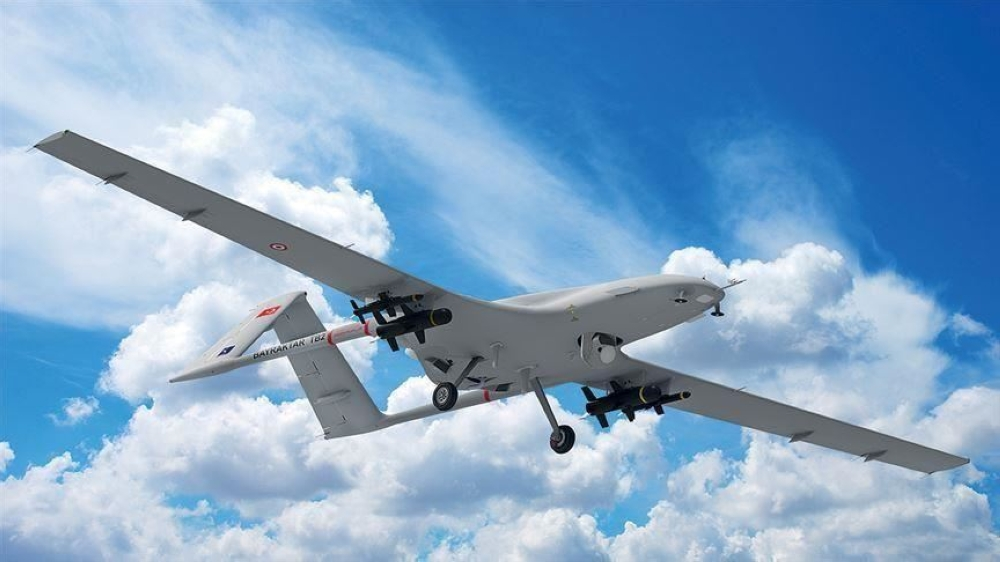
In a move reflecting escalating security tensions in Northern Europe, Swedish Defense Minister Päl Jonsson announced a massive military investment plan aimed at modernizing the Swedish army's capabilities by allocating 4 billion kronor (equivalent to 374 million euros) to purchase a diverse fleet of drones.
During his speech at the annual defense forum, Johnson stressed that this move is a direct response to the deteriorating security environment in the Old Continent, emphasizing the need for European countries to take greater responsibility for their national security and for supporting Ukraine, especially in light of what he described as the "unpredictability" of future US policies.
Deal details and new capabilities
The Minister of Defense explained that the new investment will not be limited to one type of drone, but will include a comprehensive package that includes:
- Reconnaissance and electronic warfare drones: to enhance monitoring and jamming capabilities.
- Mobile munitions (suicide drones): These are long-range systems that have proven highly effective in modern conflicts.
- Maritime drones: dedicated to mine clearance and maritime surveillance missions, which is vital to the security of Sweden, which borders the Baltic Sea.
The Swedish armed forces are expected to receive these advanced systems within the next two years, which will greatly enhance their combat readiness.
Strategic shift after joining NATO
This announcement comes in the context of a historic shift in Swedish military doctrine, as Sweden abandoned its centuries-long policy of military non-alignment and officially joined NATO in March 2024 as its 32nd member. This accession imposed new obligations on Stockholm to increase its military spending and modernize its arsenal to integrate with the alliance's defense systems, especially given the Baltic Sea's transformation into an area of direct friction with Russia.
Lessons from the Ukrainian war and space
Sweden's move toward investing in drones reflects a rapid assimilation of lessons learned from the Russian-Ukrainian war, where unmanned aerial vehicles (UAVs) became a crucial element in modern warfare, both for reconnaissance and direct attack. Sweden has not stopped there; it has also announced the allocation of 1.3 billion kroner (121.5 million euros) to enhance its space capabilities by launching ten military satellites, aimed at increasing the accuracy and effectiveness of its drones and cruise missiles.
Strengthening air defenses
These efforts complement previous announcements, as Sweden recently revealed an investment of 15 billion kroner (1.4 billion euros) in land-based air defense systems, including IRIS-T missiles, to protect its airspace from hostile missiles and fighters, indicating a comprehensive approach to building “total defense” to counter any potential threats from the Russian side.