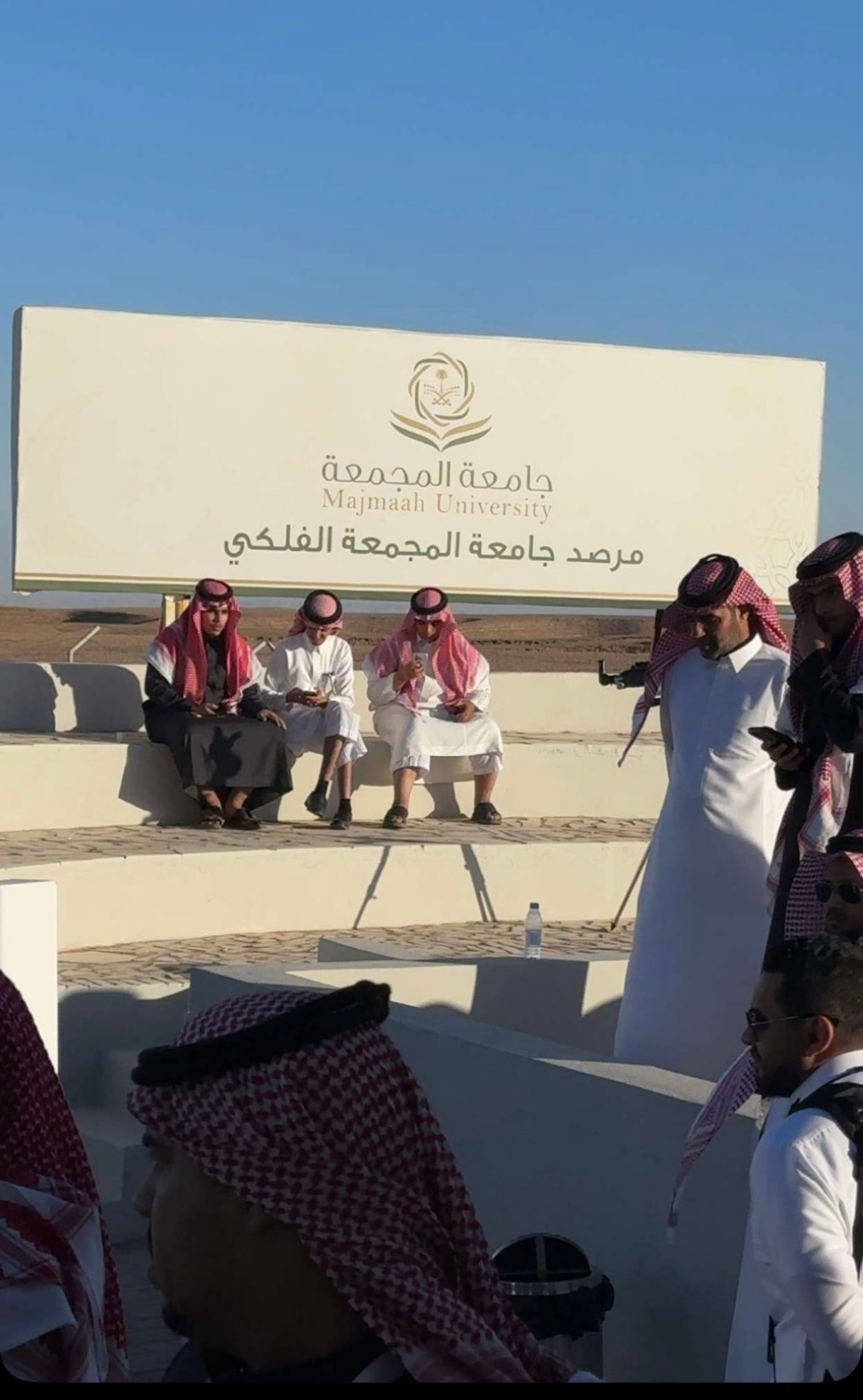
As the month of Sha'ban draws to a close, the eyes of the Islamic world turn to the Kingdom of Saudi Arabia, specifically to the Hawtat Sudair Astronomical Observatory, one of the most prominent official sites for sighting the new moon. In this context, Al-Majma'ah University has mobilized all its technical, administrative, and human resources in preparation for the sighting of the crescent moon of Ramadan on the evening of Sunday, the 29th of Sha'ban 1445 AH. This year's event has taken on a significant international dimension with the participation of student and academic delegations from 13 Arab and Islamic countries.
The importance of sighting the new moon in Islam
The determination of the beginning of the Islamic months, especially Ramadan and the two Eid festivals (Eid al-Fitr and Eid al-Adha), is based on the sighting of the new crescent moon with the naked eye or using binoculars, a confirmed Sunnah (practice) of the Prophet Muhammad (peace be upon him). The sighting process is a tradition that combines science and faith, as Muslims around the world await the official announcement from the relevant authorities in the Kingdom, given its religious significance, to begin the fasting rituals. This annual event is a living embodiment of the close connection between religion and science, as the latest astronomical technologies are used to revive the Sunnah of the Prophet Muhammad (peace be upon him).
Sudair Observatory: A strategic site for astronomical observation
The Hawtat Sudair Observatory, overseen by Majmaah University, has gained widespread renown and high credibility both locally and internationally. This is due to its unique geographical location, far removed from light pollution in major cities, providing ideal clear skies for precise astronomical observations. The Supreme Court of Saudi Arabia relies heavily on the observations from this observatory, along with other observatories in the Kingdom, to issue its official ruling on the start of the holy month.
International cooperation to unify the vision
Dr. Mohammed Al-Shehri, Vice Rector for Scientific Research at Majmaah University, affirmed the university's complete readiness to ensure the success of this event. He noted that the Sudair Observatory witnessed a significant international presence this year, represented by the participation of students from the Islamic University representing more than 13 different nationalities, who came to experience this unique astronomical and religious phenomenon. The university also welcomed high-level delegations from the Arab Republic of Egypt and the State of Kuwait to observe the moon sighting procedures and exchange astronomical expertise, thus strengthening the observatory's position as a regional scientific center and contributing to efforts aimed at unifying the beginnings of lunar months among Islamic countries.
Advanced equipment and modern technologies
Al-Shahri revealed that the observatory has undergone comprehensive development to ensure the highest levels of accuracy and reliability. This includes the provision of state-of-the-art telescopes and advanced astronomical equipment, as well as the establishment of a dedicated, enclosed room for the moon-sighting committee to guarantee precise observations free from any external influences. Dedicated platforms have also been set up for media personnel and guests, along with a fully equipped reception hall to ensure the comfort of participating delegations and visitors. Various governmental and security agencies in Hawtat Sudair, including traffic police, regular police, the Red Crescent Authority, and medical services, are collaborating to provide logistical support, secure the site, and facilitate the arrival of participants.