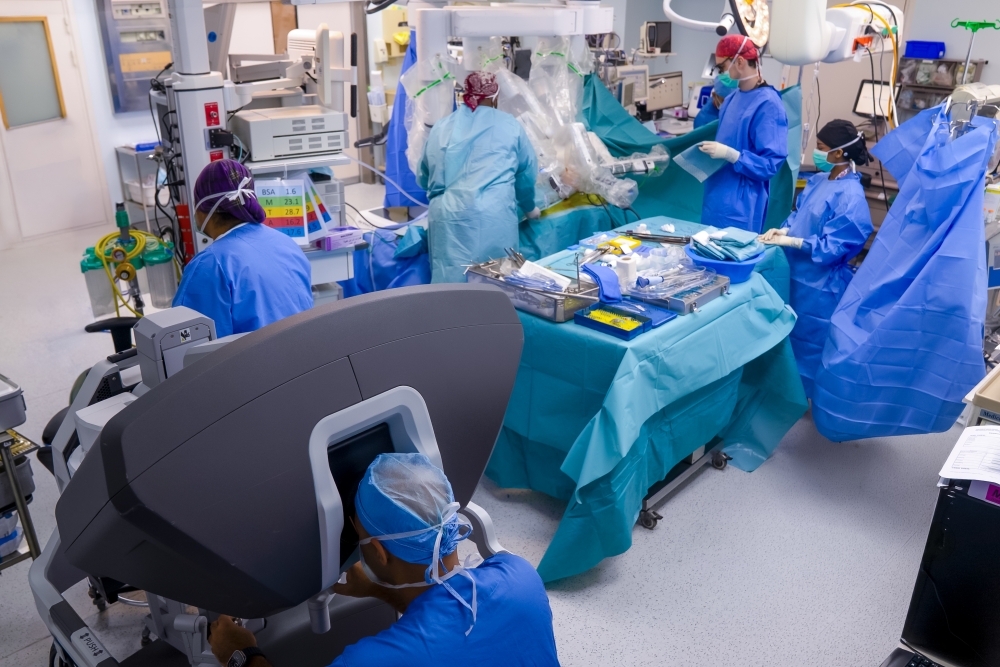
King Faisal Specialist Hospital and Research Centre in Jeddah has achieved another medical milestone, adding to the Kingdom of Saudi Arabia's impressive record of successes. The hospital announced the successful completion of a colon resection using the advanced Swenson technique and minimally invasive robotic surgery. This complex procedure was performed on a two-year-old child, weighing less than 10 kilograms, who suffered from Hirschsprung's disease, a rare congenital disorder that directly affects bowel function.
The nature of Hirschsprung's disease and its effects on children
Hirschsprung's disease is a rare congenital condition characterized by the absence of nerve cells (ganglionic cells) in a portion of the large intestine. This deficiency disrupts normal bowel function, limiting the intestine's ability to expel waste. If medical intervention is delayed, the condition can worsen, leading to severe intestinal obstruction and life-threatening complications. Historically, treatment for this disease required open surgery, resulting in significant scarring and a lengthy recovery period. However, modern medical advancements have fundamentally changed the treatment approach.
Extreme precision in performing the colon resection procedure
Colon resection in children is a highly complex procedure. This is primarily due to the narrow pelvis and the limited space available for surgery in a two-year-old's body. Furthermore, the surgical area is located very close to vital nerves, muscles, and blood vessels involved in bowel function. The Sonsen technique, used in this procedure, involves removing the affected section of the colon that lacks nerve cells and then reconnecting the healthy section directly to the anus. This procedure requires exceptional precision in handling and preserving the surrounding tissues to ensure stable and lasting postoperative results.
Robotic surgery: A quantum leap in modern medicine
Robotic surgery has revolutionized the medical field, particularly in pediatric microsurgery. Using surgical robots, surgeons can perform complex procedures with a precision that surpasses the capabilities of the human hand alone. The robot provides a high-definition, magnified, three-dimensional view of the surgical site, reducing the likelihood of complications, minimizing the size of surgical incisions, and thus accelerating patient recovery and return to normal life.
Regional and international impact of Saudi healthcare
The success of this medical procedure is not merely about saving a child's life; it carries deeper implications, reflecting the rapid development of the healthcare sector in Saudi Arabia. Locally, this achievement strengthens the confidence of citizens and residents in national medical expertise and reduces the need to travel abroad for complex treatments. Regionally and internationally, it solidifies the Kingdom's position as a leading destination for medical tourism and innovation, aligning with the goals of Saudi Vision 2030, which prioritizes human health and quality of life.
Global rankings confirm the leading position of King Faisal Specialist Hospital
This achievement is a continuation of King Faisal Specialist Hospital & Research Centre's approach to adopting and employing the latest advanced medical technologies in treating complex cases. As a culmination of these efforts, the hospital was ranked first in the Middle East and North Africa and 12th globally in the list of the top 250 academic healthcare institutions worldwide for 2026. It also earned the title of the most valuable healthcare brand in the Kingdom and the Middle East, according to the Brand Finance 2025 report. Furthermore, the hospital was included in Newsweek magazine's prestigious lists of the best hospitals in the world for 2025, the best smart hospitals, and the best specialized hospitals for 2026, underscoring its ongoing commitment to providing specialized healthcare that meets the highest international standards.