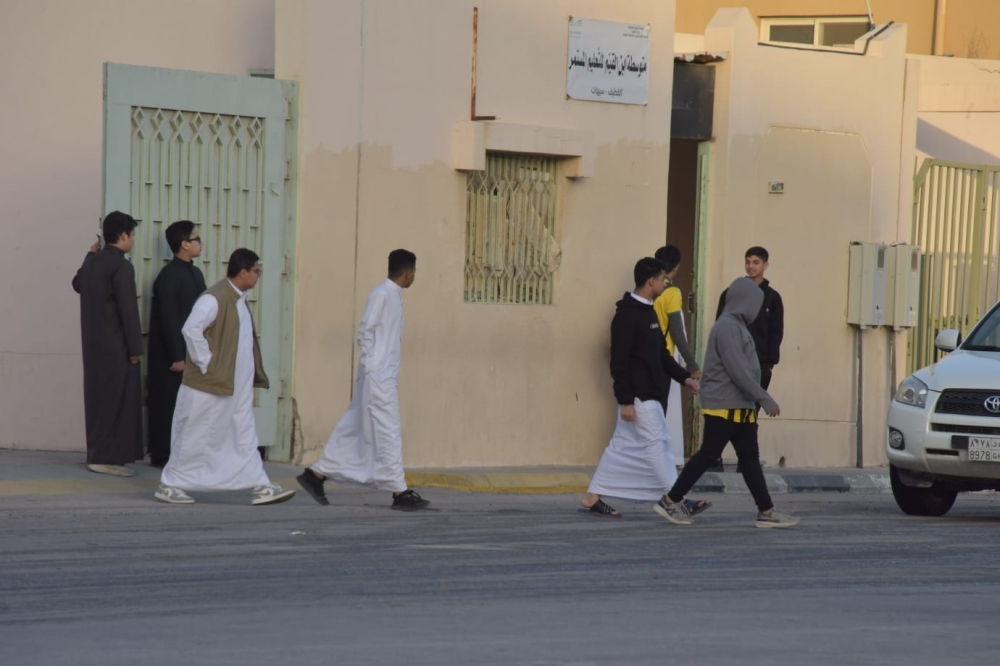
More than six million students returned to their classrooms this morning, Sunday, across Saudi Arabia's public, private, and community schools, marking the start of the second semester after a week-long break. This return comes amidst intensive preparations for the 19-week academic year, reflecting the education system's commitment to maximizing learning outcomes.
Strict enforcement of the "Noor" system and code of conduct
As part of the Ministry of Education's efforts to streamline the educational process from day one, the Ministry has directed all educational departments and schools to immediately and accurately monitor student absences through the "Noor" electronic system. The "Noor" system is a cornerstone of the digital transformation in Saudi education, connecting schools and homes to ensure real-time monitoring of students' academic and behavioral progress.
The ministry emphasized that there would be no leniency in enforcing the code of conduct and attendance policy, requiring school leaders to immediately notify parents of any absences via text messages and approved communication channels. These strict measures aim to raise the level of school discipline, as educational studies indicate a strong correlation between regular attendance and academic achievement, thus reducing learning loss and fostering a more positive school environment.
Holiday calendar and consideration of religious seasons
This semester's academic calendar includes important breaks for students, beginning with the celebration of "Founding Day," a national occasion that reinforces identity and belonging, followed by the Eid al-Fitr holiday, and culminating in the Eid al-Adha holiday at the end of the academic year. This timetable aims to achieve a balance between academic effort and the psychological well-being of both students and teaching staff.
In consideration of the Kingdom's unique geographical and religious context, the Ministry has approved an exceptional arrangement for the regions of Makkah, Madinah, Jeddah, and Taif, bringing forward the date of the Eid al-Adha holiday. This strategic step aims to ensure the smooth flow of crowds during the Hajj season and to enable government agencies and residents in these areas to actively participate in serving the pilgrims, aligning with the goals of the Kingdom's Vision 2030 to enrich the Hajj and Umrah experience.
Preparing for the holy month of Ramadan
In anticipation of the holy month, educational districts have adopted flexible school schedules as part of their "Summer and Winter Calendar" plan. This early announcement of school hours during Ramadan aims to help Saudi families organize their daily schedules, ensuring a balance between the spirituality of the holy month and academic achievement, thus providing a stable and supportive learning environment for students under all circumstances.