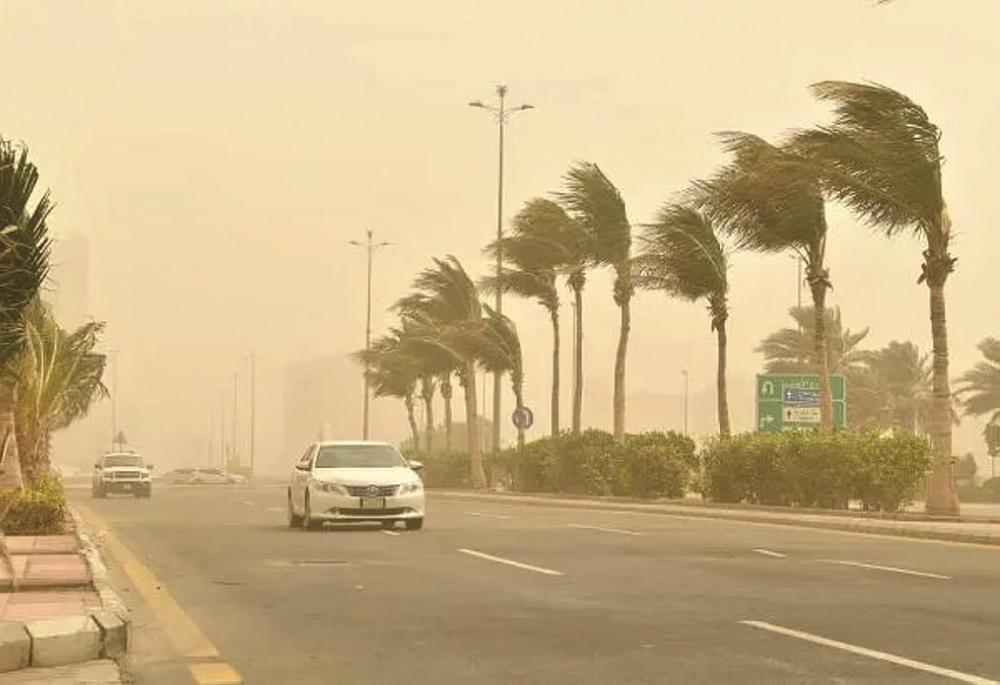
The National Center for Meteorology in Saudi Arabia issued an advanced weather alert on Thursday for the Hail and Tabuk regions, warning of strong surface winds that could reach speeds of up to 49 kilometers per hour. These active winds are expected to stir up dust and sand, causing a significant decrease in horizontal visibility, especially on highways and in open areas.
Special warning for the Hail region
In detail, the center explained that the Hail region will experience strong winds starting in the morning and continuing until 7:00 PM. The warning covers most of the region's governorates, open areas, and the highways connecting them. The relevant authorities, primarily the Civil Defense, urged citizens and residents to exercise caution, especially drivers, due to the impact of dust on visibility, which increases the likelihood of accidents.
Active winds in the Tabuk region
The National Center for Meteorology also warned of similar active winds in parts of the Tabuk region, specifically the governorates of Al Wajh and Umluj and their surrounding areas. These winds are expected to reduce horizontal visibility due to blowing dust, with wind speeds reaching 40-49 km/h. The center indicated that this weather condition is expected to continue, God willing, until 7:00 PM this Thursday.
The climatic context of the northern region
These weather phenomena are common in the northern regions of Saudi Arabia, which are characterized by their desert landscape and proximity to the Great Nafud Desert. During certain times of the year, particularly during seasonal transitions, surface winds become active due to differences in atmospheric pressure, leading to the formation of dust storms. The National Center for Meteorology plays a vital role in monitoring these changes and issuing early warnings to mitigate their negative impacts on public safety and vital sectors.
Expected effects and safety guidelines
Such weather conditions have direct impacts on public health and daily life. Asthma and respiratory patients are advised to avoid going out in these conditions unless absolutely necessary, and to wear protective masks. Regarding transportation, reduced visibility requires drivers to reduce speed, maintain a safe distance between vehicles, and use hazard lights. These winds also affect outdoor activities and construction work, necessitating the securing of materials and objects that could be blown away. Authorities emphasize the importance of following the continuous updates from the National Center of Meteorology and adhering to safety instructions issued by official bodies.