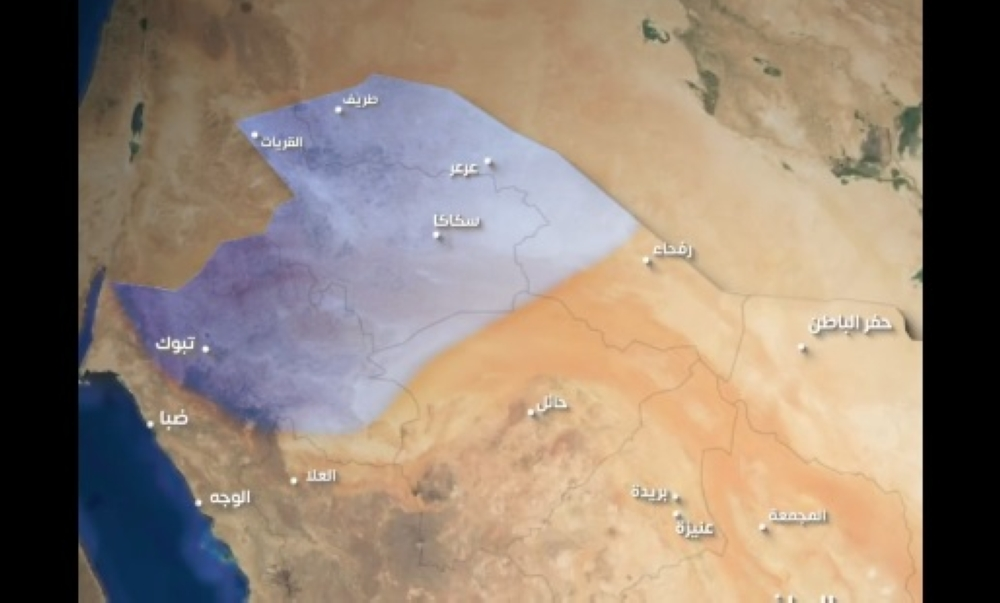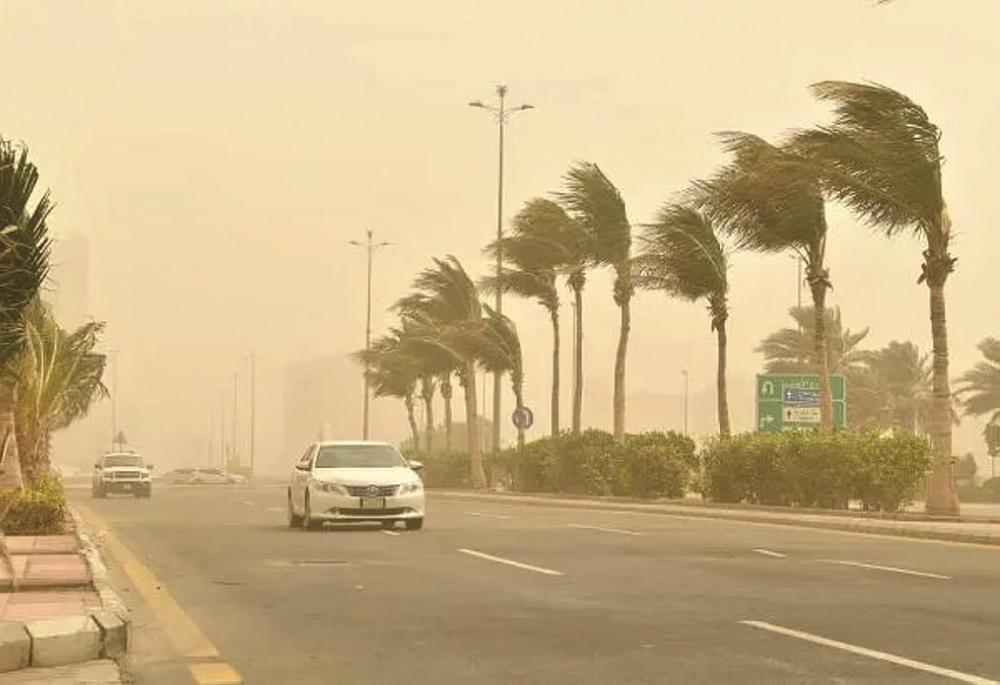
The National Center for Meteorology in Saudi Arabia issued an advanced warning regarding the prevailing weather conditions today, Thursday, in the Hail and Tabuk regions, indicating strong surface winds accompanied by dust storms, leading to a sharp decrease in horizontal visibility. The center explained that these weather conditions began affecting the region and will continue until 7:00 PM.
According to the alert, the Hail region is experiencing strong winds reaching speeds of 40 to 49 kilometers per hour, with the impact particularly concentrated on open areas and highways. This poses a risk to traffic and requires drivers to exercise extreme caution. The warning also covers the Tabuk region, specifically the governorates of Al Wajh and Umluj, where strong winds of the same speed are prevailing, accompanied by a significant decrease in horizontal visibility.
The climatic context of the northern region
These weather phenomena are relatively common in the northern regions of Saudi Arabia, due to their desert nature and geographical location. During certain times of the year, especially with the changing seasons, surface winds become active as a result of the region being affected by air masses of varying pressure and temperature. These winds stir up sand and dust from the vast desert lands, creating dust storms that can extend to cover wide areas—a phenomenon known locally as “Al-Ajaj.” The National Center for Meteorology plays a vital role in monitoring these climatic changes and issuing early warnings to mitigate their negative impacts.
Expected effects and the importance of warnings
The effects of these winds extend beyond simply reducing visibility on roads. Locally, they can impact air traffic at regional airports such as Hail Regional Airport and Prince Sultan bin Abdulaziz Airport in Tabuk, potentially causing delays or reschedulings. The dust also poses a health risk, particularly for the elderly, children, and those with respiratory conditions like asthma. Health authorities advise staying indoors as much as possible and keeping windows tightly closed during such weather. Regionally, these dust storms may be part of a larger weather system affecting neighboring countries, underscoring the importance of regional coordination in weather monitoring. Meteorological warnings enable relevant authorities, such as Civil Defense and Highway Patrol, to increase their preparedness and respond promptly to any emergencies that may arise from these weather conditions.