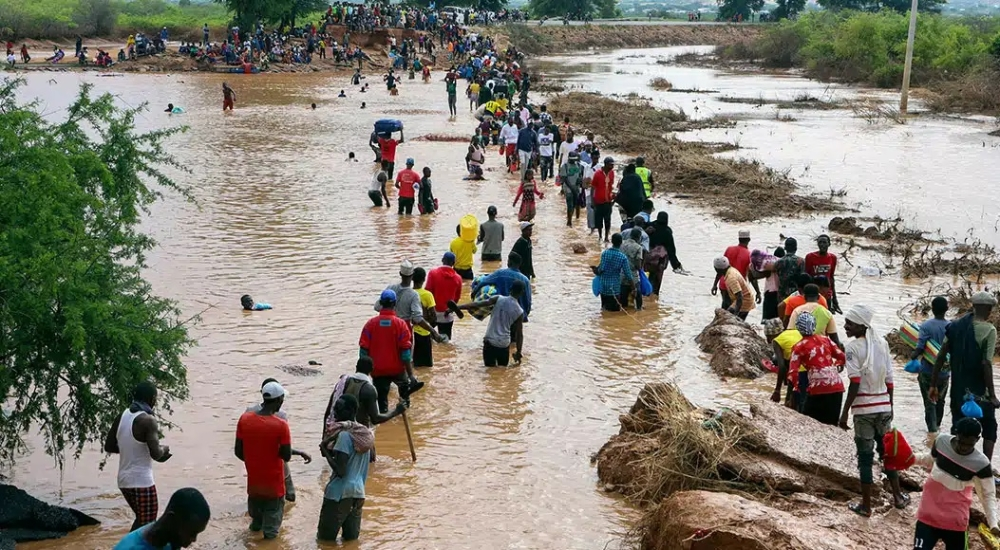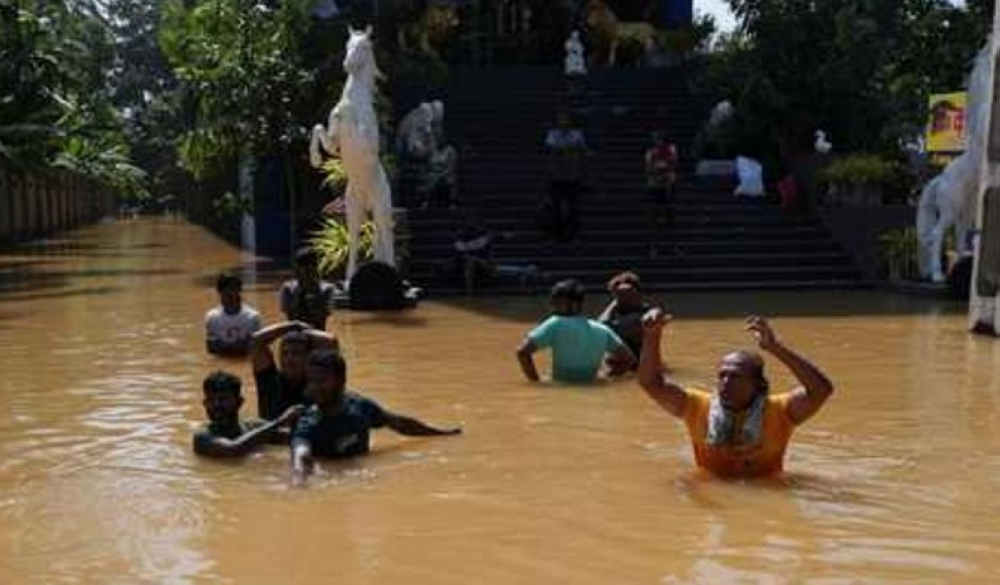
In a move reflecting the immense devastation caused by recent natural disasters, the Sri Lankan government has announced a substantial allocation of $1.6 billion (equivalent to 500 billion Sri Lankan rupees) in its 2026 budget to fund comprehensive reconstruction efforts across the island. This decisive measure follows the devastating Cyclone Detwah, which struck the country with force last November, leaving behind an unprecedented humanitarian and economic crisis.
Heavy human and material losses
Official statistics revealed that the cyclone caused the deaths of more than 640 people, while its devastating effects impacted approximately 2.3 million, representing more than 10% of the country's total population. The widespread flooding and landslides caused extensive damage to infrastructure, prompting an urgent government response.
In a special parliamentary session held on Thursday, ending a month-long political truce, Sri Lankan President Anura Kumara Dissanayake described the disaster as the "most complex" in the island's history of natural disasters. Addressing parliament, Dissanayake stressed the need to allocate these additional funds for relief and reconstruction, in addition to the regular public spending budget, and expressed his intention to provide direct cash assistance to citizens who lost their livelihoods as a result of the disaster.
Economic challenges and international support
This disaster comes at a time when Sri Lanka is facing delicate economic challenges. The president has confirmed that the government does not intend to raise the public debt ceiling to cover reconstruction costs, placing the country under a difficult financial test. To overcome this obstacle, Colombo is heavily reliant on international support and foreign aid.
In this context, the Ministry of Finance announced it will hold an international donors' conference in early January to mobilize the necessary financial resources. The government also moved quickly to request $200 million from the International Monetary Fund through its emergency financing facility and has already secured World Bank approval to reallocate $120 million from previous loans and aid toward urgent recovery efforts.
climatic and geographical context
Sri Lanka, due to its geographical location in the Indian Ocean, is periodically subjected to waves of extreme weather. However, the intensity of cyclones and floods has increased in recent years, a phenomenon experts attribute to global climate change. These changes are placing increasing pressure on the budgets of developing countries, making international financing and reconstruction mechanisms essential for ensuring their stability and resilience against future disasters.