Spanish authorities announced today a complete suspension of passenger train services in the northeastern region of Catalonia as an emergency precaution following a horrific train collision in Barcelona last night. This decision comes amid heightened anxiety across the country over a series of railway accidents in a short period.
Details of the incident and the victims
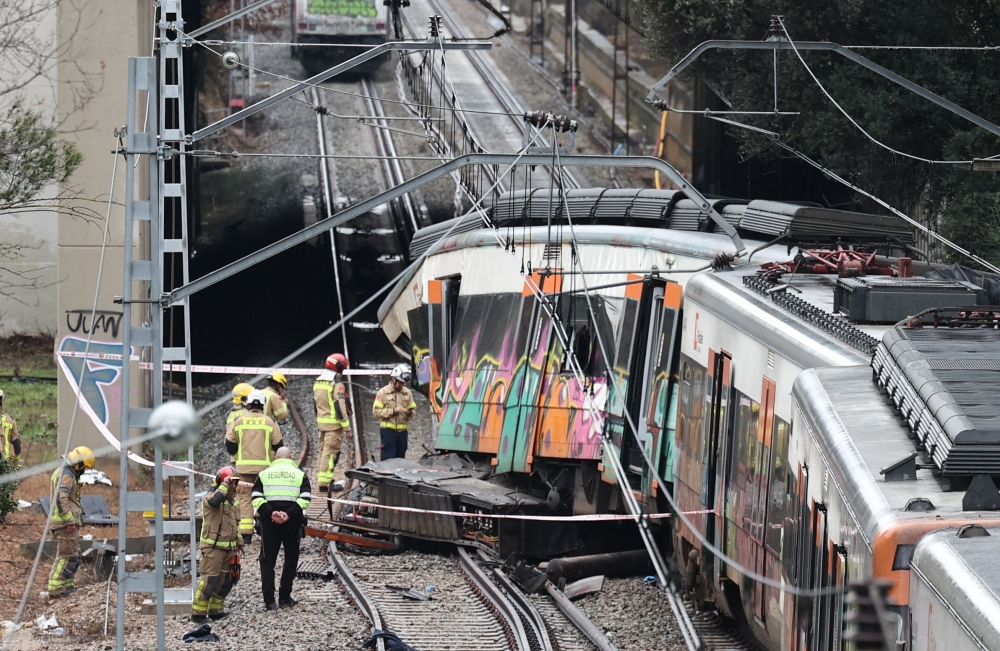
According to official reports from rescue teams in Catalonia, the accident, which occurred within the city limits of Barcelona, resulted in at least one death and 37 injuries of varying severity. Medical sources indicated that five of the injured were in critical condition, while the condition of six others was described as less serious. All were transported to receive necessary medical care.
Initial investigations revealed that the accident was caused by the train colliding with a retaining wall, which then collapsed directly onto the tracks and train carriages. Regional firefighters stated that most of the injuries were concentrated in the first carriage of the train, and rescue teams worked throughout the night to evacuate all trapped passengers and secure the area.
A bloody week for Spanish railways
This incident is not isolated, coming as it does within a tragic week for Spain's transport sector. While emergency teams are dealing with the Barcelona crash, other rescue teams are still searching for possible victims of a train collision that occurred last Sunday in southern Spain, some 800 kilometers from the site of this latest accident. The southern crash resulted in a heavy toll of at least 42 deaths, prompting the government to declare three days of national mourning.
Economic and logistical impacts on Catalonia
The suspension of train services in Catalonia is of particular importance given the region's vital role. The Catalan railway network, known locally as "Rodalies," is the lifeline for hundreds of thousands of commuters who travel daily between the suburbs and Barcelona for work and study. This suspension is expected to cause significant disruption to travel and severe traffic congestion on alternative routes, potentially impacting economic activity in the region, which is one of Spain's main economic engines.
Concerns about infrastructure and safety
These successive accidents raise serious questions about safety standards and the maintenance of railway infrastructure in Spain. Although Spain boasts one of the most advanced high-speed rail (AVE) networks in the world, its regional and local networks frequently face criticism regarding the need for modernization and investment. The Railway Accident Investigation Commission (CIAF) is expected to launch a comprehensive investigation to determine responsibility and ensure that such disasters, which have shocked the Spanish public, are not repeated.