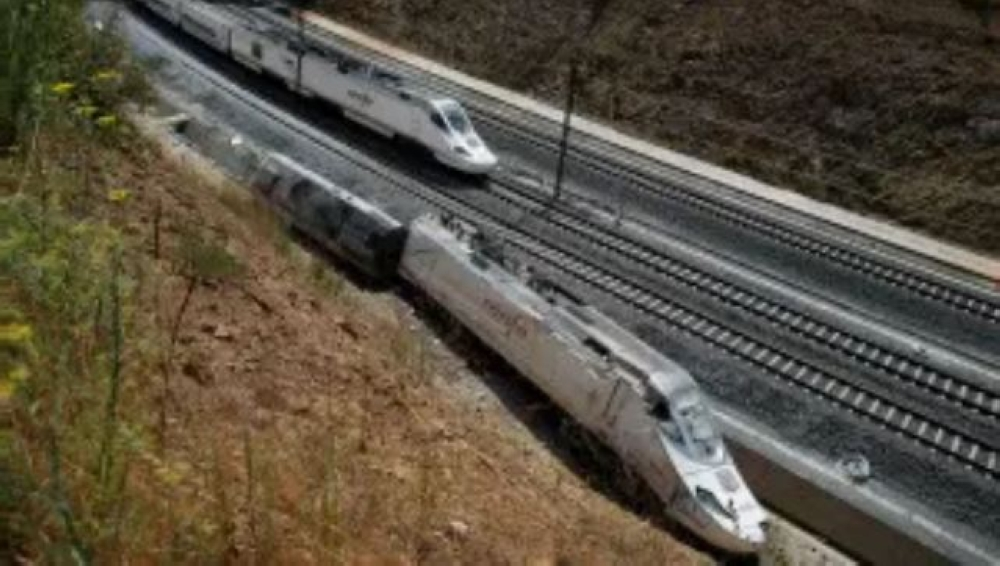
The death toll from the tragic train crash in southern Spain on Sunday has risen to at least 21, following a horrific collision between two high-speed trains. Sources from the Spanish Civil Guard confirmed the new toll to AFP, adding that rescue and emergency teams are still working at the scene to provide support and assess the final losses.
Train service suspended; details of the accident
In the aftermath of the disaster, the Spanish railway network ADIF, responsible for managing the rail infrastructure, announced immediate measures via its official website. The company confirmed the suspension of high-speed (AVE) train services connecting Madrid with major southern cities, including Córdoba, Seville, Málaga, and Huelva. ADIF stated that this suspension would last at least throughout Monday, January 19, highlighting the extensive damage to the infrastructure and the difficulty of quickly resuming operations.
Official reactions and national solidarity
The Spanish royal family quickly issued an official statement expressing their “deepest concern” over the incident, which they described as “serious.” The Royal Palace offered its heartfelt condolences to the families and loved ones of the victims, affirming its complete solidarity with those affected during this difficult time. These statements reflect the shock felt throughout the country following this tragic event.
Historical context of the Spanish railway network
Spain is one of the world's leading countries in high-speed rail transport. The country boasts the second-largest high-speed rail network in the world after China, and its AVE network is known for its high safety standards and advanced technology. The southern line, where the accident occurred, connects the capital, Madrid, with the Andalusia region. It was the first high-speed line in Spain, opening in 1992 to coincide with the Seville Expo. Despite the network's relatively safe record, major accidents remain rare but devastating, bringing to mind the 2013 Santiago de Compostela train crash, one of the worst rail disasters in modern Spanish history.
Expected impacts and economic importance
This incident is expected to cast a shadow over transportation and the local economy, especially since the line connecting Madrid and Andalusia is a vital artery for tourism and business. Cities like Seville and Malaga rely heavily on the influx of visitors and businesspeople arriving from the capital on these trains. Even a brief suspension of service could cause significant logistical disruptions and economic losses, as well as potentially damaging passenger confidence in safety procedures. This will likely necessitate a thorough investigation and a comprehensive review of safety protocols to prevent similar tragedies from recurring.